Iran Crisis and Kashmir’s Reaction: Strategic Implications for Indian Policy
 usanasfoundation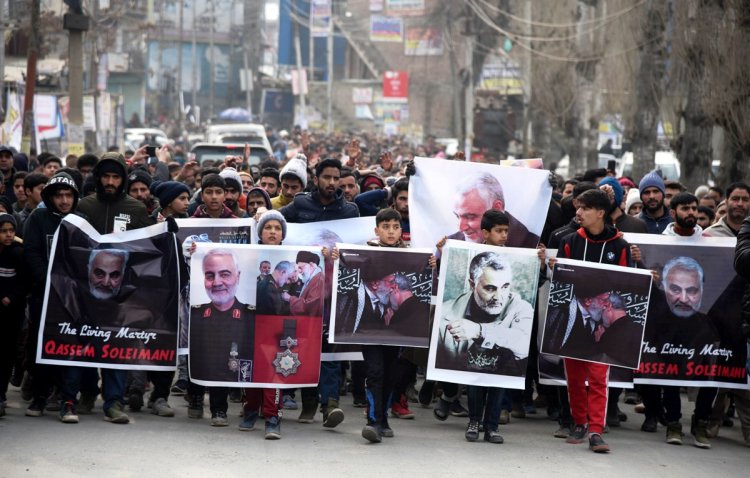
Analysis
By Umer Iqbal
Iran’s internal situation worsened hugely in late December 2025. The Shopkeeper strikes in Tehran on December 28 quickly turned into nationwide protests within 72 hours. All 31 provinces of Iran saw protests and rallies reportedly driven by economic collapse, currency depreciation, and a sharp sentiment of grievances against governance failures. The regime’s response proved decisive and brutal. Iranian Authorities imposed a total internet shutdown on January 8, severing Iran from global communication networks. Supreme Leader Ayatollah Khamenei acknowledged on January 17 that “thousands” had perished. Independent monitors place the death toll above 3,000, with some estimates reaching 20,000. CNN reported that approximately 5,000 Iraqi Shiite militia fighters crossed into Iran to reinforce internal security forces. This represents Iran’s most serious internal challenge in four decades.
During this same period, India’s Jammu and Kashmir witnessed significant pro-Iran demonstrations. Between January 13 and 16, Shiite-majority areas organized rallies expressing solidarity with Iran’s Supreme Leader Ayatollah Khamenei. Kargil district in Ladakh saw the largest mobilization. Thousands of Shias join these rallies across multiple days, even in chilling sub-zero temperatures. News platforms such as India Today and WION also documented these gatherings, where protesters displayed both Indian and Iranian flags simultaneously. The messaging focused on Iranian sovereignty, solidarity in opposition to foreign interference, and particularly criticism of the United States and Israel. Dras subdivision saw repeated demonstrations with significant participation from the Shia community.
Kashmir Valley followed on January 16 after Friday congregational prayers. The Hindu reported that Budgam district saw organized marches from the main Imambara. Aga Syed Hassan, a respected local cleric heading Anjuman-e-Shari Shia Budgam, led participants. He called for accurate international reporting, as well as said that stability had returned to Iran. Srinagar witnessed parallel demonstrations in Nehru Park, Hassanabad, and Gund Hassi Bhat. Pulwama’s Gangoo area also recorded a significant turnout. Local dailies such as Rising Kashmir and Deccan Chronicle confirmed that most protests and rallies were peaceful and orderly. The common narrative across rallies at locations stressed sovereignty concerns and resistance to external pressure. There were protests against US President Donald Trump and Israeli Prime Minister Benjamin Netanyahu as well.
These developments, obviously, require a careful strategic analysis. First thing to note is that the information asymmetry shaped community perceptions significantly. Iran’s internet blackout, imposed from January 8-17 (clearly), prevented independent verification of ground realities. Information about the internal situation in Iran reached Kashmir through selective channels that framed events in a certain manner. This interpretation may not capture Iran’s complex reality, but it definitely shaped how the local community understood geopolitical developments. India knows, from its own experience, how information warfare influences perceptions during crises and the public reaction. Thus, controlling narrative often matters more than controlling facts on the ground.
Secondly, the religious and cultural linkages provide the necessary context. Kashmir’s Shiite community maintains centuries-old connections with Iran, which involve religious scholarship, cultural exchange, and shared identity. These transnational bonds are neither unusual nor problematic in themselves. Many religious communities maintain similar global connections theologically or culturally. These rallies showed legitimate concern for co-religionists abroad, not compromised national loyalty. India’s pluralistic framework accommodates diverse perspectives on international affairs. This represents democratic strength in spirit.
Thirdly, India has many strategic interests in the stability of Iran. For instance, Chabahar Port provides a necessary route of access to Afghanistan and Central Asia while bypassing Pakistan entirely. This particular route serves India’s economic integration with resource-rich regions beyond. Energy cooperation remains important and required despite diversification efforts. Iran also supplies a significant amount of crude oil and natural gas volumes to India. Diplomatically, Tehran tends to avoid directly antagonizing relations with New Delhi. And, sometimes this plays in India’s favor against Pakistan. This carries significant strategic value for India.
A sudden regime change in Tehran will immediately create multiple uncertainties in Indo-Iranian relations. New leadership might possibly recalibrate toward Pakistan to establish balanced regional relationships. Also, In the long run political instability eventually disrupts trade, connectivity, and energy flows as well. India has invested decades building functional relationships with Iran’s current establishment. Starting this all over again involves significant costs and unpredictable outcomes.
Kashmir’s protests also revealed that India’s policy towards Iran has domestic stakeholders. For example, The Kargil turnout was substantial, not marginal. This clearly indicates a genuine sentiment which is worth acknowledging during policy formulation and in policy calculations. Regional political figures like Mehbooba Mufti also commented on the situation. That demonstrates recognition of community concerns.
Several policy principles emerge from these simple observations. India must continue its sophisticated and well-calculated West Asian engagement strategy. By maintaining simultaneous relationships with Iran, Israel, Saudi Arabia, and the UAE, India maximizes leverage and options. This act of balancing reflects a mature statecraft. India also needs to maintain reliable communication channels with diverse community leaders. A keen understanding of community concerns helps build social cohesion and prepares a state to handle potential tensions easily.
India must also accelerate alternative connectivity development. Strategic planning requires timely revisions. If Chabahar Port faces disruption, we will need viable alternatives. For example, the International North-South Transport Corridor and Central Asian partnerships need some priority attention and calculated consideration. India’s unique diplomatic position provides unique advantages. Unlike Western powers or regional actors, India is able to maintain reliable and trustworthy international credibility across divides in the region. This enables roles that serve both humanitarian and strategic purposes at the same time.
The series of rallies in Kashmir mainly highlighted how global developments acquire local dimensions in India’s diverse society. Managing this will require a few things, which include recognizing legitimate sentiments, understanding strategic implications, and formulating policies serving long-term national interests. Rising powers succeed by managing complexity intelligently. Therefore, it is very evident that Kashmir’s local response to Iran’s crisis offers insights that have highly relevant significance toward India’s strategic positioning if properly understood and then utilized.
Disclaimer: This paper is the author's individual scholastic contribution and does not necessarily reflect the organization's viewpoint.