Insecurity, Minorities, and States' Diplomacy
 usanasfoundation
Analysis
By Anusreeta Dutta
States are rarely open about their vulnerability. Instead, they discuss sovereignty, stability, and national interests. Across areas and political systems, however, insecurity—rather than ideology—quietly impacts how governments treat minorities and behave diplomatically.
Minority oppression is frequently framed as a home failure or a moral fall. However, it is a foreign policy variable. How a country handles diversity at home frequently dictates how confident, open, or defensive it is abroad.
When Identity Turns into a Security Issue
During periods of political uncertainty—weak mandates, economic pressure, contested borders, or legitimacy crises—states seek internal coherence. Diversity, which should be viewed as a strength, is instead interpreted as a vulnerability. Minorities are no longer citizens; they are questioned. Risks. Suspicions.
This transition is seldom sudden. It occurs through regulations, selective policing, quiet during violent incidents, or frequent reminders of who "truly" belongs. Insecurity becomes a dominating instinct over time, rather than a fleeting feeling. Diplomacy will also shift as a result.
The Pattern in South Asia
Minority persecution is deeply rooted in Pakistan's ideological roots. Religious minorities are always the exception: they are legally limited, socially weak, and politically expendable. This makes you defensive in terms of diplomacy. People don't talk about outside criticism; they call it conspiracies or intervention. Sovereignty changes from being a principle to being a protection.
The pattern is less obvious in Bangladesh, but it still tells a lot. Attacks on minorities tend to happen more often during elections or when the government is changing, when it feels most vulnerable. Internationally, stability and economic success are given more attention, while issues affecting minorities are seen as annoying distractions that should be avoided in diplomatic talks.
Sri Lanka demonstrates how insecurity persists even after the conflict has ended. Minority grievances remain diplomatically problematic because admitting them risks reigniting ancient debates about accountability, justice, and state conduct. As a result, foreign policy is mainly based on non-interference and strategic partnerships that pose few questions.
The same logic applies elsewhere
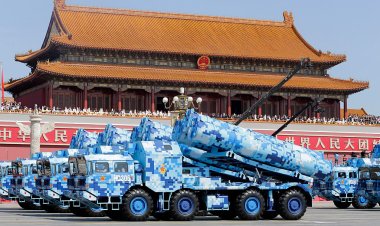
This is not a South Asian anomaly. In China, minority oppression is framed in terms of stability and counterterrorism. Diplomatically, this manifests as hostility to rights-based standards and a preference for transactional partnerships. The message is clear: internal order is not negotiable, and outward involvement must respect that priority. This is not an adverb of the situation
The persecution of the Rohingya in Myanmar not only caused a humanitarian disaster, but it also changed the country's relationships with other countries. After that, there were sanctions, isolation, and a reliance on a small group of partners. Internal insecurity greatly restricted diplomatic options. Even in parts of Europe where minority persecution is not often violent, worries about immigration and identity have made borders stronger, made it harder for regions to work together, and changed how diplomats talk to each other. The impulse is familiar, but the method is more subtle.
How Suppression Travels into Diplomacy
States that oppress minorities tend to use diplomacy defensively. They value control over reputation and insulation over influence. International participation becomes reactive, addressing criticism rather than driving outcomes.
There is also a credibility cost. Governments that demand respect overseas but deny dignity at home struggle to maintain moral authority. They gradually rely less on persuasion and more on leverage, alliances of convenience, or economic negotiation.
Most critically, insecurity reduces flexibility. When identity politics becomes vital to home legitimacy, compromising abroad appears risky. Diplomacy becomes performative, serving to comfort domestic audiences rather than to resolve external issues.
Why The Cycle Continues
The cycle persists because it is effective—at least temporarily. Minority suppression provides clarity during uncertain times. It streamlines governance, channels frustration, and instills a sense of control. Diplomatically, it enables governments to portray criticism as hostility and solidarity as allegiance.
However, the cost accumulates. Social trust erodes. International space is shrinking. Insecurity grows rather than goes.
The End
Minority repression does not stem from ineffective governance, nor is it confined to a specific region or faith. This is a common reaction from insecure states, and it has clear effects on diplomacy.
How a country treats its minorities reveals how it will cooperate, negotiate, and handle pressure from other nations. Inclusion often boosts confidence, while exclusion fosters defensiveness.
Minority rights are more than just a moral issue in the end. They are planned. Countries that can't handle diversity at home don't do well on the world stage very often. The ultimate link between minority repression and diplomacy is not philosophy, religion, or culture, but trust—or lack of it. States that are sure of their political legitimacy, strong institutions, and social cohesion don't have to police identity as much. They can handle pluralism because diversity doesn't put their lives at risk. On the other hand, insecure states project their fears onto other people. They are careful when they are at home and careful when they are abroad.
This will have effects that last a long time. You can't separate diplomatic credibility. A state that has trouble giving some of its own people basic rights and dignity finds it harder and harder to be a leader, a moral authority, or a normative influence on the world stage. Even when these kinds of governments have a lot of money or soldiers, their diplomacy is limited and reactive, and they are more concerned with damage control than with coming up with new ideas.
Disclaimer: This paper is the author's individual scholastic contribution and does not necessarily reflect the organization's viewpoint.
Anusreeta Dutta is a columnist and climate researcher with experience in political analysis, ESG research, and energy policy.