Report : Iran at War: Reshaping Power, Alliances, and Conflict in the Middle East
 usanasfoundation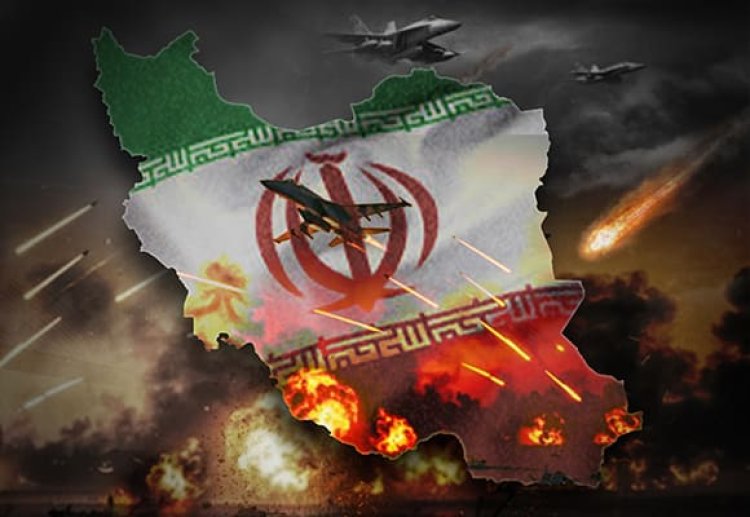
Usanas Foundation organised a panel discussion titled “Iran at War: Reshaping Power, Alliances, and Conflict in the Middle East”.
Speakers:-
Amb. Sanjay Bhattacharyya - Professor, O.P Jindal Global University, Former Amb to Switzerland, Turkey, Egypt, Secretary, Ministry of External Affairs
Emad Kiyaei - Director, Middle East Treaty Organization (METO)
Burzine Waghmar - Senior Fellow, Usanas Foundation, Centre for Iranian Studies, SOAS; University of London
Dr. Abhinav Pandya - Founder and CEO, Usanas Foundation
The discussion highlighted the ongoing Iran–US–Israel confrontation as a decisive geopolitical turning point rather than a limited regional conflict. The panel collectively emphasizes that the Middle East is no longer on the brink of war—it is already undergoing a profound transformation driven by military escalation, ideological rivalry, and shifting power balances.
A central theme emerging from the discussion is that this conflict is not merely bilateral between Iran and Israel (backed by the United States), but rather a multi-layered struggle with regional and global implications. Iran’s response strategy is characterized by asymmetric warfare, where instead of direct large-scale confrontation, it seeks to expand the costs of war beyond its borders.
The panellist’s debate whether this is a "war of choice" or "necessity," with speakers highlighting missed diplomatic opportunities, such as negotiations facilitated by Oman in Geneva. There is a consensus that the situation has opened a "Pandora's box" of humanitarian crisis and regional instability. The discussion touches on the role of the IRGC (Islamic Revolutionary Guard Corps), described as a "state within a state,"), and its influence on both Iranian domestic policy and its network of regional proxies. Another important dimension discussed is the internal political impact within Iran. Prior to the war, the country was experiencing significant domestic unrest, with widespread protests against the regime. However, the onset of war has dramatically altered this dynamic. External military intervention has suppressed internal dissent by shifting public sentiment toward national defence and survival.
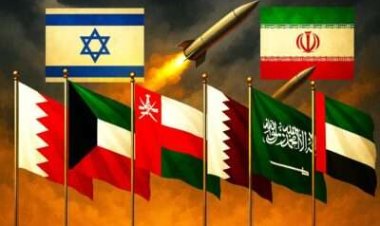
The war is also reshaping regional alignments in complex ways. Traditional alliances are becoming more fluid and transactional, with Gulf states reassessing their security strategies. While these countries have historically relied on the United States for security guarantees, recent developments have exposed the limitations of external protection. At the same time, there is skepticism about the ability or willingness of alternative powers such as China or Russia to fill this role. As a result, there is a growing recognition that long-term stability in the region cannot be outsourced and must instead be built through regional cooperation. The idea of an “Islamic NATO” is largely dismissed, with experts arguing that competing leadership ambitions among countries like Saudi Arabia, Turkey, and Iran make such a unified structure unlikely
While there is deep concern over the collapse of deterrence and the potential for a broader multi-front war, the speakers emphasize the need for a negotiated regional security apparatus. Emad Kiyaei specifically advocates for a forum to address weapons of mass destruction and regional security concerns. The panelists reflect on India's careful balancing act between civilizational ties with Iran and its strategic relationships with Israel and the US, as well as concerns about the potential spillover of radicalization into South Asia.
Ultimately, the panel converges on the conclusion that there is no viable military solution to the conflict. Continued escalation risks broader regional war, economic instability, and long-term societal damage. While ceasefires may provide temporary relief, they are insufficient without deeper structural solutions. Iran, in particular, is portrayed as seeking not just a ceasefire but guarantees against future aggression, reflecting a broader demand for security assurances. The discussion emphasizes the urgent need for a comprehensive regional security framework that includes all stakeholders and addresses interconnected conflicts across the Middle East, from Palestine to Yemen and Syria. Without such an inclusive approach, cycles of violence and retaliation are likely to persist.
In essence, the war represents a critical juncture that is redefining power, alliances, and conflict in the Middle East. It has strengthened hardline actors, weakened diplomatic mechanisms, and exposed the limitations of military force as a tool for political change. At the same time, it has created an opportunity—albeit a difficult one—for rethinking regional security and cooperation. The future trajectory of the Middle East will depend not on battlefield outcomes, but on whether political leadership can shift from confrontation to negotiation and from unilateral actions to collective solutions.
Major Takeaways
- The conflict is not a limited war; it is a systemic geopolitical shift reshaping the Middle East
- The situation underscores a significant failure in diplomatic efforts, despite the possibility that negotiations could have been conducted prior to the escalation.
- The US–Israel approach relies on military coercion and deterrence, but with limited long-term success
- Expectation of quick regime collapse in Iran was flawed
- Assumption that military strikes can trigger internal revolt has proven incorrect
- Leadership assassinations and strikes have strengthened hardliners, not weakened the system
- IRGC is emerging as a dominant power center (state within a state)
- External intervention has undermined domestic opposition movements
- Middle East alliances are becoming fluid, transactional, and unstable
- Gulf states are rethinking reliance on the US for security
- Idea of an “Islamic NATO” is unrealistic due to competing interests
- Growing need for a regional security framework instead of external dependency
War is triggering energy shocks, causing inflation and food insecurity chains
- Countries like India and Southeast Asia face indirect economic and strategic consequences
- Conflict shows erosion of global norms and institutions
- No side can achieve a decisive military victory
- Continued conflict will destabilize the entire region further
- Ceasefire alone is not sufficient
- Iran seeks security guarantees, not temporary pauses
- Only viable solution:
- Negotiated settlement
- Inclusive regional security architecture
- Addressing interconnected conflicts (Palestine, Yemen, Syria)