The ceasefire will only entrench the Middle East crisis
 usanasfoundation
Analysis
By Dr Abhinav Pandya
After forty days of war, the US, Israel, and Iran agreed to a China-Pakistan-mediated ceasefire on April 8, 2026, bringing a temporary respite from the bloodshed and destruction. Following President Trump’s threats to take Iran back to the Stone Age, all expectations of a thaw were dashed to the ground; however, it came as more of a surprise. The ceasefire has been hailed by the global community as a breakthrough, heralding peace in the region. However, a careful analysis of the underlying motives, actors, and emerging security dynamics in the Middle East suggests that the abrupt and ambiguous ceasefire is unlikely to last long, and even if it does, the region will be left more divided, destabilised, polarised, and vulnerable.
First and foremost, the US and Israel have undoubtedly inflicted massive destruction on Iran’s military, nuclear, power, and civilian infrastructural assets. Though the Islamic regime and its sympathisers showed tremendous resilience, sustained the war and severe retaliation for over a month, and refused to capitulate, the devastation in material and economic terms is a harsh truth that can hardly be ignored. In all likelihood, it will take years for Iran to return to its pre-war levels of economic, technological, and military strength.
Scholars such as Robert Pape suggest that Iran will emerge as a fourth centre of power after the US, China, and Russia. However, such ideas are far-fetched. Iran has not achieved a decisive victory in this war in terms of territorial or economic gains, though this was never Tehran’s stated goal, as it remained on the defensive. At most, it has foiled the adversaries’ goals of regime change; however, that too, only partially, as the US-Israeli forces eliminated a major segment of its tier-one and tier-two political and military leadership. Also, Iran’s much-touted victory comes at an enormous cost, which almost brought Iran to the verge of collapse. The oft-quoted examples from Iranian history, pitting Tehran as an invincible civilisational giant against the West, hardly add anything concrete to Iran’s gains or America’s losses, beyond creating a misleading narrative.
On the other hand, the combined might of the US and Israel has failed to dislodge the regime, one of the main stated objectives of the two. As regards Tehran’s nuclear programme, even though it stands severely damaged and reversed, Iran’s stockpile of 460 kilograms of enriched uranium remains beyond the reach of the US and Israel. Secondly, Tehran’s missile programme, which turned out to be its real deterrence, has suffered huge losses; however, Iran still maintains technological capability and a massive stockpile of short-range and long-range missiles.
Reportedly, Iran still has the capacity to fire 20 to 30 missiles every day for a month. Having failed in achieving most of its strategic objectives, the US’s and Israel’s gains are mostly tactical. Further, the US and Israel’s failure to capture Kharg Island, the main artery of Iran’s oil supplies, going back on the idea of ground incursion on account of Iran’s robust defence, retaliation and tough stand and subsequent ceasefire agreement to the ceasefire have indeed made a significant dent in the US’ image, stature and credibility in the Middle East.
This war adds momentum to the long process of the US’ decline in the region following its previous botched-up regime-changing interventions, leading to territorial fractures, chaos, and political instability. The large segments of Arab publics and Muslims in non-Arab countries view the US and Israeli invasion as an imperial Western project and an attack on Islam. In South Asia, Muslims, Sunnis, and Shias alike have sympathised with Iran. The Arab autocrats and kings, primarily driven by the concerns of their regimes’ survival amidst fears of a widespread Arab Spring-style domestic Islamist upheaval, are also highly sceptical of the US’s capability to continue the mantle of net security provider in the region.
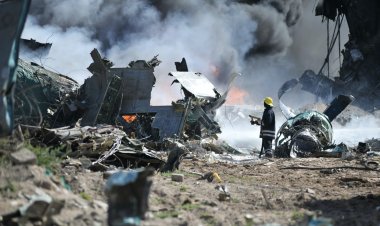
Having suffered the massive devastation from Iranian missiles and drones smashing their airports, hotels, corporate offices, US military bases, power plants, and oil infrastructure, despite huge American military and naval bases, equipped with state-of-the-art weaponry and defence systems, the Arab states are uneasy and faced with geopolitical uncertainties. Unless the regime is uprooted, the Arab states will be in a perpetual fear of Iranian missiles and drones bombing their industrial and infrastructural assets, foiling their grand ambitions to diversify their economic portfolios.
However, despite the scepticism, the Arab states are left with very few geostrategic choices given that the huge void of distrust, mutual suspicion and animosity has only deepened and become critical because of this recent war. In my informal interviews with eminent Arab interlocutors, they informed me that the looming threat of Iranian missiles and bombs has become a perpetual factor in their national security calculus. Either they start building indigenous defence capabilities, including a technologically advanced military system with standing armies, or they pursue appeasement, ie, accommodating Tehran’s concerns through Chinese, Russian, and Pakistani backchannels.
The first option, again, requires massive American support, which will increase their dependence on Washington. Further, in the military domain, they have realised that despite the growing Chinese and Russian influence in the region, they cannot replace the US as net security providers given their different strategic approaches, technological and resource limitations, and other geopolitical engagements. Furthermore, the Arab states are least likely to trust China and Russia because of their historical proximity to the Iranian regime. In the recent war, Beijing and Moscow reportedly provided crucial intelligence support to Tehran. That said, importing weapons from China or Russia can likely compromise national security. Besides, China’s and Russia’s long-term strategic goal of a multipolar world order inevitably pits them against the US and its allies and with the enemies of the US, such as Iran. As regards the second option, the Arab pride, deep-rooted historical and sectarian rivalries, and mutual distrust emanating from the security dilemma will likely act as major roadblocks in pursuing appeasement and accommodation with Iran.
Nevertheless, the US strategic debacle has, by default, widened Moscow and Beijing’s gateways to the Middle East. The Gulf states may find it difficult to trust China in the military domain; however, in the economic, tech and trade domains, they will likely diversify their portfolios in Beijing’s favour. Further, China and its client state, Pakistan, have played an instrumental role in mediating the ceasefire, which has given a major fillip to Beijing’s expanding strategic footprint in the region, indeed a major cause of concern for the US.
Iran’s Islamist regime has always nurtured robust ties with Sunni and Shia terrorist and Islamist organisations in the region and beyond, exporting its extremist and revolutionary ideology. Islamist forces in the region and beyond will project this ceasefire as Iran’s victory, even though a symbolic one, against the Western military might, providing a major material and morale boost to global jihadist entities. In the past, the 1979 Iranian revolution and, more recently, the Taliban’s return and the rise of Al-Sharaa, a former IS terrorist in Syria, have inspired jihadist organisations across the globe, resulting in a spike in their activity in the Middle East and other theatres. The much-weakened post-war Iranian regime, though a much harder and more fanatic version of the earlier one, will likely use terrorist proxies to stage attacks on the US and Israeli assets in the Middle East and the US mainland, leveraging its asymmetric advantage.
Additionally, the Iranian regime, emboldened by its Hormuz trump card, will use Houthis to block Bab-al-Mandeb, another chokepoint, to blackmail the global economies into paying shipping taxes. Besides, a weakened Iranian regime will open the pathways for Turkey to emerge as a leading power in the Middle East. Islamist leanings of Turkey and its partners like Qatar and Pakistan are well-known. Such an outcome will make Israel’s situation more precarious.
Finally, during this war, Tehran has found its most critical deterrent: the Strait of Hormuz, which has the potential to cause massive economic disruption, as 20 per cent of global oil and gas supplies pass through it. The Iranian regime is already insisting on comprehensive control over Hormuz and the right to levy taxes to compensate for its war damages. This will not end here. Having realised the potential of blocking Hormuz to unleash global economic and trade upheaval, Tehran will likely use this repeatedly as a bargaining chip in the future, in addition to targeting shipping in the waters of Bab-al-Mandeb, the Persian Gulf, the Red Sea and the Sea of Oman, unless it is rendered incapable of doing so through firm military action. With the Hormuz crisis, the Iranian regime has become a global security-cum-economic nightmare, a critical actor in the great power rivalries, to be used by revanchist powers like China and Russia to hurt Western strategic interests.
As of this writing, the first round of Pakistan-mediated peace talks has collapsed in Islamabad. Israel has continued its bombing in Lebanon, refusing to extend the ceasefire there. The Iranian leadership’s insistence on retaining the uranium enrichment rights and opening Hormuz on the condition of a ceasefire on the Lebanese border appears more like blackmail tactics, which it will likely continue in the future, either directly or through its proxies. Soon, there will be a second round of talks. However, its success remains doubtful.
Giving this regime a chance of survival and concessions to Iran in lifting sanctions or unfreezing its forex reserves must be strictly conditional upon its compliance with the key American demands, i.e., an end to the nuclear programme, reducing its missile development programmes and severing ties with proxies. However, the Islamist regime is driven more by religious extremism in its hatred for Israel and the US than by any rational and well-intentioned thought process to bring peace and is unlikely to comply with the abovementioned demands. Instead, it will use the weakening of American pressure to rebuild its military, nuclear capabilities, and proxies.
Adding further to these complexities are the interests of challenging adversaries like China and Russia in bringing the US downfall. Hence, this ceasefire is unlikely to provide a lasting and stable peace. It leaves the US and Israel with unfinished business and the Middle East, divided and destabilised. In such a scenario, the US entanglements in the Middle East are likely to intensify, becoming more complex and challenging. Hence, the world must be prepared for more action and bloodshed in the region rather than a US withdrawal.
Disclaimer: This paper is the author's individual scholastic contribution and does not necessarily reflect the organization's viewpoint. The article was first published in Firspost.