De-Escalation Through Democracy: Kurdish Aspirations in Iran
 usanasfoundation
Analysis
By Nilüfer Koç, Kurdistan National Congress (KNK) Executive Council member
Since the end of February, the spiral of violence in West Asia has reached a new and alarming level. The consequences of the war waged by the US and Israel against Iran are being felt worldwide, particularly in South and Southeast Asia. Consequently, the whole world is closely following developments in Iran and hoping for a swift end to the war. However, current developments point to a prolonged period of uncertainty and instability in Iran.
For the Kurds, 15 million of whom live in Iran alone, the recent military escalation represents not only an immediate threat to life. Rather, in recent weeks, the international community has once again been able to observe that the Kurdish population in Iran, too, constitutes a capable, responsible and well-organized force. Repeated statements by US President Trump on the role of the Kurds were immediately seized upon by them to emphasize, with one voice, their commitment to democracy, peace and unity in Iran.
The Kurds are well aware that this war was not started by them or by other sections of Iranian society. They are equally aware of the danger that the war might not end in the interests of the people of Iran. For years, the people have been calling for democracy, women’s freedom, economic justice and a peaceful foreign policy for their country. Against their will, the Kurds have been exposed to enormous dangers as a result of the war in Iran. In addition to the massive damage caused to Kurdish towns by Israeli and US air strikes, the Iranian regime has significantly increased the pressure on the local population. Neither a continuation of the war nor an even more fundamentalist and brutal regime is in the interests of the peoples of Iran. In this context, it is important to understand how the Kurds are positioning themselves in the face of the dangers and opportunities presented by the escalation in Iran, what relations they maintain with other sections of Iranian society, and how they envisage the country’s future beyond war and an Islamist regime.
The war in Iran takes place against the backdrop of the reordering of West Asia
The US is waging a comprehensive struggle to maintain its global leadership. US policy is directed in particular against China’s growing ambitions. Russia’s expansionist policy has been severely curtailed by the war in Ukraine. In a similar vein, the war in Iran is now intended to limit China’s growing influence. Iran has thus become a focal point and a decisive factor in the struggle for the global balance of power and the accompanying reordering of West Asia.
In today’s age of hybrid warfare, the conflict with Iran appears to be increasingly turning into a protracted war of attrition, waged using a wide range of military, economic or political means. The conflict is not only crucial to the future global standing of the US, but it will also have a decisive impact on the future of Asia. In this context, Russia and China regard Iran’s survival as vital to their own interests.
For West Asia, the war against Iran means that the regional order established around 100 years ago is becoming increasingly irrelevant. The UK – one of the main architects of the old status quo – continues to insist on the old order. On 23 April, the UK and Turkey signed a new framework agreement on a strategic partnership, a move that can certainly be understood in the context of London’s ambitions to maintain the status quo. However, the US and its strategic ally Israel regard the old status quo as an obstacle to their own interests. Accordingly, they have for some time been positioning themselves as forces working very actively towards a reordering of West Asia.
Regional actors will increasingly take a stand
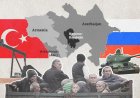
In recent weeks, Turkey has made clear its readiness to intervene militarily should the conflict in Iran escalate further. It would very likely portray such a step as a necessary measure to stem refugee flows or to prevent further Kurdish gains. Such justifications would resemble Turkey’s policy of the so-called ‘buffer zone’ in northern Syria. Ankara has repeatedly demonstrated a willingness to act unilaterally in such contexts. A destabilized Iran would offer Turkey a tempting strategic opportunity. Yet, such a development would significantly upset the regional balance of power. Israel, which has little interest in an expansion of Turkish influence in the region, would take little pleasure in such developments.
Encouraged by Ankara, Azerbaijan could also attempt to mobilize the Iranian Azeris against Kurdish aspirations. This represents a particularly dangerous source of conflict. Kurds and Azeris live in close geographical proximity in north-western Iran and in some areas even share towns and villages. There is certainly a history of ethnic tensions between the two communities, which external actors could exploit.
The Kurdistan Region of Iraq (KRI), where Iranian Kurdish parties have extensive structures, could also come under increasing pressure. The KRI maintains relations with Tehran whilst simultaneously hosting precisely those Kurdish opposition parties that Iran regards as an existential threat. In recent statements, the KRI government has made it clear that it will not tolerate any threat to the territorial integrity of neighbouring states by actors within the KRI. Nevertheless, since the end of February, Iran and its allied militias in Iraq have carried out around 700 attacks against both US targets and bases of Kurdish parties in the KRI. These attacks have continued even since the ceasefire was announced. More than 20 people, including Kurdish Peshmerga fighters from Iran, have been killed and more than one hundred injured.
The ‘Kurdish question’ is also an issue in Iran
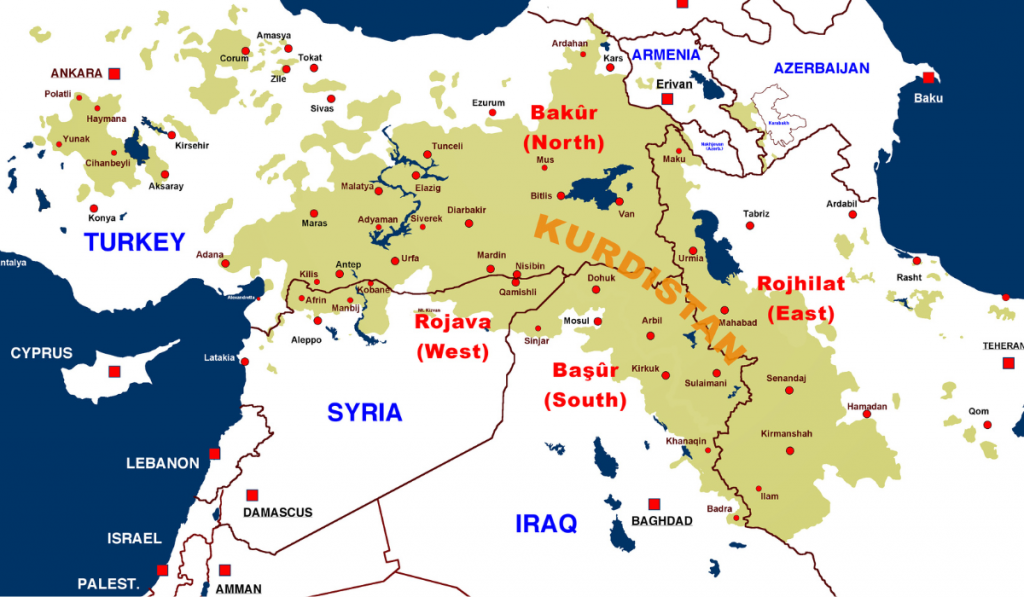
The collapse of the old regional status quo is bringing the Kurdish reality into ever sharper focus. The Kurds constitute the third-largest ethnic group in Iran after the Persians and the Azerbaijani Turks. The Kurdish question in Iran dates back centuries. Since the 17th century, Iran controls the second-largest part of Kurdistan, whilst the Ottoman Empire and later Turkey occupied the largest part of Kurdistan. The western provinces of Iran with a Kurdish majority – West Azerbaijan, Kurdistan, Kermanshah and Ilam – lie on the border with Iraq. They are widely treated as political and economic backwaters and, despite their abundant natural resources, remain among the poorest regions in Iran.
Discrimination against the predominantly Sunni Kurds in Shi’ite Iran is very complex, as the religious dimension comes into play alongside ethnic identity. The Kurds have often been more actively involved in resistance against the regime than other groups in the country. The Iranian state’s motives for oppressing the Kurds are therefore based as much on ‘security concerns’ as on other factors.
The oppression against the Kurds in modern Iran began under Reza Shah Pahlavi. He pursued a comprehensive policy aimed at forcibly homogenizing the country through violent centralization and the assimilation of non-Persian communities. In doing so, the Pahlavi era cemented a policy narrowly focused on security concerns, which viewed the Kurds as an inherent threat to the Iranian state. The Islamic Republic adopted this policy after 1979 and intensified it even further. In his first speech in Qom in 1979, Ayatollah Ruhollah Khomeini described Kurdish leaders as “the evil of the earth” and later that same year publicly declared jihad against the entire Kurdish population. The Kurdish parties were, accordingly, the first to reject the new order. Consequently, they boycotted the 1979 referendum on the establishment of an Islamic state.
The alliance of Kurdish parties in Iran defends national interests
In the wake of the upheavals in West Asia that have been ongoing for more than 35 years, the Kurds have learned important lessons. This has enabled them to stand firm in their commitment to democratic values whilst at the same time responding flexibly to regional developments. A key lesson from events, particularly in Syria and Iraq, is the central importance of national unity among the Kurdish population. The political parties in the various parts of Kurdistan bear a special responsibility in this regard.
The sense of national unity is deeply felt among the approximately 60 million Kurds living in the four parts of Kurdistan and in the diaspora. Our people’s demands on the political parties to ensure that the national unity already achieved at a societal level is also reflected politically are correspondingly urgent. This applies in particular to the Kurdish population in East Kurdistan/North-West Iran. The deep cultural awareness of the Kurds living there and the daily challenges posed by political developments in the country have made the call for national unity among all Kurdish parties in Iran even louder in recent years.
It was therefore significant that on 22 February 2026, five Kurdish parties announced the formation of the ‘Alliance of Political Forces of Iranian Kurdistan’. Shortly afterwards, the number of parties increased to six. These include the most important political forces in Eastern Kurdistan. The Kurdistan Democratic Party of Iran (KDPI) is one of the oldest Kurdish political forces in Iran and, having been founded in 1945, can draw on significant experience and organizational structures. The Komala of the Toilers of Kurdistan dates back to the period following the 1979 revolution and, like the KDPI, also has armed forces. The Kurdistan Free Life Party (PJAK) has been one of the newer parties in Eastern Kurdistan since its founding in 2004. However, due to its organizational strength across large parts of Eastern Kurdistan and the high number of its self-defence forces, it is widely regarded as the strongest force among the Kurdish parties in Iran. The Kurdistan Freedom Party (PAK), the Khabat Organization of Iranian Kurdistan and the Komala Party of Iranian Kurdistan are also part of the newly formed alliance. Its formation is the result of increased cooperation among Kurdish parties since the ‘Jin, Jiyan, Azadî’ (Women, Life, Freedom) protests in 2022/23.
The close cooperation between the Kurdish parties has enabled the Kurds in Iran to take a united stance on the recent war in the country. The primary concern is the protection of our people’s very survival. This is because the air strikes, as well as the brutal repression by the Iranian regime in Kurdish cities such as Urmia, Sine and Kermanshan, have made life extremely difficult for our people living there. Since the start of the war, the Kurdish parties have succeeded in consistently taking a united stand against attacks on the headquarters of Kurdish parties in Iraq, the execution of political prisoners in Iran, and the deployment of thousands of Iranian security forces in schools, hospitals and mosques in Kurdish cities. In particular, through their well-organized public relations work, the members of the alliance have enabled numerous international journalists to conduct interviews and gain direct access to the region. This was particularly important in light of the weeks-long internet shutdown, which makes it very difficult to obtain comprehensive information from Iran. At the same time, all parties have been able to utilize the vacuum in Eastern Kurdistan themselves to expand their social and political structures within the population. All of this has played a decisive role in enabling the Kurds in Iran to protect themselves from the enormous dangers of war, whilst also making use of the opportunities that have arisen.
The Kurds have close ties with the diverse opposition in Iran
The Kurdish population of Iran understands itself as an important part of the country’s society. Accordingly, it pursues an inclusive policy that focuses on close ties with all religious and ethnic groups, but particularly with the country’s women and young people. During the ‘Jin, Jiyan, Azadî’ protests, all sections of society witnessed the power that arises from strong social networking across ethnic and religious boundaries. The women of Iran played a leading role in this. They succeeded in channelling their anger over the murder of the young Kurdish woman Jîna Amînî by the so-called morality police into nationwide democratic protests. This demonstrated the extent to which the link between women’s freedom, democracy and freedom is supported by large sections of Iran’s ethnic and religious communities.
In response to the war launched by the US and Israel at the end of February, Kurdish political parties and civil society groups strengthened their ties with other social actors. In doing so, they continued the political strategy they have been pursuing for decades. Thus, they also responded to attempts by nationalist circles in Iran to create divisions within society and isolate the Kurdish population.
The Iran Freedom Congress, which took place in London at the end of March, provided an important forum for the Iranian opposition. Over the course of two days, more than 250 political representatives, human rights activists, academics, lawyers and women’s activists gathered there to discuss their respective visions for a democratic future for Iran, free from war and internal repression. The strength of the congress lay in the diversity of its participants. Political parties such as the Azerbaijani Democratic Party, the Balochistan People’s Party, the Kurdistan Free Life Party (PJAK), the Democratic Solidarity Party of Al-Ahwaz, the Democratic Party of Iranian Kurdistan (KDPI), the Worker-Communist Party of Iran and the Komala Party of Iranian Kurdistan took part in the discussions. Civil society groups such as the Inclusive Network for Women, Life, Freedom, the Iran Democratic Platform and the Joint Action Group were also present.
The conference in London provided Kurdish political parties and civil society actors with an important opportunity to put forward their specific proposals for the democratization of Iran for discussion and to listen to the proposals of other actors. Key political perspectives, such as the transformation of Iran’s political system into a ‘democratic republic’, the establishment of an inclusive political culture through the ‘democratic integration’ of all sections of society, and the creation of a diverse understanding of citizenship through the concept of a ‘democratic nation’, constituted important proposals put forward by Kurdish representatives. Since the start of the war, the Kurds have thus not only succeeded in deepening existing ties with Iranian civil society, but also in enriching the substantive discussions on the country’s democratic future through their own proposals.
The political approach of the Kurds in Iran follows a comprehensive strategy
Only a small minority of Kurdish parties and members of Kurdish society in Iran continue to advocate separatist solutions. The vast majority of them see themselves as citizens of Iran and are active participants in discussions about the country’s democratic future. The Kurds’ civil, cultural and economic ties with all other sections of Iranian society are also reflected in their political views. Inspired by the Kurds’ quest for cultural recognition and political rights across all parts of Kurdistan, the Kurds of Iran today advocate comprehensive political convictions which they see as a vision for the entire country. These ideas have raised great interest throughout Iran due to their theoretical foundation and their practical implementation in other parts of Kurdistan. The Kurds describe their political strategy as the ‘Third Way’. By this, they mean that they pursue their own policies independently of external powers and the Iranian regime.
To address the significant democratic deficit, the Kurds propose the establishment of a ‘democratic republic’ in Iran. The basis of this idea is not to view the Iranian nation-state in its current form as a superior, sacred and untouchable force that rules society without restriction. Rather, the nation-state is understood as a political structure that must be continually scrutinized and adapted in line with society’s changing needs. Accordingly, the ‘democratic republic’ represents a realignment of nation-state institutions and mentalities, based on a comprehensive agreement with the country’s social forces. The result is a new (self-)understanding of the nation-state. Instead of presenting itself, as before, as boundless and omnipotent, the nation-state, as a ‘democratic republic’, assumes a more realistic, functional and legitimate role than previously. Crucial to such a fundamental change are the creation of space for democratic politics and transparent legal mechanisms. The Kurds of Iran, therefore, hope that the ‘democratic republic’ will lead to the nation-state and society in Iran establishing a more constructive and stable relationship with one another.
When it comes to the future relationship between state and civil society actors in Iran, the country’s Kurdish population proposes ‘democratic integration’ as a political principle. The comprehensive integration of state and society leads to the establishment of a strictly rule-based, transparent and predictable nation-state, whilst civil society institutions are given scope to play a stronger role. This does not mean the assimilation of one part into the other, but rather their unification whilst simultaneously recognizing existing differences. In concrete terms, this entails the recognition of the country’s diverse ethnic and religious identities—such as the Kurdish identity—through legal and constitutional provisions, alongside the development of institutions of social self-administration across all spheres of life. In the course of the process of ‘democratic integration’, the nation-state and society influence, change and shape one another. This gives rise to a new relationship between the two sides, a new legal framework for it, and new responsibilities for both sides. As a result, social forces are given the place they deserve, whilst the nation-state in Iran assumes the role that it is realistically capable of fulfilling.
Another key proposal involves a new understanding of citizenship based on the concept of the ‘democratic nation’. In contrast to the hitherto very narrow, homogeneous and exclusive definition of Iranian citizenship, this concept allows for the cultural, religious, ethnic, regional, gender-based and political diversity of society to be recognized and understood as a source of richness. The country’s diversity is thus no longer viewed as a security risk that must be kept under control through omnipresent mechanisms of repression. The recognition of diversity enables the diverse groups within society to breathe freely once more and provides them with the space to exercise their capacity for political participation and decentralized self-administration. To this end, the expansion of democratic institutions and the promotion of a democratic mindset in Iran are of great importance. The aim is to create a stable and sustainable long-term balance between social and nation-state structures, rather than the incorporation of exclusive circles within individual social groups by the state.
Iran has a democratic future
The people of Iran are currently going through very difficult times. And yet, there has been no large-scale exodus so far. The country’s Kurds, Baluchis, Ahwazis, Persians and Azeris wish to remain in their homeland. For they know that their country is capable of offering its people peace, democracy and prosperity. For this to happen, it will be imperative that the war ends and democratic changes take place in Iran. The nationwide protest movements of recent years, the prudent policies of Iranian social forces since the start of the war, and the dignified stance of the country’s people clearly demonstrate that the country is ready for this. The Kurdish population of Iran will make a decisive contribution to these changes, thanks to its significant experience and political and organizational strength. For a democratic, united Iran is not only in the interests of the country’s own people, but of the entire region of West Asia, its immediate Asian neighbours and the international community.
Disclaimer: This paper is the author's individual scholastic contribution and does not necessarily reflect the organization's viewpoint.