Mali: A new jihadist caliphate in making
 usanasfoundation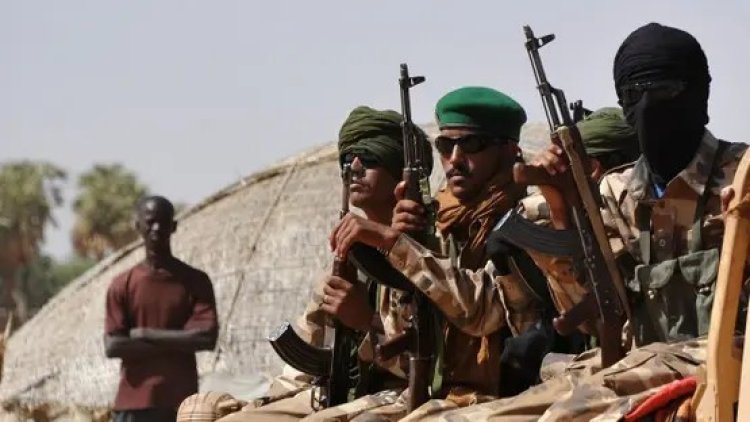
Analysis
By Dr. Abhinav Pandya
After an array of Jihadist groups led by the Al Qaeda affiliate in Sub-Saharan Africa, Jama’at Nusrat al-Islam wal-Muslimin (JNIM), launched a series of coordinated attacks across Mali in April 2026, the country stands on the verge of becoming the central hub of the Islamic Caliphate in West Africa. The Jihadists have attacked several cities, including Kidal, Gao, Sevare, Kati and the capital city of Bamako. Bamako, with its 3 million people, is under a partial siege, and Segou, 50 miles from the capital city, is under a total blockade.
This ongoing Jihadist upsurge began with the coordinated attacks by JNIM and the Azawad Liberation Front (FLA), an ethnic separatist movement of Northern Mali, seeking to overthrow the General Assimi Goita regime, which seized power in a military coup in 2020, after more than two decades of weak, unstable and corrupt democratic governments.
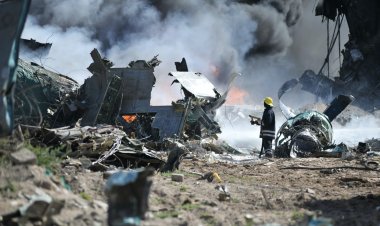
The attacks involved the use of drones and car bombs to obliterate the Kati military base. The JNIM jihadists and rebels killed Mali’s second most powerful man, Defence Minister Sadio Camara, ramming an explosives-laden truck into his official residence. Reportedly, the intelligence chief Modibo Kone was also killed in the violent clashes.
Against the JNIM-Tuareg rebel alliance, the Malian forces are working with the Russian paramilitary group Africa Corps, formerly known as the Wagner mercenaries. Faced with a jihadist onslaught, the Russians fled the northern city of Kidal, now controlled by the Azawad Liberation Front (FLA) rebels. Having succeeded in the North, the Jihadists and rebels have marched towards Central and Southern Mali, seizing important towns and military centres, leaving the government forces in an extremely vulnerable and weak position.
Before the Russians, Mali’s former colonisers, the French, aided the Malian forces in combating jihadist groups and rebels. However, after the 2020 coup, the Goita regime expelled the French, encouraging popular resentment and hatred against former colonisers, and invited Russian mercenaries to assist them against the jihadists.
The institutional and structural weaknesses and shortcomings of the Malian forces are clearly evident in their failings against the Jihadists and dependence on the Western mercenaries, who do not have any long-term strategic interests in saving the state in Mali. Back in 1992, Mali, with its 9 million people and a per capita income of $280, made a swift transition to democracy and remained a sentinel against radical Islamist forces, spreading insurgencies and state disintegration.
However, its success as a democracy depended on Western economic and development aid and support for peacebuilding, which were always lacking. Particularly after the Clinton years, there has been an increasing decline in Western support and rising scepticism about humanitarian and peacebuilding assistance to Africa.
Finally, after US President Donald Trump’s decision to terminate USAID, guided by his perception of Africa as a hub of ‘shit hole’ countries, there has been a near-total end of Western aid. In the lack of stable, functional and vibrant democracies, resulting in deepening poverty and eventually failed states, the region is emerging as the most fertile ground for the expansion of radical Islamist forces and their ideology. Additionally, the great-power geopolitical rivalry is being played out through proxies.
The Goita regime replaced the French with Russian mercenaries, much to the former’s chagrin. However, the embarrassing defeat of the Africa Corps is placating the French, who were slighted by the Goita regime. Nevertheless, these frictions and proxy conflicts are adding more to the complex situation, making the fragile states in the Sahel weaker and more vulnerable.
This time, the situation is grim and dark. Insurgents used ambushes, conventional and unconventional military tactics, kamikaze drones, Vehicle-Borne Improvised Explosive Devices (VBIEDs), RPGs, small arms and light weapons, and artillery. JNIM has evolved in its tactical operations and strategies. From a terror group centred in rural areas, JNIM has evolved, launching complex operations in urban areas. Additionally, it is successfully imposing an economic blockade on the cities by choking off fuel supplies.
Also, the JNIM has learnt its lessons from the HTS’s victory in Syria. Likewise, it has distanced itself from Al Qaeda over the latter’s preference for transnational issues. JNIM is now more focused on the local and regional issues. However, this does not imply that the JNIM has abandoned its larger ambitions. In the view of eminent counterterrorism experts, these attacks are unprecedented and are likely to overthrow Mali’s military junta.
Further, the spread of radical Islamist forces in West Africa is not confined to Mali. With the emerging caliphate, Mali can certainly emerge as its core. However, it is spreading fast in the neighbouring Niger and Burkina Faso, where again the foreign mercenaries, i.e., the French and the Russians, have failed to contain the Jihadist onslaught. Besides, the radical Islamist forces are making rapid and violent inroads in the relatively stable West African democracies of Ghana and Benin and the neighbouring Ivory Coast, known for its economic prosperity. The Islamic State’s Sahel and West Africa provinces are making alarming inroads in the region. JNIM’s success in Mali will embolden and expand the operational space for Jihadist forces. To offset the loss of the Syria-Iraq heartland, IS has a serious focus on the Sahel region.
The newly empowered Juntas, the withdrawal of foreign military powers, and the state’s economic and governance failures have created open, ungoverned spaces for IS to expand its governance, tax collection, and military presence across vast areas. The IS intends to expand in the North, targeting Morocco, Algeria, Tunisia and Libya. The growing IS footprints have a global dimension. In the Sahel region, they are targeting foreign nationals, embassy compounds, aid organisations and their offices, foreign military bases, international airports and foreign-operated mines. IS’ Sahel province-linked cells and operatives have been arrested in Morocco and Spain. ISSP’s massive online network is enabling the radicalisation and operational guidance of the youth in the West by ISSP’s Sahel-based Jihadist operators.
That said, the emerging jihadist hub in the Sahel, with Mali as its epicentre, is not a regional but a global threat. It will be a safe haven for jihadists from across the world, with the strong possibility of foreign fighters coming to this region and getting trained. Currently, the global powers are preoccupied with great-power conflicts and wars. However, they cannot afford to let non-state actors exploit this security vacuum to their advantage. They must invest in the security, stability, governance and peace-building in this region. Their approach should not be ad hoc, centred on short-term capacity building and military exercises, but rather on long-term systemic political reform, peacebuilding and economic upliftment.
Disclaimer: This paper is the author's individual scholastic contribution and does not necessarily reflect the organization's viewpoint. The article was first published in Firstpost.