Trumps's Iran Deal is an Abject Surrender
 usanasfoundation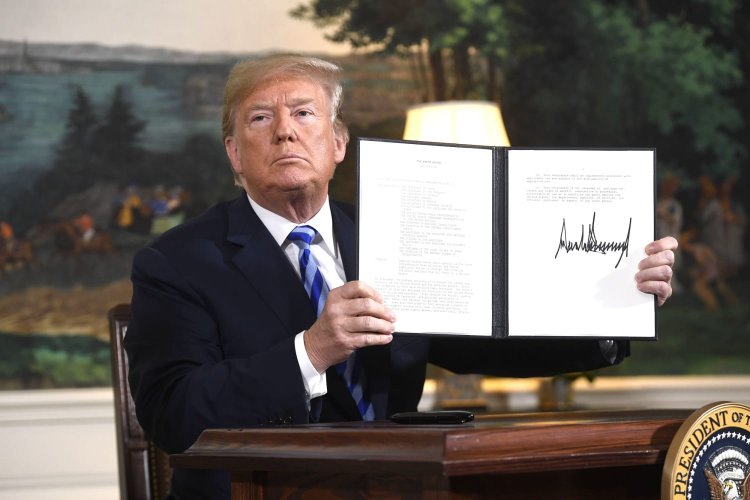
Analysis
By Dr. Abhinav Pandya
In the global foreign policy discourse, the US’ declining power, stature and diplomatic heft became a subject of keen study and research, particularly after the onset of China’s BRI. Despite the growing number of academic voices on the subject, the rhetoric and reality of the US decline, until recently, felt like Chinese propaganda. However, the US’s abject surrender to Tehran in Trump’s Iran deal makes the most convincing argument for the superpower’s decline, which appears to be entering free fall with every passing day. The negotiating parties have agreed to the Islamabad MoU in Burgenstock (Switzerland) as an interim deal, pending its final approval as a comprehensive deal within 60 days. The entire drama at Burgenstock, with the Iranian delegation walking out impatiently and Trump alternating between intimidation and supplication, merely confirms the US’s policy paralysis and waning might.
After the 12-day war ended with a ceasefire in June 2025, Iran appeared weak, fragmented and vulnerable. The Americans claimed to have destroyed its nuclear program. It was the time when the US and Israel could have consolidated their gains through tactful diplomacy and led Iran towards a nuclear deal that offered robust and concrete safeguards against the future development of its nuclear program. However, Jerusalem and Washington, D.C., hoped for the ideal outcome, i.e., regime change at an opportune moment in the near future. On the other side, Tehran, expecting another US-Israel attack, fixed all the gaps in its security architecture, streamlined its internal governance and made preparations for the final showdown. Iran’s massive public protests in January 2026 offered that opportune moment. However, the war that began as a final showdown with the goal of bringing down the Mullah regime, with a massive air invasion and a grassroots revolt by the restive population, has ended in a ceasefire followed by a deal that establishes Iran as a major pole in the Middle East, shatters the US’s exalted status as a global superpower, exposing its unreliability and unpredictability, leaves Israel in a direct face-off with a formidable existential threat and the Arab allies of the US on the horns of dilemma.
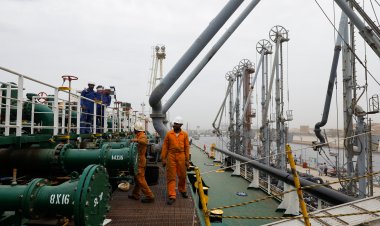
The long-awaited deal offers the US almost nothing, except hollow promises and ambiguous declarations. The deal does not mention anything about Iran’s missile and drone programs, which turned out to be the central pillars of its asymmetric capabilities, wreaking havoc in Arab capitals and the US bases in the Middle East. The deal does not address the issues of Iranian proxies. Instead, the regime has made it a point to include cessation of the offensive operations against Hezbollah on the Lebanon front, which makes it explicitly clear that Tehran has no intention to abandon its proxies. On the nuclear issue, Iran merely repeats its previous pledge not to procure and develop nuclear weapons; however, disposition of the enriched Uranium remains pending till the mutually agreed mechanism is arrived at. Further, Iran offers to open the Hormuz Strait, which it closed and remove the mines that Iranian forces planted. Additionally, Tehran allows the safe and free passage of commercial vessels through the Strait of Hormuz for 60 days, after which it is likely to levy tolls on passing vessels through its Persian Gulf Straits Authority, in complete violation of the freedom of navigation on the global commons, making the region perpetually vulnerable to the whims and fancies of the Mullah regime.
However, in lieu of these flimsy assurances, Tehran, proving its mettle as a tough negotiator, secures concrete gains, including the lifting of the US naval blockade within 30 days, removal of all the US forces in Iran’s proximity within 30 days of the final deal and the termination of all types of sanctions, including the UNSC sanctions and all of the US’ primary and secondary unilateral sanctions. Also, Iran, with its burdened economy facing sanctions for the last 40 years, manages to extract a reconstruction and economic development plan worth 300 billion USD. The draft text of the deal reads, “The mechanism for the implementation of this plan will be finalised as part of a final deal within 60 days. All required licenses, waivers and permissions needed for the relevant financial transactions will be granted by the United States of America.” Further, the US unfreezes Iran’s foreign assets worth USD 24 billion, and that too when the US president claims to have decimated Iran’s military capabilities. Additionally, the US undertakes that “immediately upon the signing of this MOU and until the termination of sanctions, the U.S. Department of the Treasury will issue waivers for the export of Iranian crude oil, petroleum products and derivatives and all associated services, including banking, transactions, insurances, transportation, etc.”
Most importantly, Israel, one of the main warring parties faced with an existential threat from Iran’s nuclear program, is not even a signatory to this deal, bringing forth its divergent views from the US, in the public eye. Further, the way the Iranian delegation is dictating terms to the US delegation and making them wait merely confirms that the US has lost the game, and it is no longer the net security provider in the Middle East. Trump’s embarrassing surrender to Iranian Mullahs has made a deep and long-lasting dent in the US’s credibility, which is certainly going to further erode its diplomatic heft and stature. No wonder the Arab allies are contemplating the possibility of the US’s withdrawal from the Middle East and exploring new partners and regional security frameworks to safeguard against the Iranian missiles.
The fragility of this MoU was evident just two weeks after its signing as major disagreements emerged between the US and Iran, leading to US strikes on Iran’s air defences, radar sites and drone storage facilities on its Qesham island, Sirik and Bandar-e-Langeh, followed by the IRGC’s retaliatory strikes on US military assets in Bahrain and Kuwait. Iran, claiming total control over the Strait of Hormuz for 30 days and citing Article 5 of the MoU, has attacked cargoes that fail to coordinate with it, preferring safer routes closer to Oman’s coastline rather than the designated routes. Besides, Tehran has rejected French demining proposals, calling them an unnecessary provocation. As of writing this piece, the US delegation led by Steve Whitcoff and the Iranian delegation led by Esmail Baghaei have arrived in Qatar for further diplomatic engagement as part of the ongoing 60-day period. However, both sides have denied any direct bilateral talks. The Iranian delegation has reiterated that the Doha engagement is strictly about the unfreezing of Iran’s foreign assets worth USD 6 billion out of the total USD 12 billion, held under the Qatari oversight. However, the Americans have denied releasing any foreign assets. On the Israeli-Lebanon front, the framework peace agreement has met a similar fate. Several factions have protested against the agreement in Beirut, and Hezbollah has rejected surrendering arms, resulting in cross-border violations and Israeli strikes in Lebanese territory.
Hence, even before the substantial negotiations begin, the deadlock continues over the release of Iran’s foreign assets, sanctions on the Iranian oil exports, shipping through Hormuz, US blockade of Iranian ports and the Israel-Lebanon hostilities. In all likelihood, the proposed deal will not see the light of day after the 60-day period is over. Most likely, it will see another extension with the 2nd round of engagement. In the meantime, the region will be the theatre for sporadic, low-intensity escalations, which are likely to continue after the extension of the 60-day period.
Disclaimer: This paper is the author's individual scholastic contribution and does not necessarily reflect the organization's viewpoint. The article was first published in Firstpost.