Iran in Syria: The Architecture of Influence and Its Collapse
 usanasfoundation
Analysis
By Preeti Khenta
As the Iran War intensifies, its ramifications are being felt across the region. Although Syria is not directly involved in the fighting, it, like many other West Asian countries, is also affected by the ensuing consequences. Syria is not sitting idly by but has adopted a policy of active neutrality, which entails avoiding direct involvement in the fighting while pursuing diplomatic and security initiatives, which allows Syria to exploit the regional crisis to consolidate its standing and reposition itself in the region.
Historically, modern Syria's strong ties with Iran are rooted in Shia connections and the complexities of geopolitical realities. During the Assad regime, Syria acted as a primary link within the Iranian-led Axis of Resistance, serving as a logistical and territorial hub for the transfer of weapons to Lebanon, the deployment of Iranian forces, and Hezbollah activities in the region. However, post-Assad Syria under President al-Sharaa has made a clear shift away from Iran. Iran was forced to evacuate its forces from Syria following the collapse of the Assad regime, which has been perceived as a potential threat to the Syrian State. The al-Sharaa government has been seizing Hezbollah assets and its weapons. Reportedly, Syria is helping the US and Israeli efforts to weaken Iran. Even during the 12-day war in June 2025 with Iran, Syria acted as a strategic corridor, giving aerial freedom of action to the US and Israel over its territory, primarily to intercept the Iranian missiles and drones. In the current war, Syria continues to coordinate and cooperate with Israel and the USA, given its close relations with the latter.
Prior to December 2024, Iranian influence in Syria had three primary forms: The first was military, where the IRGC officers and Hezbollah officers played a crucial role in establishing the Local Defence Forces (LDF) composed of Syrian fighters, as well as IRGC-affiliated armed Shia groups from Iraq, Pakistan and Afghanistan. The second form of influence was cultural: the IRGC actively promoted ideological support for the axis of resistance through the Aleppo Defenders Legion, which produced literature, cultural events, and scholarships to study in Iran. The third was religious by targeting the Twelver Shia community and encouraging them to follow Iran’s supreme leader, Ali Khamenei, as their marja- a religious authority who dispenses guidance. These layers of influence often overlapped. For instance, members of the Twelver Shia community sometimes also joined LDF units. While all these LDF units are Shia, many of them were Sunni and built their units around Sunni tribes. Notably, members of the Bekara tribe, for example, formed the Baqir Brigade. The Berri clan in Aleppo created the Martyr Ali Zayn al-Abidin Berri Brigade. As the Assad regime crumbled, these Sunni groups either turned against Iran or ceased their operations altogether.
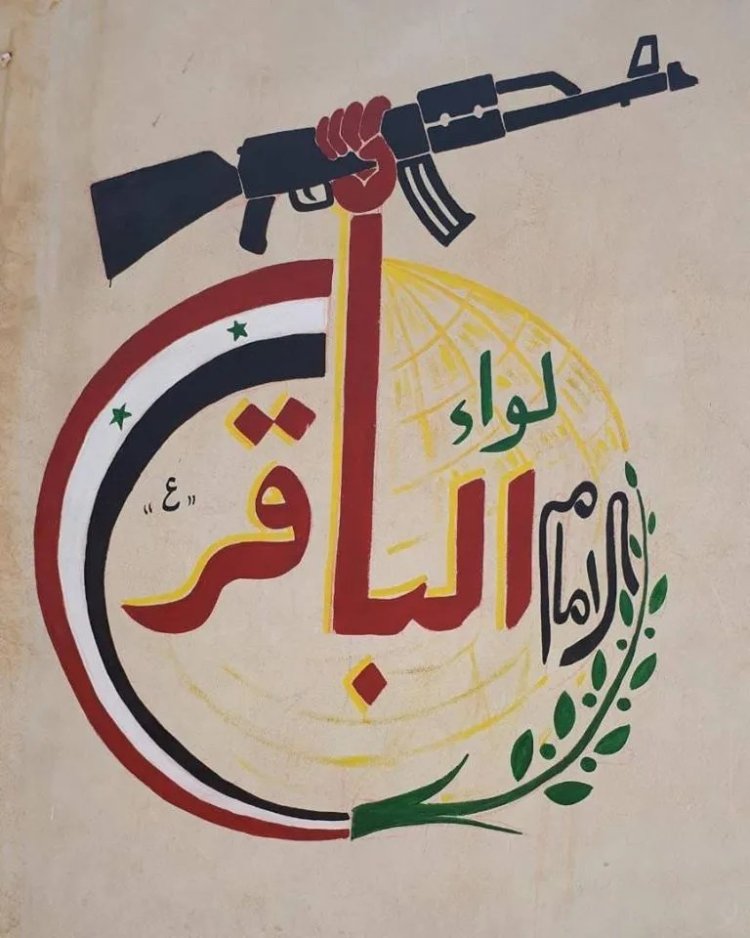
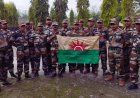
An emblem of Liwa al-Baqir, evoking Islamic Revolutionary Guard Corps and Hezbollah imagery.
Since the start of the war, al-Sharaa has been pursuing a wide range of diplomatic efforts, condemning the Iranian aggression, and emphasizing the implications of the war as a threat to regional stability and representing Syria as a constructive and valuable actor. It is also making diplomatic outreach with Saudi Arabia, the UAE, Qatar, Lebanon, Jordan, and Azerbaijan to demonstrate itself as a legitimate leader and to show that Syria is a strategic asset to these countries. As the Strait of Hormuz is closed by Iran and threats to shipping routes in the Red Sea increase, Syria becomes an alternative overland corridor connecting the Gulf to the Mediterranean.
The religious landscape is increasingly complex as the local Twelever Shia clerics are currently facing financial difficulties as they are not receiving payments from the Khameini’s office. All the Iranian institutions have been compelled to cease operations, including branches of Iran al- Mustafa University in Sayyida Zaynab and the Shia town of Aleppo province. Additionally, Images of Khamane'i, Qasem Soleimani and Hezbollah symbols have recently been removed from graves and public displays in the martyr cemeteries of Nubl and neighbouring al-Zahra’s.
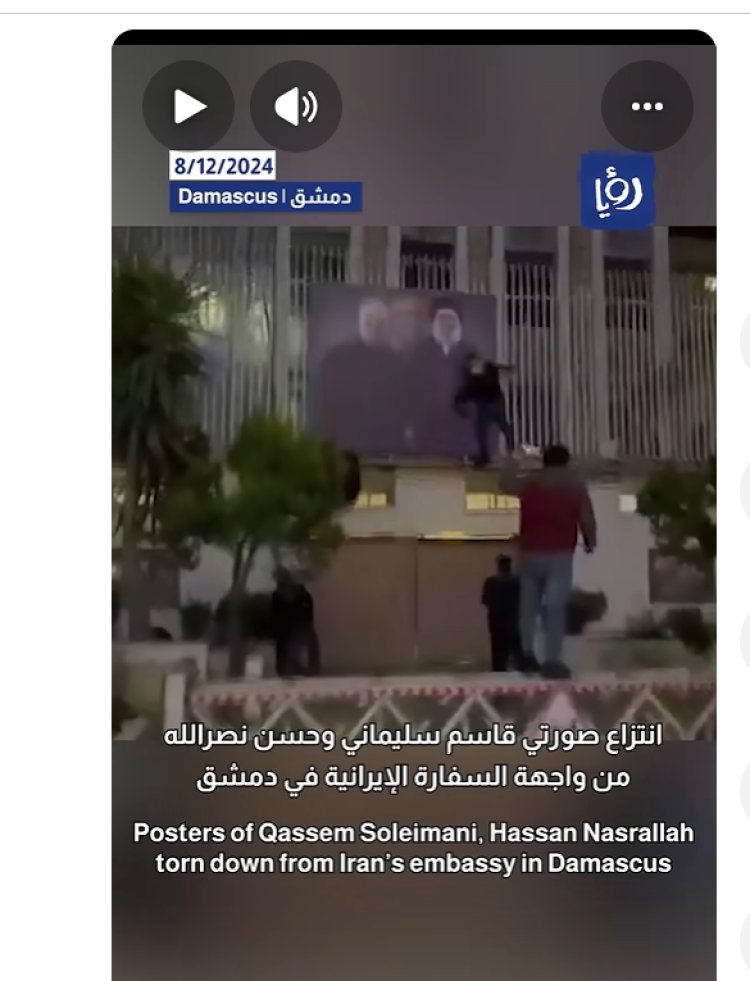
However, within the Twelver Shia community, a significant number follow Khamenei as their marja’, a position that now extends to his son Mojtaba, who succeeded him as Supreme Leader. This influence has been visible during the observance of Eid al-Fitr. Although the Syrian government officially announced Friday, 20 March, as the first day of the holiday, many residents of Nubl are still fasting because of the directives of Khamanei's office and other prominent regional Shia clerics such as Ayatollah Sistani.
There is evident sympathy with Iran in its ongoing war; however, this support is now largely confined to social media, particularly in the groups that declare themselves to be in opposition to the current government. certain groups have carried out operations targeting Israel and the United States. One such group is 'Islamic Resistance Front in Syria – Awali al-Ba's', which claimed responsibility for carrying out strikes against the American al-Shaddadi base in Hasaka, from which US troops had already withdrawn. While these claims have not been proven yet, this indicates that there is a continued presence of the small networks and individual which still retain the ideological affinity with the Axis of Resistance.
|
|
|
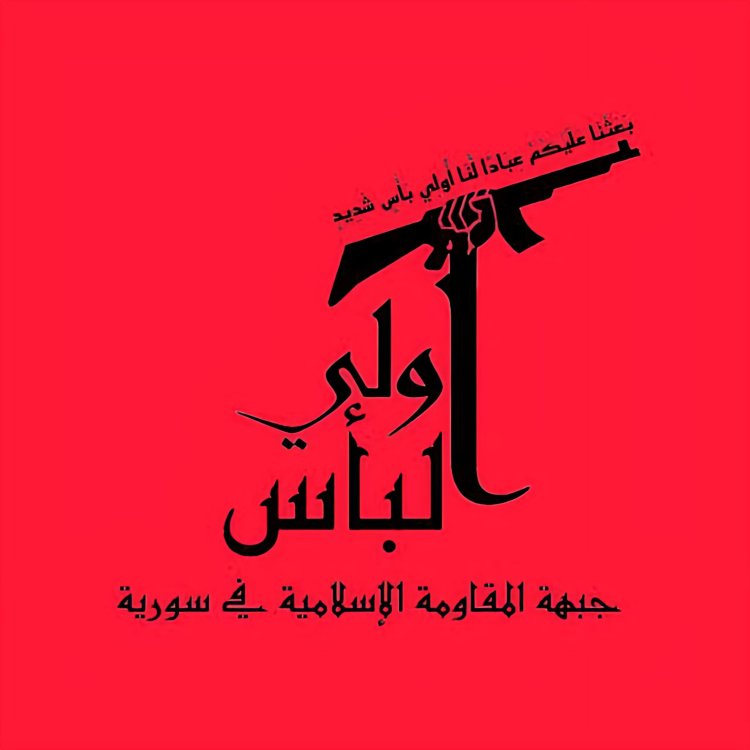
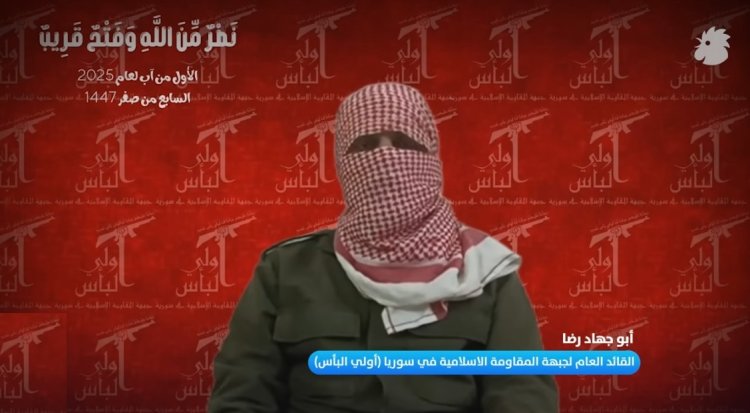
Islamic Resistance Front in Syria – Awali al-Ba's
Syria- Lebanon border
The Syrian Army is creating a buffer zone along its borders with Lebanon and conducting an offensive against Hezbollah. Reports suggest that the US has encouraged Syria to consider action against Hezbollah, including a possible deployment of forces in eastern Lebanon to curb Iranian influence. Hezbollah’s cells are still operating within Syria and continue to function as insurgents against the government or facilitating weapons smuggling. Last year in June, the al-Sharaa government announced that they had dismantled an Alawite cell in Latakia led by Maher Hussain Ali, which had received logistical support from Hezbollah. They have also declared the arrest of al-Wadah Suhayl Isma’il, leader of Fawj al-Makzun – an Alawite insurgent group supported by Hezbollah. Evidence suggested that the anti-government insurgents moved to Lebanon under Hezbollah influence, seeking a safe haven. The Alawite insurgent group Fawj Azra’il al-Jabal’s leader, Abu Ali Sumer criticized Tehran for its lack of support for Alawites after Assad's fall, and he indicated willingness to accept Israeli help if they would support Alawites, yet he was killed in an Israeli airstrike in March in Lebanon this year. It appears that Hezbollah’s hard power in Syria is met with considerable disdain; however, many Syrian Alawites from Homs are now displaced in Lebanon. Consequently, these networks do not disappear but have shifted the geography.
During a trilateral phone call with the President of France and Lebanon, al-Sharaa expressed that Syria is in full support of Lebanon’s Stability and security, and he wished that the Lebanese government would disarm Hezbollah and establish sovereignty. Al-Sharaa wants a new chapter in Syria-Lebanon relations based on cooperation and coordination, which serves the interests of both nations. Nevertheless, his opportunistic tendencies and limited room for manoeuvring, shaped by ideological considerations and pressures from his support base, complicate this ambition. Amidst the ongoing war, al-Sharaa has found an opportunity to enhance Syria’s strength, influence and distance itself from Iran’s axis of resistance. If the war in Iran evolves into a prolonged regional confrontation, including Lebanon, Tehran can no longer rely on the strategic depth it once had in Syria. What remains, however, is a thinner but more adaptable form of influence: ideological alignment and networks built over years through overlapping ties of crime, religion, family and patronage - networks that tend to endure, and can be reactivated when conditions allow.
Disclaimer: This paper is the author's individual scholastic contribution and does not necessarily reflect the organization's viewpoint.