The Terror Landscape in the Afghanistan-Pakistan War: Assessing Infrastructure, Networks and Threats
 usanasfoundation
Analysis
By Ruchika Sharma
As the world's attention remains focused on the Iran, Israel, and US war in West Asia, a parallel war has erupted in South Asia. Pakistan has declared an “ open war’’ against Afghanistan. In 2026, the tensions between Afghanistan and Pakistan caused a serious rupture in their bilateral relations since the Taliban came to power in August 2021. The violent clashes are not confined to the Durand Line (a line separating Afghanistan and Pakistan drawn by the British Empire in 1893) dispute but are also driven by the resurgence of Tehreek-e-Taliban, famously known as the Pakistani Taliban, posing a serious security threat to Pakistan. The insurgency by militant groups has strongly resurged, increasing border tension between the two countries, resulting in coordinated air and cross-border strikes. Pakistan's defence minister, Khawaja Asif, declared an “open war’’ against Afghanistan, and launched a military offensive, known as Operation Ghazab Lil Haq (Righteous Fury), aimed at targeting militants’ hideouts operating from Afghan soil. In retaliation, Afghanistan has also targeted Pakistan and ruptured the fragile ceasefire mediated by Türkiye and Qatar following the October 2025 clashes.
On March 16, in a major airstrike carried out by Pakistan at the Omid Drug Addiction Center in Kabul, as per the Taliban government, 400 lives were lost. Amid a lot of disinformation from both sides, the exact number of casualties remains highly contested. However, as per the United Nations Assistance Mission to Afghanistan (UNAMA), 143 deaths have been verified, suggesting an increase in the death toll.
The drug treatment facility, established in 2016, is a former US military and NATO base camp known as Camp Phoenix, which has been converted into a drug treatment center.
Pakistan, however, maintained that its ongoing war on terrorism involved strikes in Nangarhar and Kabul provinces and no drug rehabilitation center or civilian facility was targeted. The strikes were directed toward terrorist infrastructure, including ammunition and other installations linked to hostile activities against Pakistan. These recent attacks suggest that Pakistani strikes are not limited to the TTP and other militant outfits but also Afghan military sites and urban centres. A brief pause in military operations was announced from both sides ahead of Eid al-Fitr, and as per the Taliban government spokesperson, the suspension came after requests from Saudi Arabia, Türkiye, and Qatar.
TTP attacks in February 2026
Numerous suicide bombings in February 2026 prompted Pakistan to conduct airstrikes against Afghanistan. Islamabad attributed these deadly attacks to the TTP. Further adding to this, Pakistan is witnessing a sharp surge in terrorist violence in 2026, much of which Islamabad attributes to the TTP, a UN-designated terrorist organization and Baloch separatists. A deadly suicide bombing in a Shiite Mosque in the Tarlai district in Islamabad in February 2026 highlighted the worsening militant threat in Pakistan. The Islamic State claimed the attack in the name of its Pakistan Province branch via its media channels. However, prior to the Islamic State claiming responsibility, Pakistani Defence Minister Khawaja Asif made an unsubstantiated claim that India and Afghanistan had been behind the attack. The series of suicide bombings in February 2026 in Pakistan prompted airstrikes against Afghanistan.
Pakistan, in its official press release, stated that it has ‘’conclusive evidence’’ that these acts of terrorism were carried out by ‘’Khwarij’’ (extremists) at the behest of the Afghan leadership. Responsibility for the attacks was claimed by TTP, which the Pakistani government refers to as ‘’Fitna al-Khawarij,’’ along with their affiliates and the Islamic State of Khorasan. Earlier, a security convoy in the Bannu district of Khyber Pakhtunkhwa was attacked by a suicide bomber. In another suicide attack, 11 soldiers were killed in Bajaur. The UNSC’s 37th report highlighted that TTP is one of the largest operating terrorist groups in Afghanistan, with increasingly complex attacks, including large number of fighters. It noted that some member states also expressed concern that TTP might deepen its cooperation with Al-Qaeda linked groups.
Pakistan's military response and Official Statements
On February 22, multiple overnight Pakistani airstrikes on Afghanistan claimed 18 lives, including women and children. Islamabad claimed that seven alleged militant camps and hideouts were targeted near the Af-Pak border and were conducted in response to suicide bombings inside Pakistan. In an interview with France 24, Pakistan's Defence Minister Khawaja Asif alleged that New Delhi and Kabul are ‘’on the same page ‘‘against Pakistan and warned that the possibility of war with India still remained; Prime Minister Shehbaz Sharif and President Asif Ali Zardari condemned the attacks. On March 2, Pakistan targeted an ammunition depot in Khost Province, as per PTV.
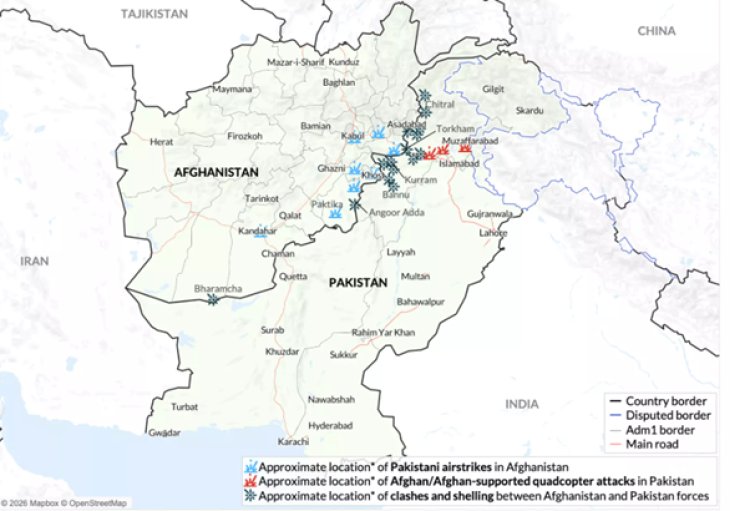
Source: ACLED (The provinces are subject to revision)
Since the start of the operation, Pakistan's Information Minister Attaullah Tarar has publicly shared videos of Pakistani forces launching cross-border strikes into Afghanistan. As per 18 March 2026 updates, the operation figures reveal significant losses on TTP and Afghan Taliban-linked targets, including 707 killed, over 938 injured, 255 posts destroyed, 44 posts captured, and the destruction of 237 tanks. In addition to this, 81 terrorist and terrorist-support infrastructures were reportedly targeted across Afghanistan by Pakistan.
Taliban Counterattacks
In response to Islamabad's air strikes on Kabul and other areas, the Ministry of Defence of the Islamic Emirate of Afghanistan announced attacks on Pakistan's military bases. Reportedly, on March 1, clashes erupted at the Torkham border crossing in Nangarhar province, a vital trade route between the two nations. As per Afghanistan's Ministry of Defence, significant military installations in Rawalpindi, Quetta, Balochistan, and Khyber-Pakhtunkhwa reportedly sustained damage. The clashes have also witnessed significant tactical evolution; based on open sources, Afghan forces have reportedly employed both modern heavy weapons such as anti-tank guided missiles and locally modified BM rockets known as Jahanumi (Hellish) along the Durand line.
The Taliban government has consistently said that the TTP is a problem created by Pakistan itself. It frames the issue as a matter of defending Afghan sovereignty, portraying its own actions as a reaction to Pakistani aggression.
Taliban's Drone Capabilities
The Afghan Taliban have invested in developing domestic drone capabilities to modernize their military operations. Ahmadullah Mttaqi, head of the Taliban's Ministry of Information and Culture in Herat, reported the establishment of local facilities for drone and other weapons' production, repair, and maintenance. For limited strikes and surveillance, short-range UAVs are used to bolster military readiness, particularly along the border regions with Pakistan.
AQIS on Kabul Bombing
A statement released by Al-Qaeda in the Indian Subcontinent (AQIS) condemned Pakistan’s bombing of the Kabul hospital, characterising the attack as reflective of the brutality linked with the US and Israel. The group criticised the Pakistan Army and described the government as a ‘’puppet regime’’, while also terming Pakistan’s policies in Balochistan as flawed. AQIS further appealed to the people of Pakistan to resist military actions, framing it as a religious obligation to uproot what it termed an oppressive, un-Islamic, corrupt system and to work towards establishing a governance structure based on Sharia-based foundations.
TTP's Operation Against Pakistan
TTP has launched Operation Al-Khandaq, named after the 627 CE Battle of the Trench. The group claimed 18 coordinated attacks across Peshawar, South Waziristan, Chitral, Bajaur, Dera Ismail Khan, Khyber, Mardan, Markan and Mohmand provinces. Operation Al-Khandaq is TTP's spring offensive, officially launched in March 2025. An infographic by TTP's media claimed 352 attacks in February 2026 across 22 Pakistani districts, mainly targeting security forces. Additionally, the groups associated with the Pakistani Taliban have carried out a number of attacks using drones, including dropping explosive payloads on military vehicles.
TTP's intensity of attacks in Pakistan is highly alarming. MEMRI reported that the group claimed 3,573 terror attacks in 2025, killing 3,481 Pakistani Security personnel. TTP’s chief, Noor Wali Mehsud and Tehreek-e-Taliban Ghazwatul Hind Chief, Hafiz Gul Bahadur, have directed their affiliates to help the Afghan Taliban and intensify major attacks in Pakistan, as per The Khorasan Diary.
TTP Organizational Expansion and Propaganda
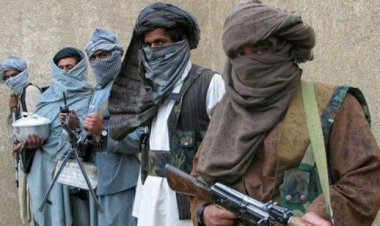
TTP have significantly increased its organisational and propaganda activities. Its media wing, Umar Media, comes out in different languages, including Balochi, Urdu and English, to expand its outreach and recruitment beyond tribal areas. The introduction of Al-Khandaq updates to demonstrate operational capabilities is also intended to serve psychological warfare.
The group has reportedly expanded its presence in southern Khyber Pakhtunkhwa and introduced new military zones and advocates for the establishment of a Taliban-style emirate in Pakistan.
Notably, TTP's media wing, Umar Media, for the first time in history, released an audio and video in the Balochi language. The group has traditionally disseminated its messaging to Baloch people via Urdu outputs. In March 2023, for the first time, an English-language documentary was released, indicating broader recruitment and outreach beyond tribal areas and targeting educated youth.
In addition to this, it rebranded their messaging by strategically weaponizing Pashtun nationalism. By bringing the colonial-era resistance figures in their narratives, it reframes militants as ‘’sons of the tribe’’. They also continue to undermine the state’s writ by establishing parallel governance systems, such as the TTP madrassa network, and by coordinating campaigns to encourage defections from local security forces. Similar campaigns are employed by the Baloch Liberation Army and the Baloch Liberation Front to expand their operational reach into Southern Punjab, Chitral, and the Saraiki Belt. Furthermore, the use of thermal imaging technology, algorithm-driven propaganda, and AI-generated content and images demonstrates their technological superiority, enabling the dissemination of highly effective, targeted narratives. Furthermore, like ISIS and Al-Qaeda, the group has also used satellite images to conduct their operations.
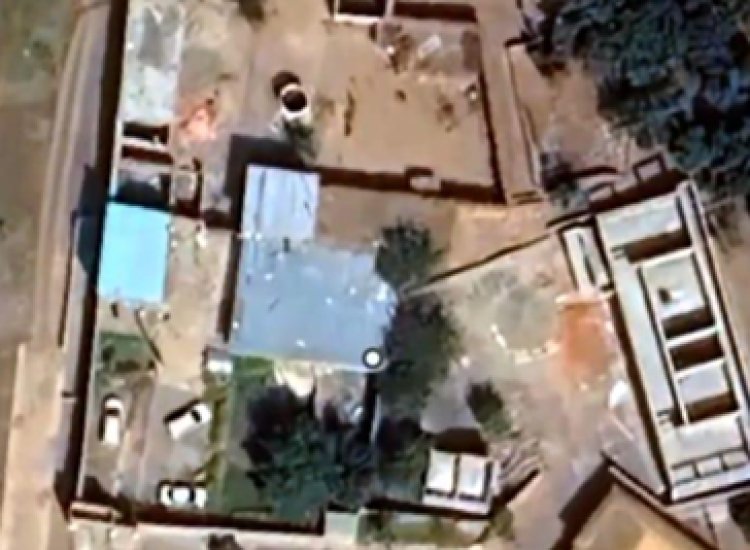
A snippet from the TTP’s propaganda video
In a recent post shared by Afghan Analyst, Tehreek-e-Taliban Pakistan released a video titled ‘’Scenes of the education and training of the children of the Mujahideen in Shangla”. Children were reportedly carrying TTP flags in classrooms and handled both real and mock weapons. Furthermore, they also underwent military-style training, including live-fire exercises with machine guns.
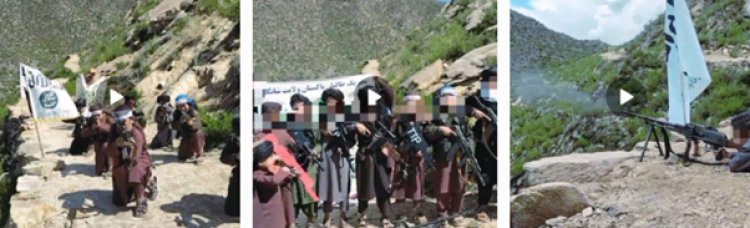
Source: Afghan Analyst
TTP’s Evolving Organizational Structure
Interestingly, TTP has evolved its organizational structure on the lines of Afghan Taliban. This includes shadow governance institutions such as ministries, an intelligence directorate, a suicide brigade, training camps, education units and court systems, among others. The defence ministry is the largest organizational unit of the TTP, comprising two military commissions: the North and the South Zones. In addition, advanced weaponry, including M4 carbines, M16A4 rifles, and night vision gear, abandoned by the US after its hasty withdrawal in 2021, significantly enhanced TTP's offensive operations. Reportedly, a significant number of these weapons were transferred to the TTP by former Afghan commanders. The blueprint released for 2026 also includes “Kashmir Waliyat,” which sources in TTP clarified refers specifically to Pakistan-occupied Kashmir (PoK) and adjoining facilitation areas, as per the Sunday Guardian report. It also included Karachi, southern Punjab, and interior Sindh.
TTP’s Extending Operations in Balochistan
TTP has extended its operations in Balochistan. It reportedly formed a new administrative unit in Qalat and Makran, appointing Shaheen Baloch as the unit’s governor. In December 2022, Mazar Baloch's jihadist group from the Makran region joined the TTP. Reportedly, in April 2023, two groups from Qalat and Quetta, led by Akram and Asim Baloch, joined the TTP. Overall, since 2022, four groups from Balochistan have reportedly joined the TTP. Though both groups have different ideologies, they view Pakistan as their common enemy.
Militant Allied Networks
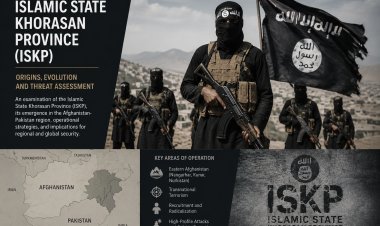
The militant landscape is increasingly complex, with multiple groups largely connected to the TTP and the Hafiz Gul Bahadur network, which reinforces the interconnected jihadist ecosystem. These groups include Ittehad-ul-Mujahideen Pakistan, Majlis-e-Aksari Karwan, Tehreek-e-Jihad Pakistan, Jaish-e-Fursan-e-Muhammad, Jabhat al-Junud al-Mahdi, and Jabhat Ansar al-Mahdi Khorasan. Other groups, such as Islamic State Khurasan and the newly emerged Ansar ul-Islam Pakistan, continue to create havoc in Pakistan.
Another group in the militant landscape is Majlis-e-Askari Karwan (MAK), which operates in Bannu, Lakki Marwat, and North Waziristan and also has a presence in Khyber and Orakzai, writes Riccardo Valle. Led by Akhtar Muhammad Khalil Mansoor, a former TTP commander in Bannu district, he later joined the Hafiz Gul Bahadur faction, now known as Tehreek-e-Taliban Ghazwatul Hind.
It is true that even after nurturing the dangerous entities for years, they never hesitate to turn against their hosts once they attain power. This is exactly what has happened in Pakistan. Hafiz Gul Bahadur's faction, once viewed as the ‘’Good Taliban’’ by Pakistan because it focused on fighting in Afghanistan rather than inside Pakistan, Operation Zarb-e-Azb in 2014 turned the group against Islamabad. The UN Analytical Support and Sanctions Monitoring Team, in its report, highlighted that Al-Qaeda provided training, ideological guidance, and support to the Pakistani Taliban to lead attacks against Pakistani security forces.
In recent years, Hafiz Gul Bahadur has expanded its operational footprint and formed new alliances. For example, in April 2025, after coordination among various TTP factions and Al-Qaeda in the Indian Subcontinent (AQIS), the Ittehad-ul-Mujahideen Pakistan (IMP) alliance was formed under Hafiz's leadership. The radical and violent extremist group, IMP (comprising the Hafiz Gul Bahadur Group (HBG), Lashkar-e-Islam and the Harkat Inqilab-e-Islami Pakistan (HIIP)), has carried out a spate of attacks, including drone attacks and suicide bombings, in the North Waziristan and Bannu districts of Khyber Pakhtunkhwa. Reportedly, Hafiz's faction operates four suicide training camps. A video released in the Pashto language claimed that Pakistan will be ruled by IMP Emir Hafiz Gul Bahadur, reported MEMRI. Between April 12 and 16, 2025, IMP claimed responsibility for numerous attacks against security forces in North Waziristan and the Tirah Valley of Khyber Agency. These included sniper strikes, rocket launcher and grenade attacks, ambushes on convoys, and, significantly, an advanced drone bomb attack using a quadcopter in Miran Shah.
Humanitarian and Strategic Consequences
This mutual violent clash spells severe consequences for civilians. Since February 2026, 289 civilian casualties have been reported, and over 115,000 people have been displaced, according to the UN report. Both sides blame each other for starting the conflict, resulting in violent clashes. This not only tests the boundaries but also leaves a little space for reconciliation. Concerningly, US and Israeli attacks on Iran have triggered migration into Afghanistan, with approximately 1700 migrants crossing to Afghanistan daily; many of them are psychologically affected. Already resource-strained Afghanistan lacks the capacity to absorb such inflows, and this influx may spill over into Pakistan, further denting already fragile Afghanistan-Pakistan relations.
What lies Ahead
The ongoing war and instability in Afghanistan continue to accelerate a vicious cycle of violence, undermining regional peace, stability, security, and development. Pakistan's decade-long strategy of supporting Islamist extremists has turned out to be a strategic blow. Ever since the Taliban government got control of the fractured territory of Afghanistan, Tehreek-e-Taliban (TTP) has ruffled the feathers in Islamabad, exposing Pakistan's strategic miscalculation of anticipating cooperation from the Afghan Taliban. The use of drones in the ongoing violent clashes demonstrates the Afghan Taliban's asymmetric warfare capabilities and the strikes reaching beyond borders. In addition to this, Afghanistan can also respond by potentially extending support to anti-Pakistan militant groups. As Pakistan also shifts blame to India, this could trigger renewed hostilities between the two nuclear-armed neighbours.
Lastly, it will be unwise to neglect that the evolving threat landscape increasingly affects the regional security architecture, as transnational jihadist narratives of groups like Al-Qaeda in the Indian Subcontinent (AQIS) and Islamic State Khorasan Province (ISKP) continue to expand their sphere of influence and dominance to reach their target audience and beyond. The presence of foreign fighters from Central and South Asia, claiming their networks' expansions in Kashmir and Bangladesh, raises significant concerns for India. Pakistan's fractured internal security risks creating cross-border spillover. Furthermore, reduced global attention and limited monitoring could provide militant networks greater operational space to regroup, recruit and attack.
Disclaimer: This paper is the author's individual scholastic contribution and does not necessarily reflect the organization's viewpoint.