Bangladesh 2024 uprising: Targeted killings, foreign signals, and the question of covert involvement
 usanasfoundation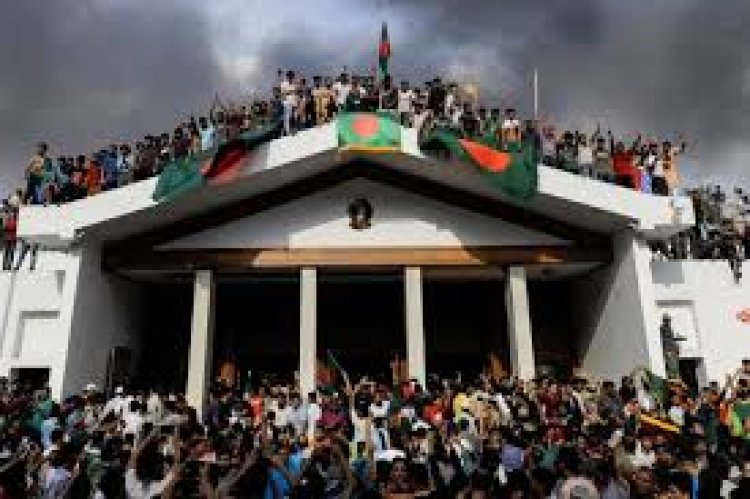
Analysis
By Salah Uddin Shoaib Choudhury
The events surrounding Bangladesh’s 2024 anti-Hasina uprising may no longer be viewed solely through the lens of domestic political unrest. Emerging remarks from Brigadier General M. Sakhawat Hossain - a key figure in the interim administration led by Muhammad Yunus - have introduced a grave national security dimension to the debate. His disclosure regarding the use of 7.62 bore sniper rifles during the protests raises a question that extends far beyond partisan rivalry: was Bangladesh the theatre of a covert, externally assisted destabilization operation?
According to Brigadier General Hossain, numerous fatalities during the protests were carried out using high-calibre sniper rifles - weapons that, he emphasized, are neither part of Bangladesh Police inventory nor handled by any officially trained sniper units within the civilian law enforcement structure.
Even more striking was his observation that the images and videos he reviewed suggested that the individuals operating these weapons did not physically resemble Bangladeshi nationals. In his words, they appeared to be “foreigners”. This assertion alone has triggered intense speculation.
Sakhawat Hossain made a pointed remark: if the sniper shooters had been Indian nationals, the Yunus-led administration, which was notoriously following anti-India policy - would have forcefully highlighted such evidence on the global stage. The absence of such accusations, he implied, speaks volumes.
Sakhawat Hossain’s comments stopped short of explicitly naming any country. But in Bangladesh’s strategic landscape, the list of plausible actors is limited. For many analysts, his remarks are widely interpreted as an implicit reference to Pakistan. The suggestion that foreign-trained snipers may have operated inside Bangladesh during the height of the 2024 unrest carries grave implications - not only for domestic politics but also for regional security architecture.
Since the ouster of Sheikh Hasina in August 2024, I have consistently argued in multiple articles and international television discussions that the anti-Hasina movement was not merely a spontaneous student-driven uprising. Rather, it was a carefully calibrated operation in which domestic discontent was amplified through external coordination.
Specifically, concerns were raised regarding the potential role of elements within what is often described as the “US deep state” and Pakistan’s spy agency - Inter-Services Intelligence (ISI). At the time, such claims were dismissed by many as speculative. However, Brigadier General Hossain’s recent remarks have reopened those questions in a manner that cannot be easily ignored.
The 2024 anti-Hasina protests began ostensibly over demands to abolish the quota system in government jobs. But the movement rapidly evolved into a nationwide confrontation marked by sudden escalations in violence. Reports from that period documented instances of precise, long-range shootings that appeared inconsistent with spontaneous street clashes. Victims were often struck in a manner suggesting professional marksmanship rather than chaotic crossfire. In this case, a question can be asked – if, according to Brigadier General Sakhawat Hossain, high-calibre 7.62 bore sniper rifles were indeed used - and if these weapons were not accessible to Bangladeshi law enforcement, the question becomes unavoidable: who possessed them?
Even more troubling is the possibility that these sniper attacks were designed to create maximum psychological impact. Targeted killings during mass protests tend to generate outrage, intensify crowd anger, and provoke state overreaction. Such tactics have been observed in destabilization operations elsewhere in the world.
Parallel to the violence on the streets was an unprecedented wave of digital mobilization. Anti-Hasina narratives rapidly dominated social media ecosystems. Content critical of the government appeared to enjoy extraordinary algorithmic amplification. Even posts containing unverified claims or emotionally charged footage circulated widely without apparent moderation challenges. Meanwhile, pro-government voices frequently reported restrictions, removals, or suppressed visibility.
Whether this was the result of organic digital dynamics or coordinated information strategy remains a subject of debate. However, the synchronization between street escalation and online momentum raises legitimate questions about orchestration.
Evidence suggests that preparations for the 2024 upheaval may have begun well before the quota protests emerged. Multiple young activists who later rose to prominence reportedly maintained connections with foreign actors long before the final phase of unrest. Meetings between influential civil society figures, NGO representatives, media personalities, and international intermediaries reportedly intensified between 2022 and 2023. Financial flows into select advocacy networks also expanded significantly during that period.
If foreign intelligence coordination occurred, it likely operated through indirect channels - utilizing civil society platforms, digital mobilization strategies, and psychological operations rather than overt military engagement.
Pakistan’s Inter-Services Intelligence has historically maintained an active interest in Bangladesh’s internal political trajectory. Analysts have long argued that Islamabad views Dhaka’s geopolitical alignment - particularly its close ties with India under Sheikh Hasina - as strategically unfavorable. Speculation now centers on whether elements linked to the ISI began laying groundwork for destabilization as early as 2022.
Some reports allege that individuals from the ‘Stranded Pakistani’ communities with historical ties to Pakistan were transported abroad for training under various pretexts. Others suggest that weapons could have entered Bangladesh via diplomatic channels, shielded from routine inspection. Such claims require independent verification. However, they are gaining renewed attention following Brigadier General Hossain’s remarks.
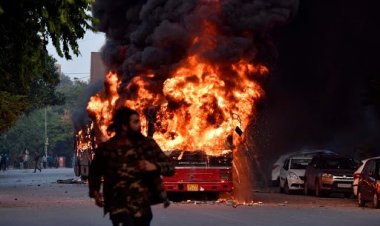
Another deeply disturbing allegation concerns the reported use of Captagon - a stimulant that has been widely documented in Middle Eastern conflict zones. Critics argue that such substances can heighten aggression and suppress fear responses. While concrete forensic evidence has not yet been publicly presented linking Captagon to the 2024 unrest, the pattern of extreme violence during certain phases of the protests has fueled speculation. For example, police stations were attacked. Security personnel were reportedly killed. Government buildings were set ablaze. Some opposition figures later acknowledged, in media interviews, that protesters engaged in severe acts of violence, such as slaughtering police while chanting “Allahu Akbar”. The scale and intensity of these actions shocked even seasoned observers.
Following the August transition, the Yunus-led interim administration moved swiftly to grant forms of immunity related to actions taken during the protest period. Critics argue that such haste may have been designed to prevent deeper investigation into who orchestrated specific acts of violence - particularly sniper killings. If foreign operatives were indeed involved, exposure could have triggered diplomatic crises of significant magnitude. It is precisely this possibility that makes Brigadier General Sakhawat Hossain’s remarks so explosive.
If the sniper narrative proves substantiated through independent inquiry, it would mean that the 2024 uprising was not merely a domestic political confrontation but part of a broader geopolitical chess game. If, however, these allegations remain unverified, they risk deepening polarization without delivering clarity. The responsibility now lies with investigative journalists, independent forensic analysts, and credible international observers to examine the available evidence without prejudice.
Now the larger question here is - why would foreign actors invest in destabilizing Bangladesh in 2024? The answer may lie in strategic geography, regional rivalries, and economic corridors. Bangladesh’s alignment between India, China, and Western powers has long been a delicate balancing act. A leadership transition under conditions of unrest could recalibrate that balance.
Brigadier General M. Sakhawat Hossain’s interview may ultimately prove to be a turning point - not because it provides definitive answers, but because it legitimizes questions that were once dismissed.
The implications of Brigadier General Hossain’s statements are therefore not merely political - they are strategic. If it is established through credible and independent investigation that foreign-trained operatives conducted targeted sniper killings during the 2024 unrest, Bangladesh’s crisis must be reclassified from a civil protest movement to a hybrid destabilization episode. Such a development would carry profound consequences for South Asian security calculations, particularly for India’s eastern flank and for the broader Bay of Bengal strategic theatre.
The possibility of involvement by elements linked to Inter-Services Intelligence - whether direct or through proxies - would represent not only interference in Bangladesh’s sovereignty but also a recalibration attempt in the subcontinental balance of power. For Islamabad, Dhaka’s long-standing proximity to New Delhi under Sheikh Hasina had strategic implications. A forced leadership transition under conditions of chaos would inevitably alter regional equations.
Conversely, if these allegations are not substantiated through a transparent inquiry, they risk embedding long-term mistrust within Bangladesh’s institutional framework and deepening domestic polarization. That is precisely why the issue cannot be left suspended in ambiguity.
For policymakers, intelligence professionals, and strategic analysts, the critical task now is dispassionate verification. Bangladesh’s stability is not a peripheral matter; it sits at the intersection of Indian Ocean maritime security, Indo-Pacific competition, and continental South Asian rivalry.
Brigadier General M. Sakhawat Hossain’s remarks may or may not prove to be the definitive breakthrough. But they have ensured that the sniper question can no longer be dismissed as conjecture. If 2024 was indeed shaped by external kinetic and informational intervention, it would mark one of the most consequential covert episodes in South Asia in recent decades. Bangladesh’s future trajectory - and the credibility of its state institutions - will depend on whether the truth is pursued with institutional courage rather than political convenience.
Disclaimer: This paper is the author's individual scholastic contribution and does not necessarily reflect the organization's viewpoint.
Salah Uddin Shoaib Choudhury is an award-winning journalist, writer, and Editor of the newspaper Blitz. He specializes in counterterrorism and regional geopolitics.