India’s Strategic Autonomy Is Facing Its Real Test
India’s growing reliance on Russian oil is exposing a deeper paradox: the more New Delhi diversifies its partnerships to preserve freedom of action, the more simultaneous crises among those partners can constrain that freedom.
 usanasfoundation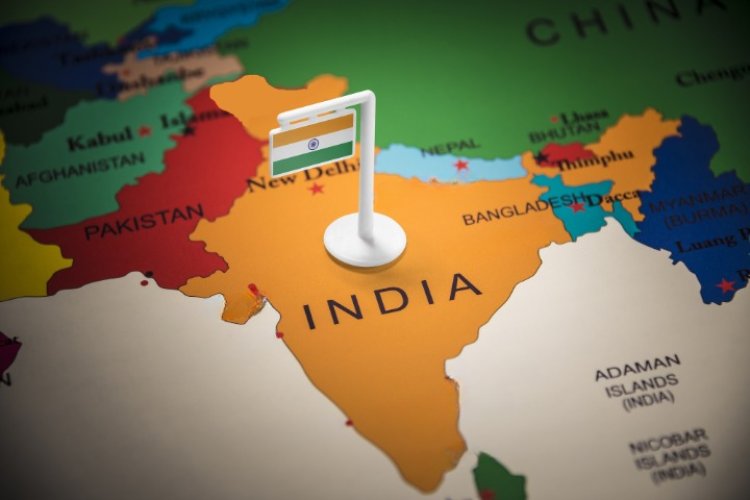
Analysis
By Gilles Touboul
India has spent years building a foreign policy around strategic autonomy: cooperating with the United States without becoming an ally, maintaining close ties with Russia, competing with China while trading with it, and preserving strong relations with the Gulf. This flexibility has served New Delhi well. But today’s energy disruptions are beginning to expose its limits.
In July 2026, Russia supplied more than half of India’s crude oil imports. According to the Global Trade Research Initiative (GTRI) estimates, Russia’s share of India’s crude oil imports rose to 52% in July 2026, compared with 48.6% in June. Interestingly, by purchasing discounted Russian crude, India reduced its oil bill by approximately $12.6 billion between 2022 and mid-2025, according to a report by The Indian Express. For New Delhi, buying discounted Russian oil was initially pragmatic. It reduced import costs and demonstrated that India would not allow Western sanctions to automatically determine whom it could trade with. Yet there is a difference between using Russia as one supplier among many and becoming heavily dependent on Russian crude because alternatives are disrupted or more expensive. The first can strengthen autonomy. The second can weaken it.
The current crisis surrounding Iran illustrates the problem. Instability in the Middle East has affected traditional energy flows, pushing India further toward Russian crude. At the same time, Washington is increasing pressure on Moscow, while China, facing disruptions to Iranian supply, is buying more Russian oil and competing with Indian refiners for some of the same barrels. Russia, Iran, China, the United States and the Gulf are therefore no longer separate files in Indian diplomacy. They are becoming part of the same strategic equation. This creates what might be called India’s autonomy paradox: the more India diversifies its partnerships to preserve freedom of action, the more simultaneous crises among those partners can constrain that freedom.
For years, India’s multi-alignment strategy worked because New Delhi could keep different relationships relatively separate. The United States could be a strategic partner in the Indo-Pacific. Russia could remain a defense and energy partner. The Gulf could provide energy and investment. China could be treated simultaneously as a competitor, trading partner and security challenge. But this model becomes harder when tensions overlap.
If instability in the Middle East reduces access to Gulf oil, Russian crude becomes more important. If Washington then pressures countries buying Russian oil, India faces a diplomatic and economic dilemma. If China increases its purchases from Russia, Indian refiners may face higher prices or reduced access. A crisis in one region therefore changes India’s options in another.
The Chinese dimension is particularly important. India and China are usually viewed through the Himalayan border, the Indian Ocean or industrial competition. Energy now adds another layer. If Beijing buys more Russian crude because Iranian supplies are disrupted, New Delhi and Beijing can end up competing for the same resources.
Geography also matters. China has substantial overland energy links with Russia, while India remains much more dependent on maritime transport. Shipping routes, freight costs, insurance and naval security therefore become part of India’s vulnerability.
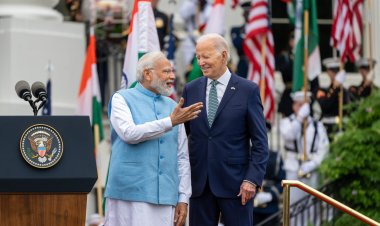
A barrel of oil is no longer simply a commodity. It becomes part of the balance of power. Washington creates another dilemma. The United States increasingly sees India as a key strategic partner in Asia and one of the few countries with the demographic and economic scale to help balance China over the long term. But Russia remains a point of tension. From Washington’s perspective, Russian oil revenues help sustain Moscow’s military capabilities. From India’s perspective, Russian crude protects Indian economic interests. Both positions are logical. But they collide.
Should New Delhi reduce Russian purchases to protect its relationship with the United States? Should it refuse in order to demonstrate that Indian foreign policy cannot be dictated from abroad? Should it seek exemptions or diversify more rapidly toward other suppliers?
None of these options is cost-free.
This reveals another paradox. Washington wants a stronger India because a stronger India can contribute to balancing China. But a stronger India is also a more independent India. New Delhi wants American technology, investment and strategic support without allowing those relationships to determine its policy toward Moscow. Russia’s growing dependence on China creates an additional difficulty. India sees China as its principal long-term strategic competitor, yet Russia is increasingly tied to Beijing while remaining important to India for defense and energy.
New Delhi would prefer a Russia that remains sufficiently independent of China. But strategic autonomy gives India control over its choices, not over Moscow’s. That distinction is important. There is also a financial dimension.
India imports more than 90 percent of the crude oil it consumes. A sustained increase in oil prices can weaken the current account, put pressure on the rupee, increase inflation and raise transportation and industrial costs.
Markets therefore do not determine Indian foreign policy, but they can determine the economic price of strategic decisions.
An escalation in the Gulf can raise oil prices. Higher oil prices can weaken India’s external balance. Pressure on the rupee makes imported energy more expensive, which can reinforce inflation. Geopolitics eventually enters the domestic economy. Strategic autonomy is therefore not only about resisting diplomatic pressure. It is also about having sufficient economic resilience to absorb the consequences of independent choices.
None of this means that India’s strategy has failed. On the contrary, strategic autonomy remains logical for a country of India’s size and ambitions. New Delhi does not want its relationship with Washington determined by Moscow, its relationship with Moscow determined by Washington, or its Middle Eastern policy reduced to choosing between rival regional camps. But autonomy in a fragmented world is more difficult than autonomy in a stable one.
As geopolitical competition intensifies, sanctions become extraterritorial, supply chains become strategic, shipping routes become security issues and technology becomes increasingly political. The space between competing blocs narrows. India may therefore need to move from a strategy based mainly on multi-alignment toward one based on managed interdependence.
The objective would remain the same: preserve freedom of action.
But the method would change. India needs greater energy diversification so that no supplier becomes indispensable. It needs stronger strategic reserves, more flexible refining capacity and secure maritime routes.
The energy transition also becomes part of this equation. Renewable energy will not eliminate India’s dependence on imported oil in the near future, but every structural reduction in that dependence can increase New Delhi’s strategic room for maneuver.
Energy policy therefore becomes part of foreign policy. Financial resilience matters as well. Foreign-exchange reserves, stronger exports, diversified trade and stable capital flows are not merely economic indicators. They are geopolitical assets because they make an independent foreign policy more affordable.
India’s strategy is often described today as multi-alignment rather than non-alignment. The distinction is important. India does not remain outside the competition between major powers. It engages with all of them. It cooperates selectively, participates in different institutions and avoids permanent alignment when interests diverge. This is not neutrality. It is a selective partnership. But selective partnership works only when selection remains possible.
Buying Russian oil can affect India’s relationship with the United States. Instability around Iran can affect Chinese demand for Russian crude. Chinese demand can affect Indian import costs. Russia’s growing relationship with China can influence the wider Asian balance. Strategic autonomy is consequently no longer simply the ability to say “yes” to one partner and “no” to another.
It is increasingly the ability to ensure that saying “no” remains economically affordable. That is a much more demanding standard. Western debates about India often ask whether New Delhi is closer to Washington, Moscow or the Global South. But this may be the wrong question. India’s objective is not necessarily to choose a permanent geopolitical identity. Its objective is to increase Indian power while preserving Indian decision-making.
The more relevant question is therefore: how much freedom can India preserve when its different relationships begin to conflict with one another?
Energy is providing one of the first serious answers. India can defend its sovereign right to buy Russian crude. It cannot force Russia to supply unlimited quantities at favorable prices. It can deepen cooperation with Washington. It cannot guarantee that the American sanctions policy will always accommodate Indian interests. It can compete with China. It cannot prevent Chinese refiners from bidding for the same barrels.
This is where strategic doctrine meets material reality.
India’s strategic autonomy has allowed New Delhi to avoid the rigid alliance choices of the Cold War. It has given the country considerable diplomatic flexibility and helped it develop relationships with actors that often oppose one another. But diplomacy alone cannot guarantee autonomy. Autonomy must also rest on economic resilience, diversified energy supplies, technological capabilities, military strength and financial stability. Otherwise, strategic autonomy risks becoming a diplomatic description of economic dependence.
India has spent years building the freedom to talk to everyone. The next stage will be harder. It must now build the capacity to remain free when the countries it talks to are increasingly in conflict with one another. That may be the real test of India’s rise.
Disclaimer: This paper is the author's individual scholastic contribution and does not necessarily reflect the organization's viewpoint.
Gilles Touboul is a geopolitical and financial markets analyst specializing in Asia, with three decades of experience in international financial markets.