The ISI's Kashmir Study Group: Recalibrating Pakistan's Jihad Strategy in Kashmir
 usanasfoundation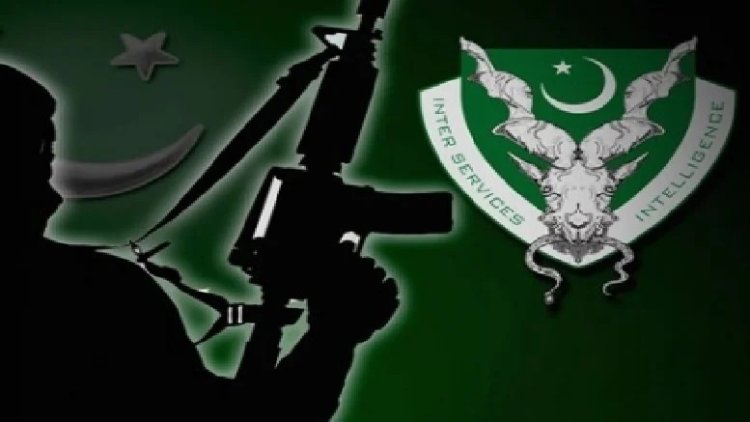
Analysis
By Dr Abhinav Pandya
A recent article by this author, published by the Usanas Foundation, examined Jammu and Kashmir’s terrorism trends and related developments in detail. Analysing the emerging trends in Jammu and Kashmir, particularly after 2020, the article discussed about the changes in Pakistan’s strategy and tactics, the shifting of the operational theatre from the Kashmir Valley to the Pir Panjal region, revival of the terror groups of 90s, emergence of secular-sounding terror outfits, infiltration of highly-trained Foreign Terrorists (FTs), digital and cyber radicalisation, and a reduction in the number of encounters by the Security Forces (SFs) due to a sharp fall in HUMINT. The Pahalgam terror attack chargesheet also pointed out the declining HUMINT as one of the major reasons for a decrease in successful encounters by the SFs. Currently, the Indian security establishment is confounded by disturbing questions about the precise number of local and foreign militants in Jammu and Kashmir, the emerging trends discussed above and growing Islamist radicalisation, sleeper cells and active Islamic State/ Al Qaeda-styled terror modules and attacks, such as Delhi’s Red Fort attack, in the Indian hinterland. Further, the roles, modus operandi, and propaganda war of the new groups with mixed memberships, such as The Resistance Front (TRF), People’s Anti-Fascist Front (PAFF), Kashmir Tigers (KT), and Allah Tigers (AT), have created more smokescreens.
Whether the decline in terror incidents and successful encounters in the Valley in parallel with increasing terror activity in the Pir Panjal region and the Indian hinterland, merely due to the fall in HUMINT or a major change in Pakistan’s strategy, still remains a partially answered and addressed question. While investigating this question, the author interviewed a few former and active militants with strong networks in Pakistan’s terror ecosystem. These interviews unravel the internal dynamics, emerging trends in Kashmir discourse within Pakistan’s intelligence and security quarters, and the resulting changes in strategy and tactics.
Reportedly, the ISI constituted a committee in 2019-20 to explore and investigate the underpinnings in the Kashmir Valley in the post-370 phase and suggest a future Jihadist militancy roadmap for J&K, with two key officers, a Brigadier and a Colonel, in charge. The trends in militancy in J&K, witnessed in the last 4-5 years, are a clear reflection of the findings of this ISI’s Kashmir study group.
The Kashmir Study recommended the creation of a local, indigenous terror group with secular-sounding names, to create a perception that the militancy is against the abrogation of Article 370 and colonisation of Kashmir with non-local outsiders, and not about the religious radicalisation. This measure was also aimed at winning international goodwill in the information war against India, eluding the watchful scrutiny of global counterterrorism watchdogs like the FATF, which were getting increasingly wary of Pakistan’s ties with terror groups. Further, PM Modi’s warm ties with President Trump and India’s growing utility for the US as a bulwark against China also added to Pakistan’s difficulties and international isolation, further strengthening the chances of being blacklisted by the FATF. Further, the Kashmir committee also suggested merging all the terror groups like Lashkar, Jaish and Umar Mujahideen, except the Hizbul Mujahideen, for operational purposes. Besides, the ISI strengthened its grip over these groups, and they were stationed together in Islamabad for Kashmir operations. The new entities formed after 2019, such as TRF, PAFF, KT, AT and Lashkar-e-Mustapha, served as digital portals for propaganda war and created smokescreens after the attacks by owning up to terror attacks. Notably, such tactics successfully created confusion, as till today India’s security experts and agencies are debating over TRF being a Lashkar proxy and PAFF being a Jaish proxy.
Another crucial recommendation highlighted the need to minimise the recruitment of Kashmiris. Strategically, the post-Burhan phase between 2016-19 had already witnessed massive local recruitment, the deepening of Jamaat’s footprint and the onset of the local affiliates IS and Al Qaeda, resulting in the massive spread of Islamist radicalisation and anti-India sentiment, preparing a fertile ground for a long future of Islamist insurgency with local support. Hence, for tactical purposes, they could afford to minimise the local recruitment. Further, the ISI analysts argued that Kashmiris are not sufficiently martial, so even after training, they get eliminated by the SFs in a span of three to four months, which in turn damages the morale of the Jihadist constituency in J&K and Pakistan. The elimination of a large number of Kashmiri militant commanders between 2016 and 2019, indeed, damaged the morale of the locals, setting in fatigue and a degree of resistance to joining the terror groups. This fatigue was visible after the abrogation of Article 370; Kashmir did not witness a large number of locals joining terror groups and orchestrating large-scale terror attacks. Further, the massive stone pelting spectacles also declined. Though this decrease in both phenomena was not entirely due to fatigue, as many other factors contributed, such as communication and security lockdowns and the National Investigation Agency’s massive crackdown on terror financing in the preceding years. Further, the Kashmir study group argued that recruiting too many Kashmiris exposes their entire communication networks and channels to the Indian agencies, as there was a huge penetration of the Indian agencies among the locals. They had cultivated many local Kashmiris as double agents.
Thirdly, the Kashmir committee suggested that the Indian government had increased the costs of joining a terror group, keeping association with it and conducting a terror attack. Post 2016, the government of India launched Mission All-Out, neutralised the militant commanders and OGWs harshly. The SFs blew up the houses of militants, took legal action against their close and distant relatives and other associates. The NIA action on the separatist ecosystem began with an aggressive footprint between 2016 19. After the Kashmir move on August 5 2019, the state action became even harsher. The state authorities dismissed individuals with even minor association with separatism and militancy, and the family members and relatives of terrorists, Over Ground Workers and political separatists from government jobs. The NIA’s crackdown on the terror funding ecosystem, including the individuals, madrasas and seminaries linked with separatism and radicalisation-related activities, has continued unabated over the last six years and intensified. Hence, the ISI masterminds suggested shifting the active theatre to the Hindu-dominant Pir Panjal and Jammu region, and the Indian hinterland, where the Indian government could not afford to raise the cost by implementing Valley-styled harsh measures discussed above, lest it would alienate Muslims and create serious internal security issues in the Indian hinterland.
Further, the committee suggested employing jungle warfare tactics by highly trained FTs. For jungle warfare, the terrain in the Pir Panjal region, i.e., Doda-Kishtwar-Poonch-Rajouri, is suitable, and the region has witnessed a major spike in terrorist activities after 2019.
A close study of the Kashmir’s terror trends over the last five-six years clearly suggest the implementation of the recommendations of ISI’s Kashmir study group- a decline in the local recruitment or a major change in the strategy i.e. the use of locals as hybrid militants, increase in the number of highly trained FTs. and increasing number of terror attacks in the Jammu region, with a focus on Poonch-Rajouri- Doda-Kishtwar.
As regards the ISI’s renewed focus on expanding its footprint in the Indian hinterland, Delhi’s failed Red Fort blast terror plot gives ample indications of the deeper and dangerous plot that Pakistan has visualised for the future. Had the Delhi blast gone successful as planned, i.e., simultaneous explosions at 100-plus locations, it would have led to casualties in hundreds, if not thousands.
The strategists at the ISI headquarters in Aabpara believe that due to intense radicalisation and communal polarisation in India over the last decade, this is the opportune moment to recruit them for anti-India sabotage activities. Hence, they are working on multiple fronts. Through propaganda initiatives, they are strengthening the unfounded fears of the Indian Muslims that under the Hindu-nationalist BJP government, India will lose its secular character and their identity will be threatened. Unfortunately, a huge segment of the Indian Muslim population has become vulnerable to such fabricated narratives, resulting in widespread radicalisation and intent to get involved in anti-India activities. Reportedly, the Al Qaeda/IS-styled radicalisation has made deep inroads among the young Muslims in the hinterland states in UP, Haryana, Bihar, Rajasthan and the southern states of Kerala, Karnataka and Tamil Nadu. In the case of Southern states, the exposure to radical Islamist ideologies in West Asia also makes them an easy target for the ISI.
The ISI handlers are operating in a highly sophisticated, layered manner. In this process, no direct handlers operate from Pakistan. Retired ISI operatives or random ISI-linked jihadists can approach vulnerable Indian youth from far-off places like Syria or Sub-Saharan Africa, already an AQ and IS stronghold. Through digital platforms, gaming applications and encrypted communication applications. NIA’s latest findings from its pan-India raids at 20 locations confirm this. As per the NIA findings, the Islamic State and Al Qaeda in the Indian Subcontinent (AQIS) handlers are following a 3-app model for introduction/recruitment, radicalisation and operational planning. They use three distinct applications to radicalise the youth and manage covert operations- using Instagram for searching the profiles of ideologically vulnerable persons with religious grievances and curiosity, Telegram for radicalisation and operational planning, including training to build IEDs and crypto wallets to transfer funds. Notably, these handlers exhibit signs of IS and AQIS in their approach, modus operandi, training manuals, and objectives; however, the ISI and its ecosystem play a critical role beneath the veneer of AQIS and IS. For the ISI, it is much easier to hide its real identity behind AQIS and IS, and also, the AQIS and IS brands sell easily. Secondly, they are motivating the local youth for fidayeen attacks and lone-wolf attacks, which do not require advanced training in assault weapons and small arms. Mostly, these require IEDs, for which they are sending training manuals teaching how to make IEDs with locally available materials. Besides, the ISI is also working to intensify Khalistani disturbances in Punjab. Its large-scale efforts to send drugs and weapons into Punjab through drones via Jammu, Punjab and Rajasthan borders are well-documented in the open sources. Further, the ISI has recently enhanced its espionage network across various parts of India. Such attempts were visible in many incidents, such as the arrests of several operatives sending pictures and locations of critical installations and the widespread network of bugged CCTV cameras sending direct feeds of vital locations and VVIP movement to Pakistan.
Last but not least, Pakistan is concentrating its efforts on intensifying jihadist radicalisation and strengthening anti-India sentiment in Bangladesh. As of now, Pakistan is trying to consolidate the diplomatic upper hand, which it believes it has acquired following its role in the West Asian crisis negotiations. As a result, it refrains from any spectacular terror activity. However, it is preparing a fertile ground for a widespread Jihadist upsurge in India. Incidentally, the domestic conditions in India are also working to its favour. In the future, if the Pakistan army faces any existential threat to its political survival, it is likely to escalate on the Indian front. However, as a final endgame, Pakistan will use these proxy assets in J&K and the Indian hinterland to its advantage during a full-scale war with India, which looks very likely in the next 3-4 years.
Notably, my interlocutors, including militants and intelligence community members, also confirmed that Pakistan strongly visualises a possibility of a full-scale war with India in the next 3-4 years. However, they also feel a sense of security in the fact that their deployment on the Western front is almost equal to the Indian deployment in terms of numbers. India is unlikely to increase the deployment on the Western front beyond about six lakhs because India needs a sizable contingent of troops in the North East due to a disturbed internal situation and the threat from Bangladesh, now firmly under the ISI's grip. Secondly, their ally China will also be India’s headache in the North East. Thirdly, Islamabad has high hopes from China for intelligence support. Because of its robust geospatial navigation systems, China can provide real-time intelligence to Pakistan, as it did during Operation Sindoor. Further, Islamabad believes that strong ties with the US, Turkey and Saudi Arabia will give it a diplomatic upper hand, in addition to religious, material and financial strength. Last but not least, regarding the possibility of India’s ground invasion, Islamabad believes it to be highly unlikely as India will have to fight lakhs of civilian Mujahids trained by Lashkar and Jaish in armed combat, thousands of civilians fidayeens, terrorist proxies of the Pakistan army and its military veterans. Also, during such war times, even the restive population of PoK will be with the Pakistan Army, due to religious factors. Indian forces will be trapped in a never-ending guerrilla fight.
Disclaimer: This paper is the author's individual scholastic contribution and does not necessarily reflect the organization's viewpoint.
Dr. Abhinav Pandya is the CEO & Founder of Usanas Foundation