The Multi-Alignment Trap: How a Shifting BRICS and New Alliances Test New Delhi
 usanasfoundation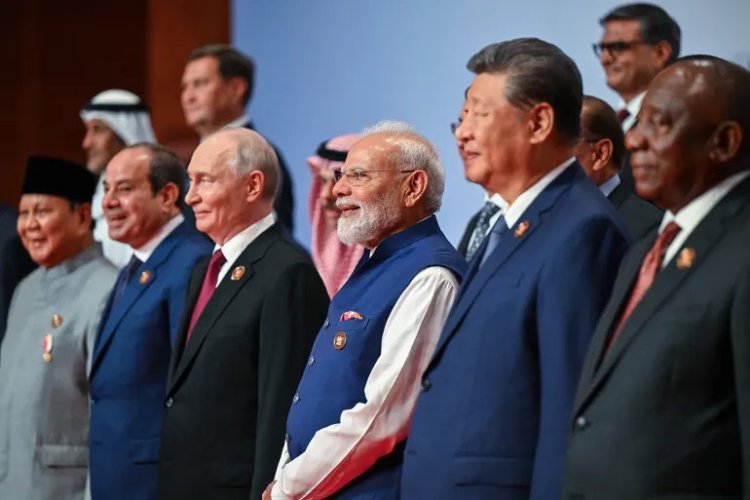
Analysis
By Dr. Abhinav Pandya
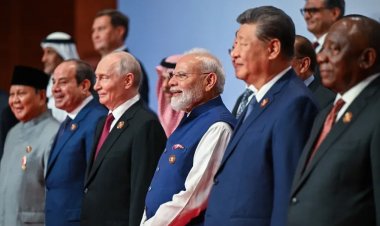
As the great-power rivalry resurges amid intensifying conflicts across multiple theatres from Gaza to Ukraine, India’s multi-alignment, an improvisation or euphemism for its Cold War-era non-alignment, was once again put to the test. The occasion was the 18th BRICS (Brazil-Russia-India-China-South Africa) summit, which India hosted as its rotating president. For a long time, BRICS has refrained from projecting itself as an alternative model of multilateralism to counter the West. Instead, it has thrived as a predominantly development-, trade-, and economy-focused group. Over the last 20 years, BRICS has come of age. Today, it includes 11 permanent members, including new additions like the UAE, Saudi Arabia, Egypt, Ethiopia, Indonesia, and Iran, and ten official partners, with the most recent expansions in 2024 and 2025. More than 30 countries, including the NATO member Turkey, have applied for membership. It has 49.5 percent of the world’s population, 26 percent of global trade, and 40 percent of GDP, calculated on a PPP basis. However, as multipolarity becomes the new norm in the emerging world order and great-power rivalry intensifies, alongside the weakening of the US and fractures in the Western world, BRICS is no longer seen as a naive, economics-focused grouping. Now, in strategic quarters and in popular perception, BRICS is largely seen as an anti-Western platform that challenges and weakens Western hegemony while offering an alternative model of multilateralism.
Among all its key members, India’s position is complex, difficult, and ambiguous. China, one of BRICS' main pillars, is India’s principal adversary and supports another rival, Pakistan. Over the last three decades, India-China strategic rivalry has intensified, with Beijing encircling India on all sides. The power asymmetry between New Delhi and Beijing continues to widen, with China surpassing India in economy, technology, cyber, space, and military capabilities. After the 2020 Galwan crisis, India-China bilateral ties have worsened. Although the October 2024 disengagement agreement, which led to India’s resumption of direct flights and the relaxation of visa rules for Chinese professionals, and Xi Jinping’s visit to India at the 18th BRICS summit suggest a thaw in ties, India’s sinophiles and intelligence community remain highly skeptical and uneasy about Beijing. Reportedly, during the June 2025 four-day India-Pakistan war, China, with its advanced satellite navigation capabilities, provided real-time intelligence to Pakistan. Pakistan claims to have shot down a few Indian fighter jets; however, these claims need verification. India lacks such advanced satellite capabilities; hence, India will have to rely on the US in case of future escalation with Pakistan.
Following the Soviet disintegration, India has invested in robust defense and economic ties with the West to counterbalance China. The India-US strategic partnership has evolved and strengthened over the last two decades, surviving the political vicissitudes. Beyond shared values of democracy, secularism, multiculturalism, and the liberal world order, concrete geopolitical drivers underpin this relationship. Washington DC and New Delhi have signed four foundational defense agreements, including the General Security and Military Information Agreement (2001), allowing them to share classified military information, Logistics Exchange Memorandum of Agreement (2016) (LEMOA), enabling them to access each other’s military facilities and bases for supplies, fuel and logistics support during operations, the Communications Compatibility and Security Agreement (COMCASA) (2018), allowing the US to supply India the secure encrypted communication equipment for interoperability in operations and Basic Exchange and Cooperation Agreement (BECA) (2020) for the exchange of satellite data. India's thriving trade with the US is visible in its sheer volume. In the 2025-26 fiscal year, total India-US trade reached USD 140.21 billion. Though China has surpassed the US and become India’s largest trading partner, with its bilateral trade volume of USD 151.1 billion, India runs a trade surplus with the US and a massive deficit with China that has touched a record high of USD 112.16 billion, a cause of major concern in New Delhi and frictions with Beijing.
A major element of the Indo-US Comprehensive Bilateral Trade Agreement is to more than double bilateral trade to USD 500 billion by 2030. Under this economic roadmap, US oil and natural gas will constitute a major share of India’s imports. Under the Catalyzing Opportunities for Military Partnership, Accelerated Commerce & Technology (COMPACT), New Delhi and Washington will explore meaningful economic engagements and collaborations in Artificial Intelligence, semiconductor supply chains, data center hardware, and critical minerals development. The two governments are also taking measures to connect small- and medium enterprises to broaden trade horizons. Ongoing tariff frictions, driven by changed US trade policies and Indian oil purchases from Russia, are temporary bottlenecks, rather than structural constraints.
Likewise, India’s ties with European Union nations have strengthened in recent years. India has comprehensive free trade agreements with the European Union and the European Free Trade Association (EFTA). India-EFTA Trade and Economic Partnership (TEPA) of 2025 entails USD 100 billion in investments, one million direct jobs over the next 15 years, and elimination of duties on 92.2 percent of tariff lines. The India-EU Free Trade Agreement (FTA) removes tariffs on 99.5 percent of Indian exports and provides zero-duty access for labor-intensive goods such as gems, jewelry, leather, and textiles. Further, on January 27, 2026, India and Europe signed a Security and Defense Partnership Agreement bridging Indo-Pacific and European defense theatres through institutional and structured military, industrial, and technological cooperation.
Likewise, India is Israel’s strategic partner with robust economic, technology, and defense ties. India-Israel intelligence, security, and counterterrorism cooperation is widely known. Israel supported India in its abrogation of Article 370, i.e., Kashmir’s special status (2019), Balakot airstrikes (2019), and Operation Sindoor, the four-day war against Pakistan in May 2025, in retaliation for the Pahalgam terrorist attack, allegedly orchestrated by The Resistance Front (TRF), a Pakistan-supported terrorist group. Most importantly, the India-Israel partnership is not merely confined to the governments. It has a strong people-to-people dimension because of shared hostility toward Islamic extremism. India’s Hindu nationalist constituency, also the core support base of the Modi government, staunchly supports Israel, almost to the point of obsession. In the ongoing Middle Eastern conflict, one can find several generals and former diplomats with sympathies for Iran; however, among the common masses, there is a huge wave of sympathy and support for Israel, though most of them do not trust the US.
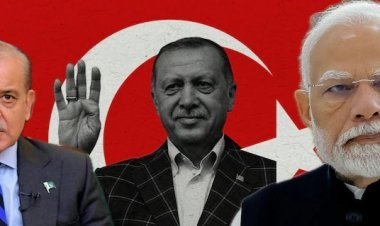
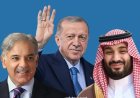
Further, emerging geopolitical configurations will push India further toward the Western bloc. In any future conflict with Pakistan, China will actively support Pakistan. Likewise, Iran, another of China’s proxies, will strongly tilt towards Pakistan or at least refrain from supporting India because of the latter’s strategic partnership with Israel. Also, Modi’s Hindu nationalist government is perceived as oppressive towards Muslims, leading to its unpopularity in the Islamic world. Though Indian diplomats and strategic experts claim that India’s multi-alignment and neutral positions have created positive optics in the Middle East, the reality falls far short of that illusion. The recently signed Mecca pact, a trilateral security agreement between Pakistan, Saudi Arabia, and Turkey with a NATO-style collective defense provision, has shattered those dreams. Despite its internal fault lines and disagreements, many increasingly view the Mecca Pact as an Islamic NATO. The underlying religious and ideological motivations get mired in the geopolitical complexities; however, they cannot be ruled out. In the future, as the US footprint weakens in the Middle East, local Arab monarchies will likely explore new security frameworks to build a stable regional security architecture. Notably, since Pakistan is emerging as one of the critical actors in the Middle East, the current and future members of the Islamic NATO will likely support Pakistan in any future India-Pakistan war.
Further, the India-Russia friendship, one of the strongest strategic partnerships, with its history dating back to the Cold War, also faces the heat of the emerging geopolitical realities. Russia’s dream of a Multipolar World, its fundamental opposition to the West-led World Order, authoritarianism, ideological opposition to liberal and multicultural values, religious orthodoxy, and the Ukraine invasion have created structural roadblocks to the future trajectory of its ties with India, which is increasingly integrating into the Western camp. Russia remains India’s largest defense supplier; however, its share is declining sharply in India’s defense basket. India is diversifying its defense procurement, with France, Israel, and the US emerging as new suppliers. Further, Russia’s dependence on China, Moscow’s primary economic lifeline, particularly after the Western sanctions imposed on Russia following the Ukraine war, has created serious security concerns for India. Given the strong bilateral ties between Moscow and Beijing, Delhi has justifiable reasons to be skeptical and deeply concerned about Russian equipment, technology transfers, and the co-production of defense equipment. Though civilizational ties between Moscow and Delhi continue to grow, the harsh realities of emerging geopolitical alignments place the two countries in different camps, in competition with each other. After the invasion of Ukraine, India faced tremendous pressure from the West to support Kyiv, making it extremely challenging for New Delhi to maintain its neutrality. More recently, India has faced US pressure to stop importing Russian oil, or risk stringent import tariffs. Reportedly, India brought down its Russian oil imports under US pressure. Besides, Russia’s ties with India’s adversary, Pakistan, have also evolved from Cold War hostility to pragmatic engagement driven by regional connectivity, energy security, and shifting geopolitical contours. In any future conflict that includes India, Pakistan, and China, it will be difficult for Moscow to support India. Notably, a prominent Russian foreign policy expert informed this author in an informal interview during Operation Sindoor that, at best, Russia would try to diffuse tensions; however, Russia would not prefer India at the cost of China.
That said, India’s deep integration with the Western bloc is likely to get stronger in the future. In such a scenario, India will gradually find itself out of place in emerging alternate multilateral structures, such as BRICS and SCO. Even on terrorism, one of the most critical issues of India’s national security, these groups have not specifically blamed Pakistan for cross-border terrorism in Kashmir, leaving India disgruntled.
India’s Dilemma Over BRICS Currency
The proposal for the new BRICS currency does not align with India’s strategic interests. Russia and Iran, BRICS member countries, are the most sanctioned countries in the world. For obvious reasons, they have supported de-dollarisation and its corollary, i.e., a new BRICS currency to replace the US dollar as a reserve currency in the long run. Even China stands to gain from the erosion of the dollar’s hegemony, as its economic and diplomatic heft is likely to push the Yuan to replace the dollar. Once again, India’s position is complex. New Delhi opposes the weaponization of the dollar and financial instruments, trading in local currencies to escape the volatility in exchange rates and transaction costs; however, India will never accept a new BRICS currency, as it fears the Yuan replacing the dollar, which Delhi’s policy wonks consider a nightmarish scenario. China is India’s arch-rival, an ally of Pakistan, reportedly determined to sabotage India’s national security in cyber, economic, technological, space, territorial, narrative, and military domains. Hence, India can never afford to let the Chinese Yuan replace the dollar, as it could pose a major threat to its economic and commercial interests, particularly given its huge trade deficit with China.
Global South Leadership: India vs China
Most of the dominant stakeholders of the BRICS are authoritarian regimes-monarchies, military dictatorships, majoritarianism, or distorted versions of democracy-at odds with Indian values of democracy, multiculturalism, and secularism. China and Russia, dominant members of the BRICS, project it as an alternative multilateral platform where Global South countries can find an equitable, inclusive, and dignified presence. However, a large number of Global South countries are ridden with failed governance systems, overwhelming influence of radical Islamist movements and Jihadi terror groups, narcotics syndicates, military dictatorships, corrupt political and administrative systems, tribal, ethnic and communal violence, civil wars, poverty, and feudal and post-colonial societies. Many of these Global South states and their leaders have tarnished human rights records, with some of them even alleged to have enabled genocides. Unlike the West, China and Russia are flexible and willing to overlook their chequered human rights histories, accommodating them in BRICS and SCO and extending unconditional loans for infrastructure development, strategic connectivity projects, and investment, making Global South countries more comfortable with entities like BRICS and SCO (Shanghai Cooperation Organization). The underlying objective is geopolitical and geoeconomic: to weaken the West-led multilateralism, erode the West’s footprint in the Global South, claim leadership, and pursue a strategic and economic agenda there. In China's case, these objectives are evident in dubious projects like the China-Pakistan Economic Corridor (CPEC)and debt-trap investments.
Further, in its claim to lead the Global South, India is no match for China's superior economic and diplomatic heft and technological capabilities, rendering it more acceptable, respectable, and preferable. Furthermore, India’s poor infrastructure, shoddy educational institutions, feeble political and administrative structures, weak manufacturing base, and poor governance give it bad press and make it an unattractive model. That said, China has a much stronger grip on Global South countries than India.
Furthermore, India’s West-tilting diplomatic positions on global conflicts such as the war in Ukraine, Gaza, and Iran make its position awkward in the BRICS and the larger Global South. Despite its long Cold War-era historic relationship with Russia, India has not unequivocally supported Russia in its invasion of Ukraine. At the same time, New Delhi has not supported Ukraine either. Although India justifies its stance under the pretext of strategic autonomy and multi-alignment, it has ended up estranging both camps. On the Gaza and Iran war, India’s position is seen as highly pro-Israel and pro-US.
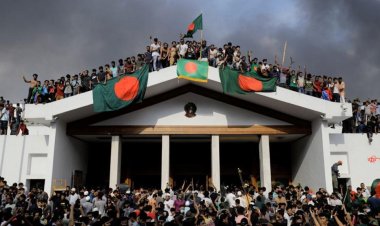
Additionally, a large number of Global South countries, either with Islamist regimes or with an overwhelming influence of Islamist clergy and non-state actors in their countries, perceive India’s Modi government as a Hindu nationalist government, oppressive towards Muslim. On several occasions, particularly in diplomatic forums and the narrative domain, they show sympathy for Pakistan. Even India’s eastern neighbor, Bangladesh, in whose liberation India played a crucial role, is now under the firm grip of Islamists and nurtures animosity and hatred for India. India’s adversaries like Turkey, China, and Pakistan have a strong strategic and intelligence footprint in Bangladesh. In most Global South countries like Nepal, Sri Lanka, the Maldives, and African and Southeast Asian nations, Chinese political influence, economic investments, and commercial stakes are much stronger than India's. Meanwhile, India’s moral, cultural, civilizational, economic, technological, and diplomatic leadership remains highly contested in its immediate neighborhood, aside from the broader Global South. In Africa, India’s outreach is constrained by limited resources, a status-quoist and incompetent bureaucracy, poor political leadership, and a lack of strategic clarity in foreign policy and security affairs.
These scenarios make India’s position in BRICS awkward and untenable. Many countries see it as a Trojan horse for the West. Though New Delhi claims to be a bridge between the Global North and Global South through its BRICS membership, the reality is starkly different. In today’s world, as great-power rivalry and conflicts intensify, the world is highly polarised. At this stage, the bridge narrative has little traction. To conclude, the recent BRICS summit can be summed up as a superficial success with good optics generated through a consensus Delhi Declaration. However, the structural constraints and fundamental roadblocks outlined above persist and are likely to worsen. Perhaps India’s real relevance in the BRICS will begin in the era of diplomacy, negotiations, stability, and peace, not now, as this is the era of war, turmoil, and turbulence.
Disclaimer: This paper is the author's individual scholastic contribution and does not necessarily reflect the organization's viewpoint.
Dr. Abhinav Pandya is the CEO & Founder of Usanas Foundation