Women’s Participation Is the Key to Syria’s Democratisation: YPJ Spokesperson Ruksan Mohammed on the Fight to Preserve an Autonomous Women’s Force Inside a New Syrian Army
 usanasfoundation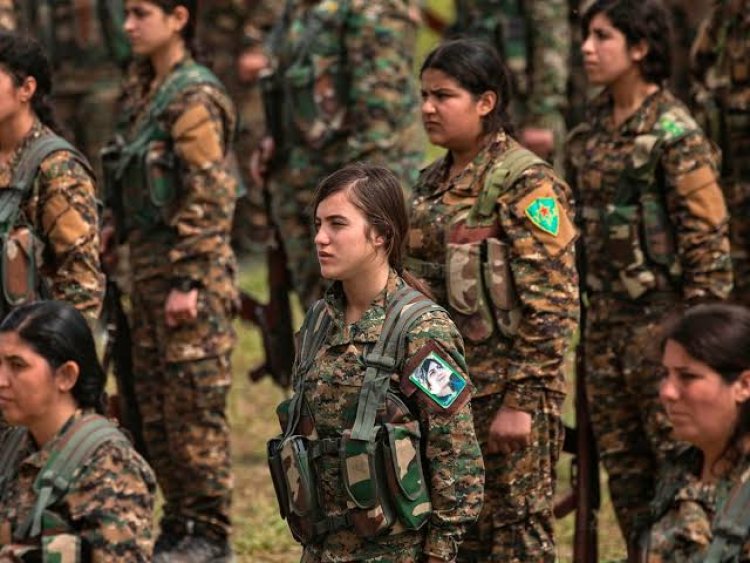
Interview
By Usanas Foundation
Interviewee: Ruksan Mohammed, Spokesperson, Women’s Protection Units (Yekîneyên Parastina Jin, YPJ)
Since the fall of the Assad regime in December 2024, Syria’s transition has hinged on an unresolved question: what happens to the armed institutions built by the Kurdish-led Democratic Autonomous Administration of North and East Syria (DAANES) once they are folded into a national army controlled from Damascus? For the YPJ — the all-women force established in 2013 that played a central role in the campaign against the Islamic State — that question is not merely a technical one about chain of command, but an existential one about whether an autonomous, women-led military institution can survive integration at all.
The January 2026 attacks against North and East Syria, and the SDF–Damascus agreement of 29 January that followed it, form the immediate backdrop to this conversation. Usanas Foundation put a set of questions to YPJ spokesperson Ruksan Mohammed on the state of talks with Damascus, the internal-security-versus-army distinction at the heart of the integration debate, Turkey’s shadow over the process, and where India might fit into Rojava’s outreach beyond the Middle East.
- Could you describe your role within the YPJ and how the organization has navigated the period since the January ceasefire with Damascus?
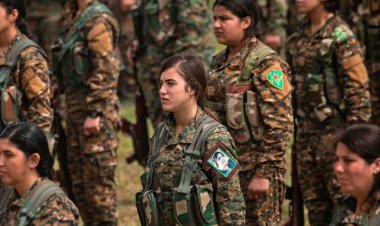
My name is Ruksan Mohammed. I am the spokesperson for the YPJ. The YPJ was founded on 4 April 2013 as part of the revolution in Rojava/Western Kurdistan. Within the context of Middle Eastern society, the establishment of autonomous women's defence forces is of great significance. In Kurdish society, many women still grow up today lacking self-confidence. They are encouraged to behave passively, not to have opinions of their own, and to make themselves dependent on men. In the wake of the developments from 2011 onwards, it became clear to us that, as individual women, we could achieve very little on our own. We therefore decided to organise ourselves as Kurdish women across all areas of life, such as the economy, education and diplomacy.
Our self-organisation in the form of the YPJ strengthens all other areas of autonomous organisation. The YPJ is not merely a military force. It is also a school of life and education where women gain self-confidence, develop leadership skills and prepare to take on pioneering roles in all areas of society. The experience we have gained today plays a decisive role not only on the battlefield but also in the democratic transformation of society. This has enabled us to restore women to their rightful place as leaders in Kurdish society. The YPJ is a school for us women. We have got to know ourselves anew, gained a better understanding of our leading role in social life, and at the same time developed into professional fighters during the war. This has enabled us to contribute to democracy, justice and stability in Syria for the past 13 years.
The military attacks carried out by the Syrian interim government in January this year posed a serious threat to Syria's unity. Following the massacres of the Alawites and the grave crimes committed against the Druze population of our country, these attacks represented yet another breach of trust.
As the YPJ, we played our part in defending the democratic achievements in northern and eastern Syria during the fighting at that time. At the same time, we have consistently called for a political settlement and, accordingly, viewed the agreement of 29 January between the Syrian Democratic Forces (SDF) and the interim government as an important step towards a long-term solution. We regard the political dialogue between Damascus and the democratic system in northern and eastern Syria as important. Syria has suffered enough from war in recent years. The leaders of our country must now demonstrate that they possess the democratic culture and political foresight required to secure a peaceful, stable and prosperous future for Syria.
We have continued to play our part in this since 29 January. We continue to have a large number of professionally trained, battle-hardened female fighters. Our organisational strength, embodied in our command structures, general military forces, special forces and academies, remains intact. We regard it as our daily responsibility to protect our people, Syria's national unity and the democratic achievements in our territory.
- The interim government has proposed folding YPJ units into internal security forces rather than the national army. Why does that distinction matter to the YPJ?
Since its foundation, the YPJ has played a leading role in defending the people of northern and eastern Syria. It has demonstrated its professionalism and determination over many years of war and therefore enjoys enormous support within our society. For years, it has not only been a source of inspiration for the women of Syria, but has also been a driving force behind the establishment of the SDF. Thousands of YPJ fighters played a crucial role in the SDF's victory over Islamic State (ISIS) in 2019. The fact that women have their own command and decision-making structures is not merely a military preference, but an institutional guarantee of women's autonomy and equal representation.
In many parts of the world, women have become invisible within male-dominated military structures. We, however, believe that the presence of women, with their own identity and organisational structure, strengthens both the professionalism of the armed forces and the democratic character of society. Against this backdrop, we can state the following very clearly: the disbandment of the YPJ would enormously weaken Syria's defence capabilities. It makes little sense to do without the thousands of YPJ fighters with combat experience, whilst the dangers in the Middle East are growing by the day.
The security and freedom of our people are under enormous threat from wars and terrorist groups. Syria therefore needs strong self-defence forces which possess not only combat experience but also the political foresight and democratic culture required to prevent unnecessary conflicts from arising in the first place.
The interim government is insisting on the disbandment of the YPJ and the integration of YPJ fighters into the internal security forces. However, in northern and eastern Syria, women have been part of the internal security forces for many years. They enjoy widespread social acceptance and have contributed greatly to internal harmony and security. Disbanding the YPJ would therefore represent an enormous step backwards.
- Kongra Star and other women's groups in Rojava have framed this as a question of women's political standing, not just military integration. How do you see the link between the two? If the demand for an independent status within the army isn't met, what alternatives is the YPJ weighing?
The achievements of the women of northern and eastern Syria can only be understood in their entirety. Over the past 15 years, we have made enormous progress in the social, cultural, political and economic spheres. Through education, self-organisation and intensive advocacy work within our society, we as women have now reached a point where we can speak with confidence about our leadership role in the democratic system of Rojava and northern and eastern Syria. Through mechanisms such as the co-chair system and the establishment of hundreds of institutions across all areas of life, we as women have secured our achievements for the long term. Our experience and knowledge provide a solid foundation for the stabilisation and democratisation of the whole of Syria. We are ready to play an active and self-confident role in Syria's politics, economy, education, culture and defence.
The military integration of the YPJ into the Syrian army is therefore part of the holistic efforts to achieve a democratic and stable Syria. In this context, we talk about a process of 'democratic integration'. By 'democratic integration', we do not mean any form of separation or division. On the contrary, it means contributing to the construction of a united, democratic and strong Syria in which different peoples and social groups are represented on an equal footing. In doing so, we are expressing our willingness, as women of Rojava, to play our part in building strong, professional and democratic civil society and state institutions in Syria.
We are confident that, in this way, the YPJ will find its place in Syria's future. Anything else would mean an enormous weakening of the country. Given the chaotic developments in our region, it would be irresponsible to insist on the disbandment of the YPJ. Only with the YPJ's help will Syria be able to avoid unnecessary entanglement in the region's wars and, where necessary, respond effectively to any threats.
- How has the broader population in northeast Syria — Kurdish and non-Kurdish — responded to the integration talks so far?
Our people possess a comprehensive political awareness and a deeply rooted democratic culture. This is the result of decades of self-organisation. As a result, we have succeeded in establishing a democratic system amidst the severe conflict of the past 15 years, a system which has attracted considerable interest and enormous support worldwide. Everyone in Rojava and in northern and eastern Syria is therefore very clear about what needs to be defended as part of the ongoing integration efforts.
At the same time, our people know the new rulers in Damascus very well. They are aware of their ideological and political convictions. They remember very clearly how the various forces behaved during the war in Syria. And for more than a year and a half, they have been observing the policies pursued by the interim government in Syria. Our country is today characterised by instability, violence and a lack of transparency. State institutions are weak and civil society is under enormous pressure. The interim government's attacks in January have, quite understandably, led people to harbour doubts about the intentions of the new rulers.
Against this backdrop, the majority of people in our areas support the ongoing talks with Damascus aimed at a democratic integration process. At the same time, the public is following the talks very closely and critically. Many people do not trust the interim government. It is therefore all the more important that Damascus refrains from taking any steps that could be misinterpreted or run counter to the spirit of democratic integration. The recognition and integration of the democratic institutions in Rojava and northern and eastern Syria, including the YPJ, will play a crucial role in restoring lost trust.
- What guarantees, if any, has Damascus offered on protecting women's rights and the autonomous administration's social structures going forward?
The interim government attempts to present itself internationally as a trustworthy partner capable of restoring stability and security to Syria after 15 years of war. However, judging by the actions of the new rulers, we can see that they are still refusing to bring about genuine peace and democratisation in our country. Their actions have led to alienation and mistrust amongst large sections of the population, such as the Alevis, Druze, Christians and Kurds. Added to this are the serious economic problems facing our country, which are only further exacerbated by the non-transparent centralisation of economic resources in the hands of a few.
It is also consistent with this picture that Damascus has so far taken no confidence-building measures with regard to the equal participation of Syrian women. We regard the stance towards the YPJ as a litmus test for the interim government. This will show whether it is prepared to recognise the equal participation of women as one of the most important prerequisites for the stabilisation and democratisation of Syria. Our expectations go beyond mere verbal assurances. Equal representation of women, the protection of women's organisations, and the constitutional safeguarding of the legal and social gains women have achieved to date will be the key indicators of genuine democratic transformation.
It is hardly encouraging that women make up just 10 per cent of the members of Syria's new parliament. The daily violence, murders and rapes women are faced with in many parts of Syria are also a cause for concern. The interim government needs to make a significant change of course. It must understand that the experience, knowledge and institutional strength of women in particular, and of the Democratic Autonomous Administration of North and East Syria (DAANES) in general, are indispensable for building a new Syria.
- Turkey has long treated the YPJ/YPG as an extension of the PKK. How does that shape the unit's negotiating position with Damascus?
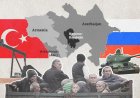
Following 15 years of war and a very abrupt change of regime in 2024, Syria now finds itself under the influence of numerous foreign powers. These include both regional and international actors. The country's geostrategic location, in particular, means that a wide variety of actors are vying for influence here. This includes Turkey. Two key dynamics shape Turkey's policy towards Syria. On the one hand, Ankara sees itself as the successor to the Ottoman Empire and, in this context, asserts claims to power in Syria. On the other hand, ever since its foundation, the Republic of Turkey has regarded the Kurdish people as a threat to national unity and security. Since the emergence of the PKK in the 1970s, Turkey has projected its relationship with the Kurds – characterised by fear, insecurity and hegemonic tendencies – entirely onto this party. Amid the current regional turmoil, Turkey also uses the PKK as a pretext for its own expansionist policy, particularly in Syria and Iraq.
For years, Turkey has been repeating its unfounded allegations that the YPJ and YPG are offshoots of the PKK. Turkey may currently be taking a less aggressive stance on this issue due to its ongoing political negotiations with the Kurdish people's leader, Abdullah Öcalan, and the PKK. However, we are aware that Ankara's influence over the Syrian interim government has repeatedly hampered and blocked the process of democratic integration in Syria. This became very clear during the military attacks on northern and eastern Syria in January. As the YPJ, we are convinced that an agreement with Damascus is possible. Intra-Syrian dialogue is crucial to this.
External powers should only play a role in this process if they do so to support democracy and stability. Turkey is an important neighbouring country, and Syria will always strive to maintain good relations with all its neighbours. As neighbours, we should always strive to maintain constructive and respectful relationships with one another. We do not wish to have any tensions or hostilities with any neighbouring country. We believe that relations with all neighbouring countries, including Turkey, based on mutual respect, dialogue and shared security, are in the interests of both Syria and the region.
- Beyond Syria, what message does the outcome of this process send to women's movements elsewhere in the region?
The many achievements we, as women in Rojava and northern and eastern Syria, have made over the past 15 years have attracted considerable interest worldwide. Women from all corners of the world have travelled to Rojava and North and East Syria to learn from our experiences and show their support. We have also repeatedly received messages of solidarity from South Asia. All of this has clearly shown that the significance of our struggle extends far beyond Kurdish society or the Middle East.
Women's organisations and movements in particular across the world are also following the current process of democratic integration with great interest. We are aware of our responsibility towards the women of the world. This strengthens our resolve all the more to find our place, as women, in a democratic and peaceful Syria. As the YPJ in particular, we are a source of inspiration and self-confidence for millions of women around the world.
The integration of our female fighters into the Syrian army will make it clear to all women worldwide that, as a military and political force, they can play a leading role in their own countries. As women, we are not merely seeking to join the army in order to fight. On the contrary, we know that women's participation is the key to the democratisation of our country and, consequently, to the prevention of military conflicts. This is precisely what the integration process will demonstrate.
- How do you view India's and other outside powers' engagement with northeast Syria during this transition, if at all?
As I mentioned earlier, many different regional and international powers are active in Syria. Unfortunately, this has played a decisive role in the long-running war in Syria. Often, external interventions have not been in the interests of the Syrian people. Instead, existing divisions have been deepened and new conflicts created in order to pursue self-serving national interests. The people of Syria know very well which powers have played such a destructive role over the past few years.
At the same time, it is also important to mention that, in the wake of our successful fight against the Islamic State and the establishment of our democratic system of self-administration, the international community has shown great interest in working with us. This does not apply solely to the military sphere. Important relationships have also been forged at the political, cultural and civil society levels. The international community has recognised that, in Rojava and Northern and Eastern Syria, it has found a reliable partner for democracy and stability in Syria.
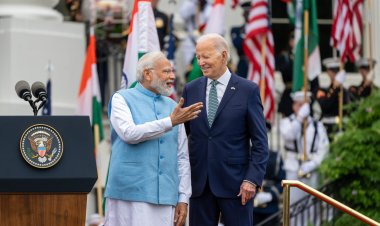
As a direct neighbour of our region, India has ties dating back thousands of years with the many cultures of the Middle East. Many people in our society are deeply inspired by India's cultural diversity, its strong democratic traditions and its history of anti-colonial struggle. There is, therefore, a strong foundation for diverse and close relations. Unlike European powers, India bears no responsibility for the crisis in the Middle East.
On the contrary, the country itself is directly affected by the chaos in our region. It would therefore be entirely understandable – and, in our view, welcome – if India were to play a more active role in Syria and the Middle East. India can draw on its long-standing and diverse ties in the region to support voices calling for democracy, stability and cooperation. We believe that countries such as India, which have long-standing democratic traditions and strong women's movements, can play a more active role in supporting an inclusive political solution in Syria and the equal participation of women. Such an approach would contribute to both regional stability and international peace.
- What would success look like for the YPJ a year from now?
The Middle East continues to undergo a serious crisis and a process of fundamental transformation. This is directly linked to other conflicts around the world and the far-reaching changes in the global order. We are aware of the dangers, but also the opportunities, that this historic phase entails.
As the YPJ, we will continue to work resolutely towards offering our country a future full of hope through the democratic integration of the achievements of Rojava and North and East Syria. We owe this to all those who have sacrificed their lives and health over the past 15 years for a democratic and free Syria. In particular, the women's institutions of North and East Syria represent a red line. Under no circumstances will we accept any denial of their central importance to Syria's future.
The YPJ, together with its thousands of professional female fighters, will take its rightful place in Syria. It will continue its struggle against all forms of religious fundamentalism in Syria with great determination. For women throughout Syria, it will serve as a source of self-confidence and pride in their identity as women. And, through its democratic culture, the YPJ will play an important part in ensuring that Syria continues to pursue a policy of peace and understanding in the region. For us, success is not merely about securing the future of the YPJ. True success lies in all Syrian women becoming equal, free and founding agents of the new Syria. For we believe that no peace can be lasting unless women's rights are safeguarded.
The YPJ's negotiating position rests on a proposition that Damascus has yet to fully accept: that an autonomous, women-led force is not an obstacle to Syrian unity but a structural safeguard for it. Whether that argument prevails will be decided less by rhetoric than by what the interim government is willing to concede on command structure, representation, and constitutional guarantees in the months ahead. For India and other outside observers, the trajectory of this integration process offers a useful test case — of how post-conflict states balance centralised authority against the claims of the movements that helped stabilise them in the first place.
About the interviewee
Ruksan Mohammed is the spokesperson for the Women’s Protection Units (YPJ), the autonomous women’s defence force of North and East Syria, founded on 4 April 2013. T
Disclaimer: The views expressed in this interview are those of the interviewee and do not necessarily reflect the editorial position of Usanas Foundation.