Pakistan’s Trading Tactics for Transnational Repression
 usanasfoundation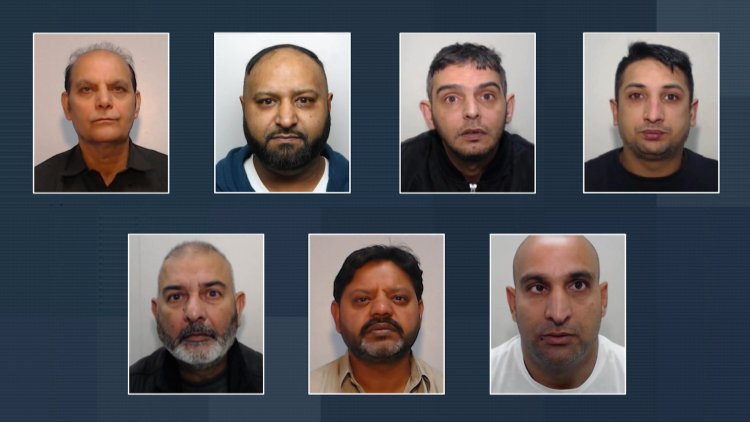
Analysis
By: Arun Anand
Transnational repression is an act conducted/directed by a state/government with the intent to silence its critics/dissent beyond its borders by means of repressive tactics such as intimidation, harassment, violence and coercion. Given its political nature, transnational repression often targets civil society members, political activists, human rights defenders, journalists, whistleblowers and like. However, the transnational character of such repression also makes accountability against such states and access to justice and protection for victims of transnational repression much harder.
The recent fiasco over the deportation of convicted Rochdale grooming gang ringleader Shabir Ahmad is the latest development of Islamabad’s intensifying use of transnational repression. Ahmad, a Pakistani-UK national, was convicted of multiple child sexual offences against in 2012 and was later stripped off his British citizenship. Now free after serving a 22-year jail sentence, Ahmad continues to be in Britain because of protection provided by the Immigration Act of 1971 towards Commonwealth citizens who arrived in the UK prior to 1973. Born in Pakistan’s Punjab, Ahmad’s deportation to Pakistan remains stalled as Islamabad expressed its unwillingness to accept Ahmad’s deportation demands by the UK, as he lived in the country for 60 years.
While this explanation seems fair, the twist is in Pakistan’s diplomatic trade-off: demanding the extradition of Pakistani political dissidents, reportedly Shahzad Akbar, Adil Raja, and Altaf Hussain, in exchange for accepting Ahmad’s deportation. Pakistan alleges that these dissidents have used British soil to ‘destabilise Pakistan’. Nevertheless, this extradition-deportation linkage as a pressure tactic by Pakistan has created a new test of sovereignty and diplomatic leverage, perpetuating transnational repression.
This pattern, however, has been recurring especially since 2022 when Asim Munir assumed the position of Pakistan’s Army Chief. While domestic repression can be understood against the backdrop of Pakistan’s powerful military establishment, the restoration of civilian rule after 2008 did little to change this pattern, as the country remained heavily under de facto military control. The political history since 2008 shows that any political leader or their associates who fell out with the military establishment often faced a similar fate, ranging from political isolation and removal from power to imprisonment, exile, and in some cases assassination.
Political dissidents have likewise faced similar consequences. Despite the return of civilian rule, Pakistan’s coercive apparatus remained deeply entangled with military power, allowing critics of the political-military establishment to be intimidated, prosecuted, displaced, or targeted in exile. In this sense, the same logic of control that shaped domestic politics and enabled a political culture rooted in coercion and censorship also informed Pakistan’s transnational repression of dissent abroad. Pakistan’s role in transnational repression, therefore, reflects the externalisation of domestic authoritarian practices, making human rights safeguards for the Pakistani exiled/diaspora population abroad vulnerable.
At the beginning of this year, a Pakistani court convicted several exiled journalists and political commentators, former army officials, in absentia on charges of the 2023 riots following the arrest of former PM Imran Khan, whose rising popularity is perceived as a threat to the present military-backed government. Freedom House noted the intensifying campaign of transnational repression by the Pakistani government in recent months, including reports of physical attacks and raids against dissidents living in the UK. Similar reports of such assaults extended to other countries like Kenya, the US, and Canada, where PTI demonstrations were reported in 2025, marked by surveillance, threats and intimidation by actors linked with ISI. Recent reporting and police investigations, too, point to targeted incidents against Shahzad Akbar and Adil Raja in the UK. At the same time, Altaf Hussain remains a longstanding exile critic affected more by political restriction and state pressure than by a clearly documented recent physical attack.
The recent trade-off therefore deserves special attention. Pakistan’s attempt to condition acceptance of a convicted offender on the extradition of exiled critics is not a routine diplomatic dispute. It equates a criminal deportation case with political dissent and appears designed to weaken the legal protections available to exiles. More broadly, it reflects a disregard for human rights and the rule of law, while also placing pressure on the UK through diplomatic bargaining.
This is not surprising given the growing political dominance of Pakistan’s military establishment, which has weakened legal protections at home and increasingly treats criticism as a threat to legitimacy. While transnational repression is commonly associated with authoritarian regimes, its use by a state that formally presents itself as democratic underscores the centrality of the military in Islamabad’s political order.
The standoff has now created a diplomatic deadlock. There are also reports that the UK may consider withdrawing foreign aid from Pakistan as part of a broader fiscal reallocation. Even so, London may use coercive diplomacy to push back against Pakistan’s transnational repression tactics. The larger lesson is clear: by misusing deportation and extradition as instruments of pressure, Pakistan has turned a bilateral immigration dispute into a wider test of sovereignty, accountability, and the protection of exiled dissenters.
Disclaimer: This paper is the author's individual scholastic contribution and does not necessarily reflect the organization's viewpoint.
Arun Anand is a distinguished fellow with Usanas Foundation.