Stranded between Ideology and Geopolitics: Is a Relationship between India and Jamaat-e-Islami Bangladesh Possible?
 usanasfoundation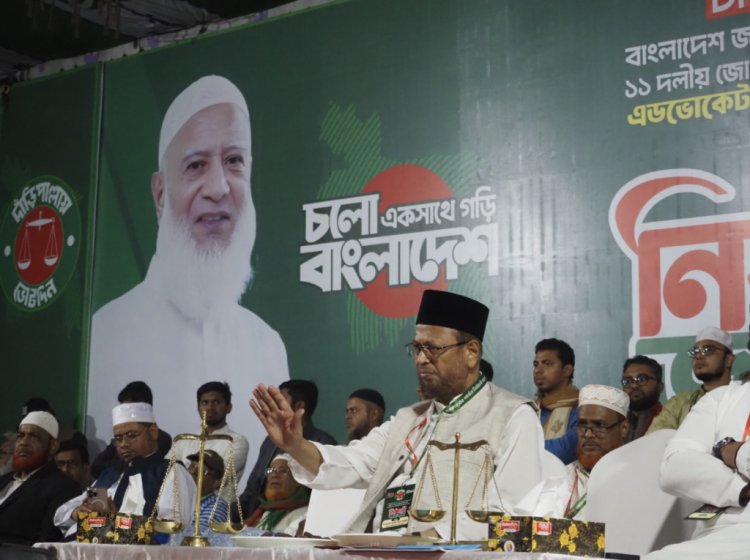
Commentary
By Anusreeta Dutta
The political climate in South Asia is changing, but only a little. Bangladesh is the best example of this. India and other nearby countries have had to rethink their relations with other countries since Jamaat-e-Islami (JeI) rose to power. New Delhi had serious doubts about Jamaat for a long time because of its political views, its past involvement in Bangladeshi politics, and the fact that it seemed to be against India. But recent events show that things aren't that simple. There is a chance for real teamwork.
The question is no longer whether Jamaat is important; it is. The question is whether India can realistically keep or build a working relationship with it without putting its strategic goals at risk.
The Comeback of Jamat-e-Islami
In the past, Jamaat-e-Islami Bangladesh was shunned and even banned. Now, it is a major political force in Bangladesh's changing political scene. Sheikh Hasina's Awami League had kept the party from getting too much political space for years. But the party had more room to manoeuvre during the political upheavals of 2024 and the subsequent changes in Bangladesh's political structure.
Jamaat changed and joined a larger political alliance to prepare for the 2026 elections. This marked the party's most significant return to centre-stage politics in nearly ten years. The Bangladesh Nationalist Party (BNP) ultimately won the most elections, but Jamaat still retained substantial support, especially in districts near the India-Bangladesh border. This resurgence has prompted New Delhi to reconsider its strategic approach. For a long time, India relied heavily on its close relationship with Sheikh Hasina's government. The two countries collaborated to secure the border, combat terrorism, and strengthen their economic ties. The end of the Hasina era has made India's politics considerably more divided.
History of India and Jamaat
There has been a long history of distrust between India and the Jamaat. India doesn't trust Jamaat-e-Islami because of things that have happened in the past. During the 1971 Liberation War, the Jamaat was against Bangladesh's independence and stayed politically and ideologically close to Pakistan. Over time, some members of the group began to speak out against India and try to get people to join Islamist groups. India sees the Jamaat as a group that could cause problems in the region because of these memories from the past.
Fears about safety made things worse. Indian politicians have been worried for a long time that Islamist political groups in Bangladesh could indirectly help terrorist groups that work along the eastern border, which is easy to cross. Because of this, New Delhi has usually preferred to talk to secular or moderate nationalist parties, such as the Awami League. But geopolitics doesn't often let people have permanent preferences.
A Different Tone from Jamaat
Recent comments from Jamaat leaders suggest that they are making a conscious effort to change the party's public stance toward India. Recently, Jamaat president Shafiqur Rahman stressed how important it is to keep good relations with India. He said this because the two countries are closely linked and have similar interests.
Reports say that Rahman met with an Indian official in secret, which suggests that there may already be quiet diplomatic ties between New Delhi and the Islamist party. These signs are not random. Jamaat knows that any future government in Bangladesh will have to keep good relations with India, the country's biggest neighbor and an important economic partner. Indian pragmatic diplomacy has long been known for keeping quiet lines of communication open with all important political players, even those with different ideas.
- Bangladesh's Political Diversity- Bangladesh's political scene has changed since the Awami League lost power. India can't depend on just one political party because many parties are fighting for power. Keeping ties with the Jamaat, even if they aren't official, gives you more freedom in diplomacy.
- Security at the border - Bangladesh has India's longest land border, which is 4,096 kilometers long. Because of this, New Delhi has made Bangladesh's stability a top security goal. If the Jamaat becomes more important in border districts, as recent election results show, India will have to deal with leaders from those areas.
- Competition for regional power- Another new thing is getting involved with other countries. Reports say that the United States and other countries have started to cautiously work with Jamaat as the party becomes more important in Bangladeshi politics. If India doesn't want to talk to the world's powers, it could end up being strategically isolated.
Possible but limited
It doesn't seem likely that India and Jamaat-e-Islami Bangladesh will work together strategically. Because of past mistrust, ideological differences, and political limits at home on both sides, such a relationship is politically difficult. But it's also not possible to fully detach. Geography, politics in the region, and Bangladesh's growing power structure all suggest that India and the Jamaat are working together in some way. The main question isn't whether India will work with the Jamaat, but how carefully and quietly it will do so.
In South Asia's unstable politics, practicality often comes before philosophy. And as Bangladesh's politics change, India may find that keeping lines of communication open, even with people who aren't always easy to deal with, is the price of keeping the peace on its eastern border.
Disclaimer: This paper is the author's individual scholastic contribution and does not necessarily reflect the organization's viewpoint.
Anusreeta Dutta is a columnist and climate researcher with experience in political analysis, ESG research, and energy policy.