Quest to Overcome the Thucydides Trap: Managing US-China Strategic Rivalry and India’s Fears
 usanasfoundation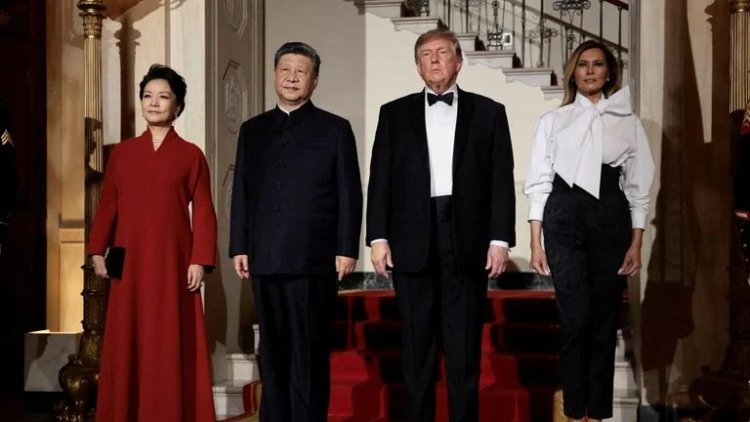
Analysis
By Dr. Abhinav Pandya
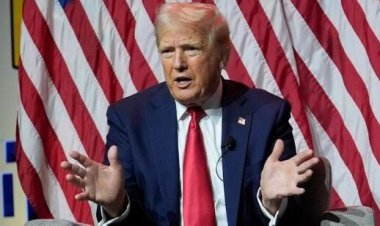
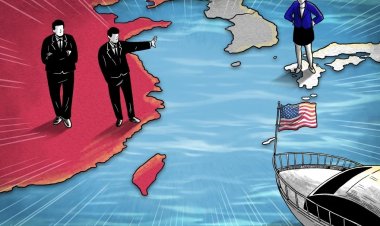
The September 24, 2026, meeting between President Xi Jinping and US President Donald Trump signals a paradigm shift in how the two great powers will approach their strategic rivalry. The US-China strategic rivalry spanning multiple domains, including tech, the military, the economy, trade, finance, and geopolitics, leaves the majority of foreign policy experts with the impression that both powers are inevitably doomed to fall into the Thucydides trap, a classic situation in international relations in which rivalry between an emerging power and the established hegemon is bound to end in a war. However, during Trump's May 2026 visit to China, Xi Jinping asked whether the two countries could overcome the Thucydides trap.
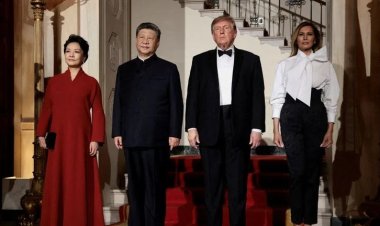
The answer to this partly lies in Xi Jinping’s September 2026 visit to the US. President Donald Trump broke the traditional protocol and received the Chinese president at Joint Base Andrews Airport on September 23, marking the first time since 1962 that a sitting US president received a foreign leader other than the pope. The optics of Jinping’s visit have made the media and strategic community jubilant, as they see a window of peace amidst the ongoing turmoil. Many in the media have called it a diplotainment. In the welcoming ceremony, the US extended a 100-foot red carpet, a 21-person honor cordon, ceremonial cannon fire, and an overhead flypast by two U.S. Air Force B-1B bombers. In mutual gestures of goodwill, President Trump called the bilateral relationship a ‘truly great friendship,’ and Xi compared MAGA to ‘Rejuvenation of the Chinese Nation’. On September 25, the event ended with President Trump showing Xi the original Bill of Rights, the U.S. Constitution, and the Declaration of Independence during a tour of the National Archives. In a strange comparison of the two countries, Trump showed great humility, quite uncharacteristic of him, while remarking that “ours goes 250 years, which is great. We are proud of it, but theirs goes 6000 years.”
Over the last 11 months, Trump and Xi have met thrice and are likely to meet again at the APEC summit in China in November 2026, followed by Xi’s US visit for the G20 summit in Miami. Beneath these positive optics, visits and pleasantries lies an implicit understanding in Beijing and Washington, D.C., to manage the strategic rivalry and avoid direct confrontation. Xi’s invocation of the Thucydides trap raises concerns about potential conflict between the two countries and its impact on the long-term bilateral equation. However, Xi’s White House speech suggested that rising and established powers can overcome historical patterns of conflict through deliberate cooperation and peaceful coexistence. That said, the September 2026 visit can be judged not by its concrete outcomes, but as a platform to deliberate and establish institutional mechanisms to avoid the Thucydides trap. Jinping has summarized his vision for the bilateral ties as ‘constructive strategic stability '. To achieve the said objective, Xi suggested strengthening communication through regular dialogues between the military, diplomatic, and political leaders of the two countries. He also recommended peaceful coexistence and cooperation in addressing shared challenges such as the unintended risks of AI. Further, Xi emphasized the need for people-to-people contact and extensive educational exchanges between Beijing and Washington.
However, the high-profile Xi visit ended without a joint statement or even a communiqué, let alone concrete agreements between the two countries. The two parties deliberately avoided problem areas such as Taiwan and Iran. On Iran, Xi reiterated its position on the nuclear issue and the Strait of Hormuz; however, he did not signal any major change in its relationship with Iran, which could strengthen the American position. China also made no major concessions on purchasing American agricultural products and energy. The only concrete outcome was that the US extended the tariff truce until January 10, 2027, implying that China will not face major tariff impositions under the Graham Act for buying Russian and Iranian oil in the immediate future; and on AI, both parties agreed to a US-China Super Intelligence Dialogue, scheduled for November 2026, and a communication channel to address AI-related threats. However, the talks failed to resolve disputes over semiconductor export controls, computing infrastructure, and model distillation. Additionally, structural differences persist on AI: Trump, fearing China will outpace the US in the AI race, rejects regulatory oversight to maintain the US’ lead, unlike Xi, who prefers strict human control and collaborative risk governance to prevent misuse and unintended threats from frontier AI models.
Not Good News for India
Several Indian commentators, including academics and veteran diplomats, have argued that US-China strategic rivalry is a zero-sum game, with no scope for any rapprochement, let alone a long-term peaceful coexistence. They further argue that since the September conference has produced no concrete concessions from China, with core ruptures on issues like Taiwan, Iran, and the Indo-Pacific left untouched, any goodwill is, at best, short-term. In the final analysis, both superpowers are inevitably heading toward a decisive and comprehensive conflict across multiple geographic theaters and domains.
However, these assessments need to be taken with a pinch of salt. Partly, they stem from India’s fears that if the US has decided to engage China bilaterally to avoid confrontation, it may not need India to counterbalance China in the Indo-Pacific, which is not good news for Delhi. India’s fears are not completely unfounded. The US Deputy Assistant Secretary of State, Christopher Landau, stated in his speech at the Raisina Dialogue that the US will not repeat its mistakes with China with India, i.e., allow India to outcompete the US through unequal trade relations, and facilitate the rise of a new geostrategic rival. Such statements suggest deep-rooted, hidden motives. India, already skeptical of the West because of its colonial and Cold War hangover, gets overly concerned by such outpourings.
China is India’s strategic adversary. Indo-China ties have plummeted, particularly after the 2020 Galwan crisis; US support is critical to India’s national security against Chinese shenanigans. After Galwan, bilateral ties between New Delhi and Beijing entered their worst phase. Along the LAC, the boundary between India and China, troops were deployed in large numbers. Aggression and animosity also intensified on the propaganda and diplomatic fronts. In 2024, de-escalation and disengagement began and continue in various stages; however, India remains highly cautious and guarded about Chinese designs, as China supported Pakistan with intelligence, equipment, and logistics in the four-day Indo-Pakistan war in May 2025. In any future India-Pakistan escalation, China will likely support Pakistan, in addition to opening a new front on the India-China border to put pressure on India. Further, China continues to build and sustain pressure on India by strengthening its intelligence, economic, and defense footprint in India’s immediate neighborhood, i.e., South Asian countries like Nepal, Sri Lanka, Bangladesh, Myanmar, and the Maldives, and other global theatres like West Asia, which is critical to India’s energy security. Further, in a future escalation scenario with Pakistan and China, India cannot rely on Moscow, as the latter has a robust strategic partnership with Beijing. Particularly after the Ukraine war sanctions, Beijing has emerged as Russia's primary economic lifeline; hence, Russia will not be in a position to render effective help.
Further, India’s ongoing frictions with the US add to New Delhi’s fears and concerns. The current bilateral situation between the two countries is far from cordial for several reasons. India rejected Trump’s claims to have arranged an India-Pakistan ceasefire during May 2025, an Indo-Pakistan war, scuttling his chances for the Nobel Peace Prize. India faces tough choices on the war in Ukraine and with Iran. India has refrained from taking sides and continues to buy Russian oil, though it stopped buying Iranian oil long ago. After the Graham Act, the sword of 100 percent tariffs on Indian exports to the US looms large if Modi does not stop importing Russian oil. The US has stalled the supply of the engine for India’s indigenous fighter plane, Tejas. India is uneasy with the growing US footprint in Bangladesh, as the US allegedly facilitates and supports pro-Pakistani Islamist entities like Jamaat-e-Islami and separatist Christian religious minorities, which can be troublesome for India in its North East. Hence, despite signing four foundational agreements on defense, intelligence and logistics matters, the bilateral equation between New Delhi and Washington, D.C., lacks trust.
Also, Pakistan’s crypto and defense deals with India’s nemesis, Field Marshal Asim Munir, and with Trump’s family members intensify India’s fears. Field Marshal Asim Munir is known for his religiously charged anti-India speeches while steering the Pakistan Army during the four-day India-Pakistan war of May 2025. Allegedly, he was on the verge of activating nukes. Further, the US-China rapprochement does not resonate with India’s vision of a multipolar world order. The idea of Constructive Strategic Stability as the guiding principle of the US-China relationship suggests a shift toward a bipolar world order. In such a world order, China will be a dominant player in multilateral economic, financial, and diplomatic institutions, much to India's chagrin.
However, it is not merely India’s skeptical lens that is pessimistic about the future of US-China rapprochement. Fundamental disagreements and disputes between the two superpowers could overwhelm peace overtures. Their conflicting geopolitical and geoeconomic motives, actions, and influence are evident in most global issues and conflicts today. Hence, at best, the September summit can be called a tactical pause instead of a strategic breakthrough. This tactical pause seems to be driven by the limitations of these two powers. The US, with its involvement in the Iran war and the Ukraine war, which are likely to escalate, is already overstretched. At this stage, China also wants to avoid direct confrontation with the US. Moreover, direct involvement in the quagmire of European and Middle Eastern conflict theatres would drain Chinese resources. Further, in Chinese statecraft, wars can be won without firing a single shot. That said, China expects the US to decline in every possible way, i.e., economically, militarily, politically, and internally, with these unending wars. It is only a matter of time. China can excel at patience, and while the imminent US decline unfolds, it can gain more time, space, and resources to emerge as a genuine claimant to the power vacuum left by the US decline.
Disclaimer: This paper is the author's individual scholastic contribution and does not necessarily reflect the organization's viewpoint.
Dr. Abhinav Pandya is the CEO & Founder of Usanas Foundation