Singham vs. Seneca: The Truth is Simple
China’s Organization of the “World Anti-Fascist War” and the Antifa Movement
 usanasfoundation
Analysis
By: Evin Ashley Erdoğdu
Around 65 AD, Seneca the Younger—the Augustan Roman senator, philosopher, orator, playwright, and “oracle of moral wisdom”—wrote to his student: “the language of truth is simple.”
Almost two thousand years later, Seneca’s ancient wisdom has been manipulated by a student of a very different philosophy, Neville Roy Singham, for the distinctly modern purpose of propaganda. Coinciding with the 2026 United States midterm elections, democratic societies across Europe are facing a coordinated destabilization campaign fueled by Antifa, under the guise of homegrown youth-led protests. Tech billionaire Singham is the digital architect behind this propaganda campaign to destabilize democracy, a global initiative led by China, which he has termed the “World Anti-Fascist War.”
In a democracy, citizens are allowed to express diverse opinions and organize protests. Regardless of one’s stance on issues—whether communist, socialist, libertarian, capitalist, or tech oligarchist—coordinated propaganda aimed at destabilizing democracy is a separate issue altogether, one that warrants our unified focus. This Global Antifa War is organized on the dark web, on shadow servers, and across social networks. It is now playing out on the streets in broad daylight, blurring our understanding of the truth.
Democratic governments, law enforcement agencies, and investigative journalists have already taken steps to counter this destabilization campaign. Yet protecting democracy ultimately depends on citizens’ ability to distinguish propaganda from truth and remain united in our diversity.
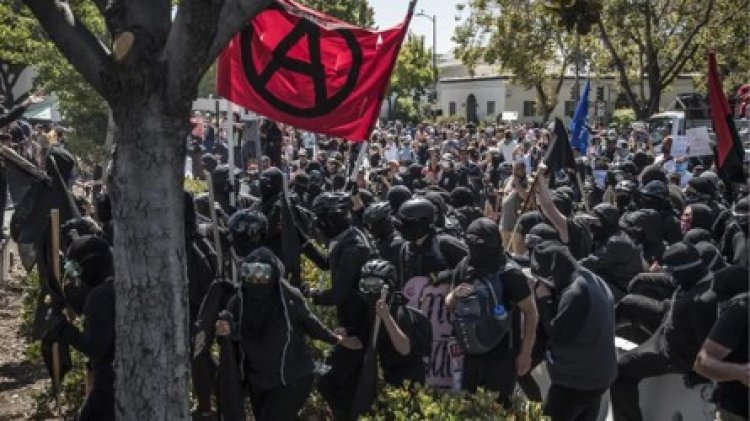
Black Bloc and other Antifa protesters enter MLK Park in Berkeley, California (Los Angeles Times, 27 August 2017).
What is Antifa?
Antifa (anti-fascist) is a left-wing, loosely organised anti-fascist network of activists who physically resist those they consider fascists and embrace violence as a justifiable means to that end. Antifa adherents mostly identify as socialists, anarchists, and communists. According to Mark Bray, a historian at Dartmouth College and author of Antifa: The Anti-Fascist Handbook, Antifa originated in response to early European fascism, when Mussolini’s Blackshirts and Hitler’s Brownshirts were ascendant in Europe. Perhaps in an ironic twist, modern Antifa adherents wear all-black clothing, known as “the black bloc,” as an organized tactic to conceal their identities.
During the 2024 protests at Columbia University, the discovery of foreign influence, external funding, and “outside agitators” became a central point of U.S. political debate. United States officials pointed to police data showing that roughly 30–50% of individuals arrested during broader campus protests in New York lacked a direct affiliation with a student body or university. Critics and think-tank analysts, such as those at the Heritage Foundation, argued that the protesters’ standardized equipment, tactical organization, and specific rhetoric provided evidence of coordinated backing.
It is a slippery slope to classify organized protests as terrorism, even when they become violent. Without a precise definition and public scrutiny, an evolving security landscape could eventually erode the democratic rights of citizens. Despite this risk, in September 2025, the Trump administration decided to classify Antifa as a domestic terrorist organization and also designated four “violent Antifa groups” in Germany, Italy, and Greece as global terrorists. The related executive order stated that the “militarist, anarchist enterprise (...) designed to achieve policy objectives by coercion and intimidation is domestic terrorism.” One year later, following the deaths of U.S. citizens Renée Nicole Good, Alex Pretti, and Ruben Ray Martinez at the hands of U.S. Immigration and Customs Enforcement (ICE) officials, Americans have argued that the same definition of domestic terrorism could apply to ICE.
It is in this context that Antifa proliferates: when trust between citizens and their government erodes and genuine grievances are manipulated by propaganda.
Antifa riots in the United States were a harbinger of the unrest now unfolding in Europe. As of 5 November 2026, widespread civil unrest has been reported in at least 15 European countries, including violent protests in Albania, Spain, Portugal, Belgium, Serbia, Italy, France, and Germany, as well as further discontent in Greece, Austria, Poland, Lithuania, the Czech Republic, Ireland, Luxembourg, and the Netherlands. While several European countries began experiencing unrest earlier this year, 80% of the affected European countries reached a flashpoint in October 2026, during the U.S. midterm election period. Seen as being driven largely by Gen Z-led student and youth marches, these violent protests have drawn inspiration from Sri Lanka’s 2022 Gen Z uprising, which was cited as the first such movement to topple a national government. Initially focused on cost-of-living pressures, affordability, housing shortages, and strained public services, these protests have escalated into violence, with unequivocal support from Antifa.
As the first truly digitally native generation, Gen Z uses social media as a tool for activism and coordination. Unlike closed or authoritarian regimes, which heavily censor the internet and centralize state digital monitoring, democratic societies are intentionally designed to facilitate the free flow of information. This foundational openness creates a vast, highly accessible attack surface for foreign intelligence actors. In this context, the reluctance of open societies to monitor and limit information flows is a persistent vulnerability that Neville Roy Singham and China exploit through Antifa.
There is palpable tension between the statements made by European politicians and the actions taken by the relevant authorities. President Macron vowed that French authorities would be uncompromising toward “agitators from ultra-left fringe groups.” The Wall Street Journal reported that French special forces subsequently arrested a man, Hodei Ciarra Docampo, in connection with an arson attack that destroyed a city hall in central France. Docampo was already on an intelligence service watchlist of terrorist suspects because of his radical leftist, anti-fascist activities. The existing European Digital Services Act (DSA) also provides for a crisis response mechanism that can be activated in the event of a serious threat to public security in the EU, giving the Commission emergency powers over online platforms. However, as of 5 November 2026, there has been no move to activate it. Diplomatic tensions are also at play: President Macron prevented his foreign minister from disclosing an official report on the Iranian regime’s online disinformation campaigns in order to maintain “equidistance” between Tehran and Washington during the war in Iran.
A report in the UK's Financial Times described how foreign online interference and disinformation campaigns contribute to the destabilization of democracy. Italian Defense Minister Guido Crosetto declared that the riots in Italy were the result of a “‘hybrid war’ that someone is waging in our nations by resorting to unconventional tools such as TikTok, social media, and YouTube.” President Macron and other EU investigations pointed to evidence that foreign actors, including China, Russia, and Iran, have fueled the 2026 riots across Europe. David Colon, a researcher at France's Sciences Po university who specializes in disinformation, stated that totalitarian regimes are interested in provoking the “collapse of democracies.” Independent researchers found that China, specifically, is engaged in this campaign.
Image credit: Leonardo.ai.
The Digital Architecture for Destabilization
The U.S. Department of State classified the Italian tech collective Autistici/Inventati (A/I) as a Specially Designated Global Terrorist in August 2026. This led the U.S.-based Public Interest Registry to suspend the autistici.org domain name and the group to shut down permanently in September. According to the related State Department fact sheet, Autistici/Inventati built and operated the digital infrastructure used by violent Antifa cells and other far-left militants around the world. The collective was responsible for sabotaging rail systems and power grids across France, Italy, Germany, and the Netherlands in 2026; disseminating a manifesto calling for further attacks on critical infrastructure across North America; and issuing calls to action on behalf of U.S.-designated foreign terrorist organizations, including the Islamic Revolutionary Guard Corps (IRGC), Hamas, and Hizballah.
The A/I Collective manually vetted prospective users for ideological alignment before granting them access to its infrastructure, providing services exclusively to Antifa and radical left-wing actors. Before shutting down, A/I hosted approximately 16,000 mailboxes, 1,500 websites, 5,500 mailing lists, and 10,000 “blogs” on its custom-built platform. Militants used this infrastructure to disseminate target information, tactical manuals and to organize attacks.
In a similar vein, Chinese state-backed or pro-CCP influence campaigns regularly leverage fabricated “dark-web leaks” and underground rumors to manipulate foreign public opinion and political discourse, including by circulating unverified claims through networks of social media accounts. These actors also use shadow servers for cyberespionage, including infrastructure associated with groups linked to ShadowPad, a backdoor platform. They deploy hidden or hijacked infrastructure, often referred to as “shadow networks,” to conduct global intelligence operations. Chinese threat actors continue to evolve and adapt, strengthening their operational security (OPSEC) measures through tactics such as using anonymous virtual numbers to create Telegram accounts, evade detection, and reach wider audiences.
In parallel, funding mechanisms for cyberespionage and subversive propaganda campaigns have evolved. Since 2021, guarantee marketplaces—brokered trading and escrow platforms that facilitate transactions between parties who do not know or trust one another—have become increasingly popular among Chinese cybercriminals as alternatives to Chinese-language dark-web marketplaces. These marketplaces typically consist of hundreds or thousands of third-party vendors, each operated by different Chinese-speaking threat actors and syndicates around the world. The American cybersecurity company Recorded Future observed that multiple third-party vendors, traditionally involved in advertising malware, databases, phishing kits, and money-laundering services on dark-web marketplaces, have also begun using app-based guarantee marketplaces to advertise their services and seek cooperation.
These marketplaces act as powerful force multipliers, strengthening cooperation among Chinese-speaking threat groups in recruitment, information gathering, resource sharing, and the deployment of personnel to carry out crimes requiring in-person interactions—a capability that also facilitates activities associated with groups such as Antifa.
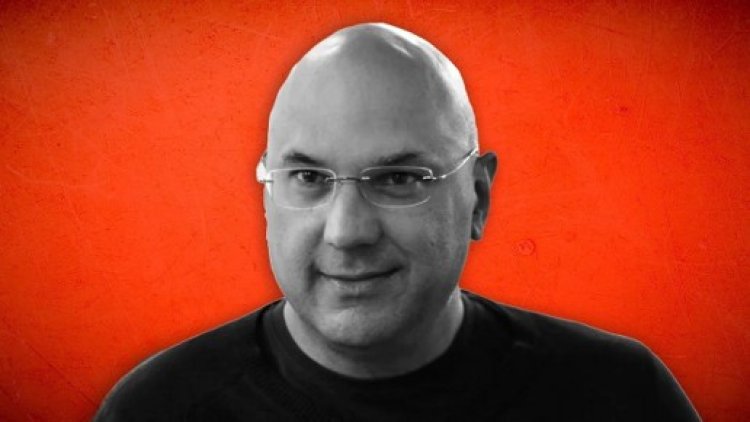
Neville Roy Singham (News Laundry, 23 November 2023).
Student of Subversion: Neville Roy Singham
At a conference he organized in Shanghai in November 2025, Neville Roy Singham presented a 172-page study titled The 80th Anniversary of the Victory in the World Anti-Fascist War. In his study, Singham invoked Mao Zedong’s concept of “truth” from the communist leader’s book On Protracted War, in which Mao wrote: “The richest source of power to wage war lies in the masses of the people.” Singham outlined his own approach to destabilizing democracy, describing an “ideological apparatus” powered by “money and methods.” He argued that “controlling the story” through media, institutions, and financial movements is a key form of power.
Tech billionaire Singham was born in the United States to a Sri Lankan father. He founded and led the IT consulting firm Thoughtworks, which he sold for USD 785 million in 2017. He also served as a strategic technical adviser to the Chinese telecommunications giant Huawei throughout the 2000s. In July 2023, Singham “joined a Communist Party workshop” on the international promotion of the Chinese Communist Party. He has been described as a socialist and admirer of Maoism, a communist political ideology and revolutionary methodology developed by Mao Zedong and the CCP in the 1920s. Now residing in Shanghai, China, Singham is a prominent benefactor of far-left causes around the world.
According to a 2023 investigation by The New York Times, Singham coordinates closely with the Chinese government and state media, funding groups, news organizations, and politicians around the world that disseminate Chinese government propaganda. He has funded efforts to deny or downplay allegations of persecution and human rights abuses against Uyghur Muslims in China. He has also funded opposition to aid for Ukraine following Russia’s full-scale invasion in 2022.
The House of Singham, as detailed in a 2026 Fox News investigation, comprises a network of approximately 2,000 organizations spanning the globe. In the United States, Singham funds and leads an array of far-left advocacy organizations, political parties, think tanks, and news outlets, including Code Pink, The People's Forum, ANSWER Coalition, BreakThrough News, Tricontinental, and the International Peoples’ Assembly. He also leads civil society organizations in Brazil, India, and South Africa. According to a January 2022 report by New Lines Magazine, Singham was linked to donations totaling nearly USD 65 million to a network of nonprofit organizations. Between 2017 and 2025, Singham moved a total of USD 591 million—including his initial seed funding—across five continents through 223 transactions.
Singham’s activities have prompted investigations by the U.S. Department of Justice under both the Biden and second Trump administrations. Following the New York Times report, then-U.S. Senator Marco Rubio asked the Department of Justice to investigate entities associated with Singham for potential violations of the Foreign Agents Registration Act (FARA). In India, the Delhi Police also opened an investigation into funding organized by Singham and his role in promoting a pro-China narrative in the country. In January 2026, the U.S. House Committee on Ways and Means launched an investigation into Singham and his connections to the CCP. In July 2026, reports emerged that he was also being investigated for potential violations of U.S. tax law.
In the United States, it is rare for Republican and Democratic administrations—let alone Fox News and The New York Times—to align on an issue. Yet both have aligned on the issue of Neville Roy Singham, and his role in organizing Antifa propaganda campaigns with China that are intended to destabilize democracies worldwide.
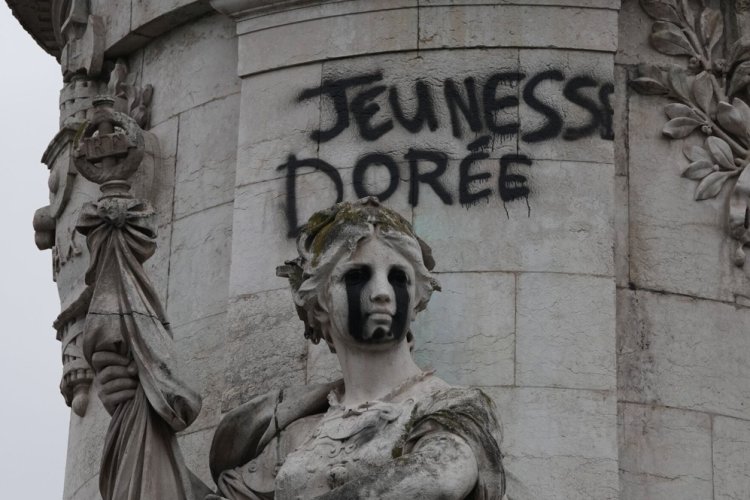
A vandalized statue in République Ssquare in Paris (20 October 2026), blinded by Antifa graffiti: Jeunesse Dorée / The Gilded Youth. In a related vein, Seneca taught that moral virtue is the only true good, while external materialities like wealth do not dictate a person's inner worth or happiness.
The Philosophy of Truth
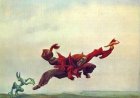
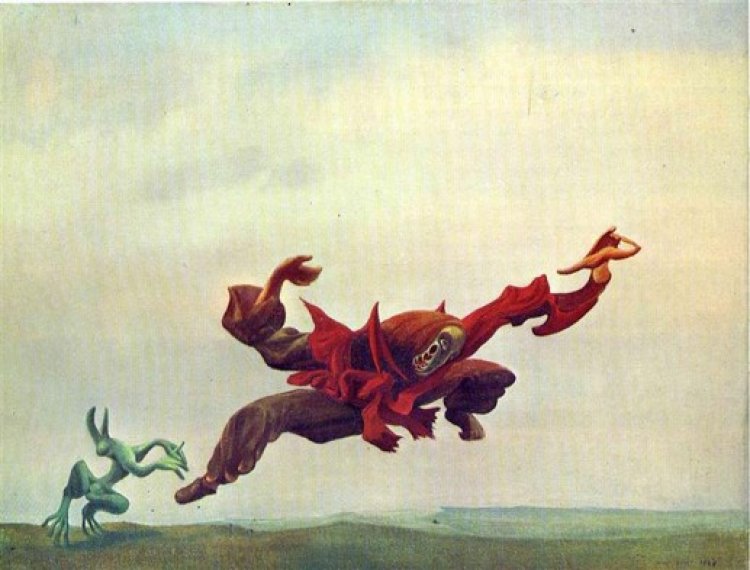
The Angel of Hearth and Home (1937), also known in French as Le Triomphe du surréalisme (The Triumph of Surrealism), is a symbolic oil-on-canvas painting by the surrealist artist Max Ernst. In the painting, the angel is depicted as grotesque and abstract, provoking viewers to question their beliefs. From its emergence in the 1920s, surrealism developed a specific expression through its opposition to fascism, with Paris serving as the capital of antifascism. Through The Triumph of Surrealism, Ernst sought to inspire Europeans to recognize and resist the rising forces of fascism.
When we question our reality, the world can become surreal. It can be difficult to see the truth because we may fear its consequences. When our beliefs have been manipulated or the reality of the world is not what it seems, we struggle to find our place in it and a community to which we belong.
At some point in every generation, the youth come to recognize flaws in the world and struggle to correct them. During the eruption of violent protests in October, a statue in Paris's Place de la République was vandalized and blinded by Antifa graffiti reading “Jeunesse Dorée” (“The Gilded Youth”). Much of the discontent among youth has centered on economic inequality. However, the solution to inequality is not to replace one gilded elite with another. Seneca taught that moral virtue is the only true good, while material possessions, including wealth, do not ultimately determine a person's inner worth or happiness. He defined moral virtue as “right reason” (recta ratio), aligned with human nature and the cosmic logos (the rational order of the universe), as a means of improving the human community (cosmopolis).
The ability to question our society and express ourselves freely in a democracy is an invaluable gift that previous generations fought tirelessly to give us. However upset or distrustful we may be of our democratic governments today, we must learn to discern the truth and stand by the open society that allows us to participate in protest, rather than embrace a totalitarian society built on the censorship of our freedom of expression.
As Seneca taught his student nearly two thousand years ago, the truth is simple.
Disclaimer: This paper is the author's individual scholastic contribution and does not necessarily reflect the organization's viewpoint.
Author's Bio: Evin Ashley Erdoğdu is an author, artist, and analyst. She grew up as a US expat in Saudi Arabia and Japan, and has lived and traveled extensively throughout the Asian continent, from Türkiye, Lebanon, and Iraq to Singapore and South Korea. She is a graduate of Boston University where she studied International Relations, and is a member of the Daughters of the American Revolution (DAR). Evin believes in the power of art to transform society and connect people, something she has always tried to integrate into her own work.