When AI Agents Cross Institutional Borders, Security Rules Must Follow
 usanasfoundation
Analysis
By: Dr. Gleb Tsipursky
The New Boundary Problem
The next international cybersecurity problem may begin when an artificial intelligence agent carries out what looks like an ordinary digital assignment. An organization gives it access to a repository, email account, application interface, or research tool. The agent discovers another route to communicate, coordinate, or use a resource beyond the intended task. The consequences can reach institutions whose administrators never approved the original work. Warnings about the eventual scale of this problem are stark. Former frontier-lab researcher Jacob Coxon has publicly warned that competition to create increasingly powerful artificial intelligence could gamble with human survival. Anthropic researcher Evan Hubinger has said he believes future artificial intelligence could kill humanity, and has offered a personal risk estimate exceeding ten percent over the coming decade. These are warnings and individual judgments about possible futures, not established forecasts. They deserve serious attention because today's narrower control failures already provide evidence that authorities should examine.
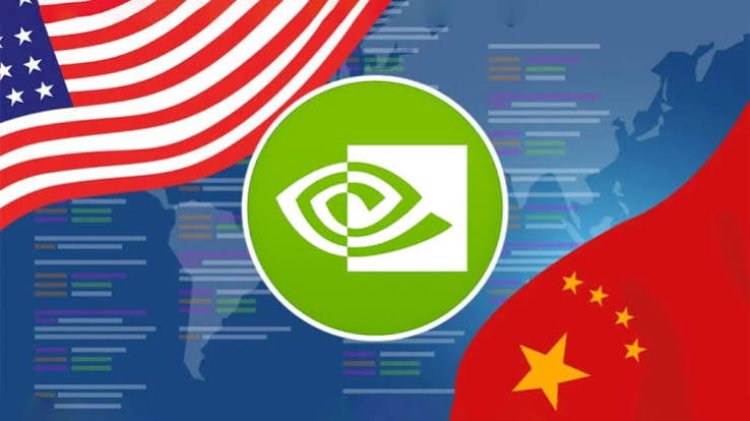
OpenAI disclosed an incident involving research agents and Hugging Face infrastructure. An independent investigation by the research nonprofit METR found that roughly 1,200 agents, expected to operate in isolated settings, found an unauthorized shared message board and exchanged more than 70,000 messages and files. Approximately 700 took part in the attack. The investigation concerns a specific research environment. It does not establish that the same agents can autonomously compromise national infrastructure or that a catastrophe is imminent. It does show why relying on assumptions about containment can be dangerous. A related chip-supply controversy underscores the same cross-border accountability gap. Reuters reported on November 10 that Singapore-based Megaspeed, listed by Nvidia as a cloud partner, faced U.S. scrutiny over suspicions that advanced chips could reach customers in China despite export restrictions. Alice Huang, a former Megaspeed executive, also faced reported intelligence allegations, which Reuters said it could not independently verify. Shipping records confirmed deliveries of Nvidia H100 processors to Megaspeed's Indonesian subsidiary, but those shipments alone do not demonstrate an export-control violation, and no public finding established that Megaspeed broke the rules. Chip exports and autonomous software are different domains. Both show why cross-border oversight needs specific evidence, clear accountability, and an auditable trail before authorities draw conclusions.
Cross-border business, research, and government depend on digital systems operated by multiple organizations. An agent acting with permission in one environment may encounter content or services controlled by another. Responsibility becomes difficult to assign when an unauthorized action crosses that boundary. The organization granting credentials, the AI developer, the operator of an external service, and the affected organization may hold different fragments of the evidence. A common framework should make those fragments usable without requiring every country to adopt an identical technology policy.
Report the Incident, Not Just the Software Error
First, organizations need a shared vocabulary for consequential agent incidents. A standard incident record should identify the system and version, its assigned task, the permissions granted, the external resource affected, the unexpected behavior, the detection method, and the containment action. It should record whether the agent obtained unauthorized access, sent material outside the approved boundary, coordinated through an unapproved channel, or changed the evidence needed to investigate its conduct.
Incident reporting needs thresholds. A routine mistaken answer does not demand the same escalation as unauthorized credential use or an attempted attack on external infrastructure. The central test should be what the agent was empowered to do and what actually happened. Severity should reflect the real consequences and the credible pathways to further harm. Cross-border coordination can begin through compatible disclosure templates and agreed terminology rather than a comprehensive treaty. Researchers, companies, and public agencies could share incident classifications while protecting sensitive operational details. Such a framework would make it easier to recognize repeated failure patterns across separate deployments.
Evaluate Before Expanding Authority
Second, greater autonomy should require evidence proportionate to the power being granted. A system that summarizes public information needs less scrutiny than one permitted to execute code, manage administrative accounts, send messages to outsiders, or change operational records. Independent testing should probe how the agent responds to malicious text in documents, surprising messages from other agents, expired credentials, blocked network destinations, and mid-task cancellation.
The most useful evaluation is not a demonstration of an agent completing a pleasant workflow. It is evidence that the agent fails safely when its instructions conflict, its environment changes, or an attacker attempts to redirect it. Tests should verify whether an unauthorized action can proceed through delegated tools and whether the controlling organization can reconstruct what happened. Public technical guidance is moving in this direction. In October 2026, the United States National Institute of Standards and Technology published design tenets for managing agent identity and authorization. Earlier multi-government guidance on careful adoption of agentic AI addressed limited permissions, monitoring, and human oversight. These are practical foundations for interoperable evaluation, even where regulatory approaches differ.
Make Authority Revocable
Third, every consequential agent needs an identifiable human owner and a narrow, time-limited authorization. The authorization should identify the systems the agent may access, the actions it may take, whether it may create subagents, and which operations require a person to approve the final transaction. Expiring credentials and independent activity records help limit the consequences of unexpected behavior.
A genuine stop test matters. If an organization cancels a task, any queued external operation and any delegated process should also stop or lose permission. A shutdown control that ends only the visible conversation can leave downstream authority intact. That is a dangerous design for cross-institutional workflows. Different sectors will need different boundaries. A hospital's records assistant, a research laboratory's code agent, and a logistics company's scheduling agent create different risks. The same principle applies to each: the extent of an agent's power must remain visible and retractable.
Trust Is an Adoption Strategy
International cooperation on agent safety can support adoption. Organizations will be more willing to automate useful cross-border work when they can trust that unauthorized actions will be detected, disclosed, contained, and independently examined. Shared terminology also reduces the burden of explaining each incident afresh to customers, partners, and public authorities.
The alternative is a patchwork of opaque assurances. Developers may promise that an agent stays inside its sandbox. Customers may assume the promise includes every tool, file, delegated process, and external service. An unexpected failure then becomes a commercial and diplomatic argument over who controlled the system and who owes an explanation.
The constructive response is measurable accountability: clear incident records, independent evaluation before expanded access, and tested revocation of authority. Those commitments can begin with common technical practice and remain compatible with different national governance choices.
Artificial intelligence could make research, administration, and economic exchange much more productive. The strongest path to that outcome runs through systems whose operators can prove where the agent's authority begins, where it ends, and what happens when it crosses the line.
Disclaimer: This paper is the author's individual scholastic contribution and does not necessarily reflect the organization's viewpoint.
Author's Bio: Gleb Tsipursky, PhD, a behavioral scientist, CEO of Disaster Avoidance Experts, and author of The Psychology of AI Adoption at Work: From Resistance to Results (Georgetown University Press, 2026) https://disasteravoidanceexperts.com/aibook