Beyond the Battlefield: How Islamic State is Reshaping the Terror Threat Against Israel
 usanasfoundation
Analysis
By: Vaasu Sharma
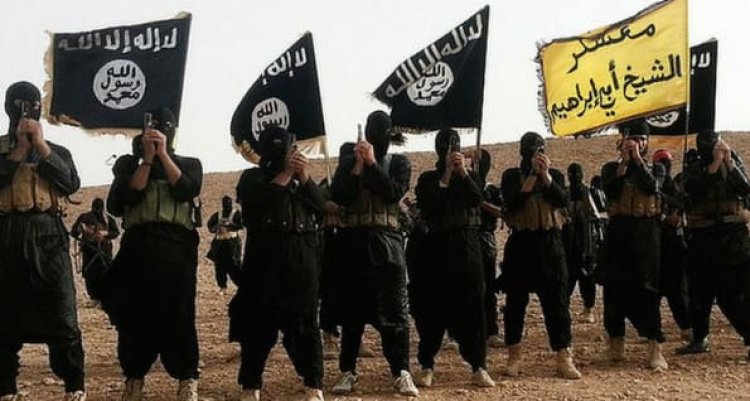
The Islamic State (ISIS) has never had the territorial footprint in Israel that it previously had in Iraq and Syria. However, the absence of a persistent campaign of successful attacks should not be misconstrued for a lack of strategic intent. Beyond the greater fight against Hamas, Hezbollah and Iran, another security danger has been brewing. Increasingly, ISIS has blended domestic radicalization, online recruitment and external facilitation to produce threats against Israel and Jewish interests beyond its boundaries.
The magnitude of this development became apparent in October 2026 when a review of publicly published Israeli security operations showed a notable uptick in IS-related arrests. Israeli officials had almost 50 operations against alleged ISIS militants between 2014 and October 2023. The figure has already risen to 46 in less than three years since the Hamas attack of 7 October 2023. More importantly, 28 of the recent operations involved real plotting of attacks, compared to 18 in the previous nine and a half years. These figures are not drawn from an exhaustive government statistical database, but from publicly available information, and they do suggest a significant shift in the threat landscape. So, the question is not just whether ISIS can carry out a significant attack inside Israel. It is whether the organization is building a recruiting and facilitation ecology that can produce new dangers over and over, even if individual cells are taken apart. The distinction is crucial for Israeli national security, since it moves the emphasis from stopping individual attacks to understanding the bigger networks, regional circumstances and ideological influences that enable such operations.
An Ideological Confrontation that never disappeared
ISIS’s animosity towards Israel is not a recent response to the ongoing Gaza conflict. It’s a matter of intellectual outlook, seeing Jews and Israel in a wider context of religious conflict. Its antisemitism is not merely a political reaction to Israeli government policies, but a key feature of its radical view of religious and historical strife. IS propaganda, more precisely, uses selective interpretation of religious texts and historical wars to depict Jews as fundamental adversaries of Islam, and frames the confrontation as a larger religious struggle. This narrative is used to justify violence against Jewish communities and Israeli targets.
The group’s claim of responsibility for the 2017 attack at Jerusalem’s Damascus Gate that murdered Border Police officer Hadas Malka showed its willingness to appropriate bloodshed against Israelis for propaganda purposes. Israeli officials have questioned the assertion of direct organizational involvement and it is vital to distinguish between ISIS-inspired violence and acts that are operationally controlled by the group. Nonetheless, the episode indicated that Israel had already penetrated the organization's ideological target environment.
The violence that erupted after 7 October 2023 has given IS yet another opportunity to capitalize on regional instability. It has targeted Jewish communities and Israeli interests through its propaganda, while undermining the intellectual validity of Hamas. ISIS condemns Hamas as a movement of apostates and condemns its connections to Iran. In January 2024 the organization called on Palestinians to reject Hamas and focus their violence on Jews. In April 2026, its propaganda once more incited attacks on synagogues during Passover. It exposes a major contrast in the regional Islamist scene. ISIS and Hamas are both enemies of Israel, but they are ideological rivals with very distinct political and theological goals. The crisis offers ISIS the opportunity to attack Israel, and to position itself as an alternative to other Palestinian and regional groups.
The Changing Face of Domestic Radicalisation
Perhaps the most significant trend is the rising involvement of people who already reside in Israel. Two-thirds of the cases of ISIS activity since October 2023 involved Arab citizens of Israel, not Palestinians from the West Bank or East Jerusalem. Among the instances at least nine were kids, some as young as 14. The suspects also came from a wide range of socio-economic and professional backgrounds, suggesting that the threat cannot be characterized through a narrow profile of economically marginalized or socially isolated persons.
Additionally, the concern is amplified by the incidents that transpired in 2026. In January, Israeli security officials announced the arrest of a 15-year-old from northern Israel who had allegedly pledged allegiance to ISIS, maintained communication with individuals linked with the organization abroad, and taken real steps toward plotting an attack. In August, two Arab Israeli youths were charged with suspected ISIS affiliation and plotting to assault Israeli security forces. Another case involved a 20-year-old Bedouin man who was alleged to have planned an assault near a nightclub in Beersheba.
The more significant issue is the evolving correlation between operational intent and ideological exposure. In its territorial expansion, IS recruiting was often linked to travel to Syria and Iraq, formal loyalty, and involvement in an established organizational structure. Today, a person can be exposed to extremist material, contact a facilitator abroad and develop an intention to do violence without ever leaving his or her close surroundings. This shift is illustrated by the 2025 Arara case. Three citizens accused of communicating with an ISIS affiliate in Syria via TikTok, obtaining instructional material and assembling explosive devices. The case demonstrates the ability of digital communication to connect local sympathizers with external networks without the traditional organizational infrastructure.
Such developments have significant consequences for intelligence evaluation. The lack of conventional command structures does not guaranty that there is no organizational impact. ISIS can maintain ideological and facilitation links with individuals who operate autonomously in their local communities. The problem for the Israeli security forces is to detect the point at which the individual moves from passive consumption of extremist material to active support and preparation for attack. The challenge is compounded by the growing popularity of digital platforms among young people, and the fact that extremist content is spread in multiple languages and in different online communities.
Syria and the return of the cross-border threat
The exterior aspect of this difficulty warrants equal attention. A major proportion of the instances documented since October 2023 featured suspects who communicated with IS operators abroad or attempted to travel to areas where the organization operates. Syria is particularly significant because it provides an atmosphere where surviving militants, facilitators and ideological networks may exploit political and security turmoil. Israel’s counterterrorism dilemma, therefore, extends beyond tracking people on its own soil. It also has to consider the networks working in its northern neighborhood.
This situation has been worsened by the changing political and security arrangements in Syria. The restructure of security institutions, the unknown status of facilities holding IS militants in jail and the future of past Kurdish-led security arrangements have created lapses that might be exploited by extremist organizations. Any relaxation of incarceration, intelligence and border-monitoring systems risks enabling experienced militants and their associates to re-connect. Israel's concern is not just the possibility of an ISIS presence near the Golan Heights, but the possible formation of networks that can facilitate recruiting and attacks across borders.
The United Nations’ November 2026 report on Syria stated that IS remains active despite ongoing counterterrorism pressure. On 22 October Syrian security forces conducted an operation against a suspected cell in Rankous, near Damascus, killing reportedly five suspected terrorists and arresting six others. The same study also noted ongoing concerns about plans against security officers and places of worship. These developments illustrate that ISIS continues to be a relevant security issue when considering Syria’s political transition.
This is where Israeli security assessments must go beyond the immediate boundary. Not all of Syria’s militant organizations are affiliated with IS, and the various extremist networks should not be viewed as interchangeable. Nonetheless, the possibility that instability would create opportunities for ISIS to reestablish its facilitation networks necessitates ongoing intelligence monitoring and collaboration with regional allies. Israel must examine not only hostile actors' present capabilities, but also the conditions that may allow them to become more hazardous over time.
The External Front and Israeli Interests Abroad
Additionally, the threat is beginning to disperse geographically. In January 2026, Azerbaijani officials arrested three people suspected of planning an attack against a foreign embassy in Baku on the orders of Islamic State Khorasan Province, often known as IS-K. Subsequent reports stated that the target had been the Israeli embassy. The incident is important as it reveals how an affiliate beyond the Levant might threaten Israeli diplomatic interests in a third country.
Another incident was surfaced in Belgrade on October 28, 2026, when a juvenile attacked a member of the Serbian Gendarmerie guarding the Israeli embassy. Serbian authorities called the incident a terrorist act and said the attacker had posted Islamic State emblems on social media. There is no evidence to prove that the attack was ordered by the central leadership of ISIS, but the evidence does show the security issues presented by people who are affected by transnational extremist ideology.
For Israel this is a security challenge that cannot be solved through domestic counter-terrorism operations alone. Israeli embassies, Jewish community institutions and other Israeli-related interests overseas are located in distinct legal regimes, intelligence settings and security arrangements. ISIS does not necessary require a centrally planned international strategy to produce such threats. Its propaganda and facilitation networks can affect people in several countries, making for a wide security burden on Israel and its international partners.
The Intelligence Challenge Beyond Arrests
Notably, a significant lesson for Israel’s national security is that operational disruption and strategic threat reduction should not be viewed from the same lens Thwarted attacks, detained suspects and broken up cells are significant victories, but they don’t necessarily reduce the recruitment networks churning out new threats. The 46 operations recorded since October 2023 should not be seen as proof of successful containment but as a sign of the evolving threat environment. The question is whether the sources of recruitment and external facilitation are dwindling or adapting to police pressure.
This requires a more comprehensive intelligence approach. IS related activity must be evaluated separately from threats from Hamas, Hezbollah and Iran-backed organizations. Their ideological aims, recruitment practices, and operational structures are different, even where their operations overlap geographically. Syria and the security of detention institutions and the networks that link local recruits with external facilitators also need more attention in intelligence collaboration with regional and international allies. The experiences in Azerbaijan and Serbia demonstrates the significance of cooperation outside the immediate Middle Eastern theatre.
Israel's domestic response must also acknowledge the significance of community-based prevention. Many of the recent cases have involved young Arab citizens of Israel, therefore coordination with municipalities, educational institutions and community leaders can help to recognize radicalization before it develops into operational activity. This means differentiating between extremist networks and the broader Arab populace. Collective suspicion threatens to alienate groups whose cooperation is vital to efficient intelligence collection. Digital surveillance, Arabic-language content assessment and early intervention should therefore augment traditional counterterrorism skills.
Conclusion
IS is currently not threatening Israel through territorial control or traditional military capabilities. Its more serious threat stems from its ability to link ideological influence, local recruitment, and transnational facilitation across many jurisdiction. The combination of domestic radicalization, instability in Syria and threats against Israeli interests overseas implies that the organization is capitalizing on security gaps rather than trying to reestablish its old territorial model.
Israel has shown tremendous ability to detect and neutralize these threats. The next task is to look beyond the number of assaults stopped and see if the networks generating them are being weakened. The goal should be to strategically restrict ISIS’s ability to regenerate, rather than just to prevent its next action. The geographical caliphate is gone, but the ideological and organizational networks that maintained it remain. The battlefield has changed for Israel, and so must its intelligence response.
Disclaimer: This paper is the author's individual scholastic contribution and does not necessarily reflect the organization's viewpoint. The paper is first published in Global Horizons.
Vaasu Sharma is a Foreign Policy Analyst based in India. He is pursuing his Ph.D. at the University of Haifa in the International Relations Department. He previously worked with WION Tv Channel as a Research Consultant in New Delhi. He has done his Master in International Relations with a specialization in Diplomacy Studies from the University of Haifa in Israel.