From Rivalry to Co-Production: The Turkey-Saudi Defence Partnership and Its Implications for West Asian Geopolitics
 usanasfoundation
Analysis
By Shruti Sharma
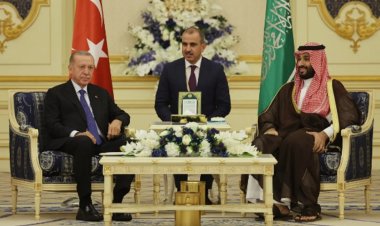
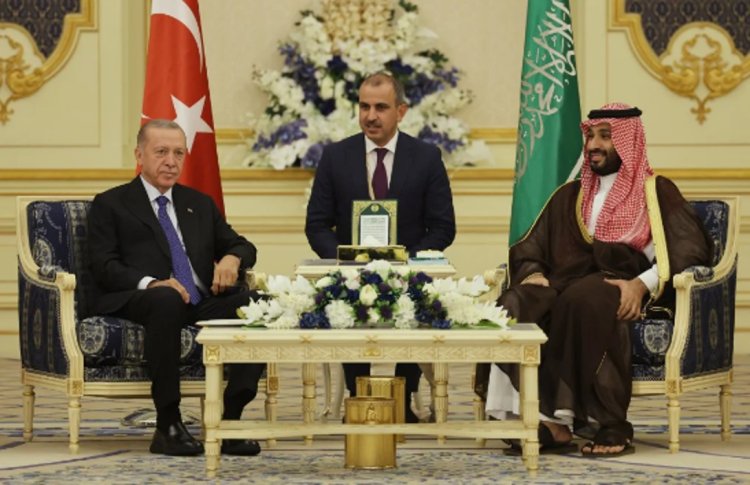
The year 2023 marked a turning point in Turkey and Saudi Arabia’s relationship. It began in the city of Jeddah. The Turkish defence and aviation company Baykar signed an agreement with the Saudi Ministry of Defence to buy Akinci combat drones. The relationship evolved after Baykar signed a contract with the Saudi Arabian Military Industries (SAMI). The contract proposed a two-level process starting from local purchase of Akinci drones to local production of equipment starting in 2026 within the Kingdom. The Baykar-SAMI contract further stipulated that the Intellectual property rights will be jointly shared by both countries in agreement. The shift from Turkey selling equipment to Saudi Arabia to the two countries building it together illustrates the shift from historical rivalry and diplomatic rupture towards a structural defence partnership. This article explores what the shift in Turkey-Saudi relations means for the West Asian region and how it has impacted the region in contemporary times.
This partnership stands in sharp contrast to the state of relations just a few years ago. Relations between Ankara and Riyadh plummeted after the 2018 killing of Jamal Khashoggi inside the Saudi Consulate in Istanbul. In addition, Turkey’s support for former Egyptian President Mohamed Morsi and other Muslim Brotherhood-inspired movements compounded the deterioration, leading Saudi Arabia, the United Arab Emirates (UAE), and Egypt to form an anti-Turkey bloc. The fallout was observed in both economic and diplomatic terms. In 2021, there was a collapse of 92% in exports from Turkey to Saudi Arabia, falling from $221 million to just $16 million. Therefore, this raises a question of how a relationship which was defined by an informal embargo has evolved into shared intellectual property rights and joint manufacturing. This article argues that the explanation lies less in a change of disposition than in a changed strategic environment.
Co-production extends beyond Baykar. In July 2024, SAMI signed three Memoranda of Understanding (MoUs) with Turkish firms in Riyadh. Along with Baykar, it also included Aselsan, Turkey’s largest defence electronics company. In addition, it included the tech firm Fergani Space, which aimed to serve the global space sector and foster the development of emerging technology within the Kingdom. In addition, at the recent World Defence Show 2026 in Riyadh, ULAQ Global Autonomous Systems, a Turkish firm, signed a partnership with SAMI Autonomous Company, a subsidiary of Saudi Arabia’s Public Investment Fund, to jointly design, develop and produce unmanned surface vessels in the maritime domain. It reflects Saudi Arabia’s localisation plan set out in Vision 2030. This shift is prompted by two convergent quantifiable pressures rather than goodwill alone. On the Saudi side, SAMI’s management has acknowledged that only 15% of the Kingdom’s defence output has been localised thus far. According to Vision 2030, 50% localisation of defence production should be achieved by the year 2030. This indicates that in place of simply purchasing equipment, tech transfer partnerships are now key to any security-related deal. On the Turkish side, the motivation is related to export revenues and scale. The original Akinci deal is characterised as the largest defence export contract in Turkey’s history. Riyadh’s co-funding of localisation provides Turkish enterprises with adequate financial resources and order volumes to scale up Research & Development (R&D) and production of defence systems.
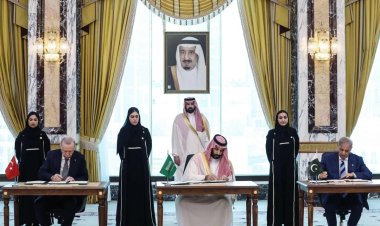
Industrial ties bind more tightly than political pledges. A political commitment can be more flexible than presumed, as illustrated by the Makkah Joint Defence Agreement between Saudi Arabia, Turkey and Pakistan, which states, “Any armed attack against any one of the three states shall be regarded as an attack against them all.” Nevertheless, in September 2025, Pakistan signed the Pakistan-Saudi Strategic Mutual Defence Agreement and yet remained uninvolved in the military efforts of Saudi Arabia in the first stage of the 2026 US-Israel-Iran War. However, shared R&D efforts and co-location of production do not allow any ambiguity in the interpretation of agreements, which can also be seen in discussions of Saudi investments in Turkish KAAN fighter jet development. The Turkey-Saudi relationship reflects that the “builder” narrative should not be overstated. The earlier localisation gap suggests that the announced cooperation does not necessarily translate into reliable capabilities. Both countries, moreover, remain hedged rather than committed. Saudi Arabia’s $24.3 billion deal for the F-35 missile from the USA, its dependence on China’s missile technology, and Turkey’s $50.7 billion F-35 deal with the UAE are demonstrations of this. It implies that neither side is certain of its counterparty. It is not a binding alliance, but a strategic diversification, where Saudi Arabia can gain some leverage over the supplier of the joint production without becoming entirely dependent on any one supplier. Furthermore, it provides a strategic option for Turkey without sacrificing its own strategic independence. Whether this will be a lasting axis or just one among a bunch of hedges will rely less on announcements than on whether or not localisation targets are reached.
The partnership, therefore, lies less in alliance than in what it reveals about the regional order. In the case of West Asian geopolitics, it can be analysed with the three core arguments. First, rivalry is a variable, not a constant. States that boycotted one another in 2020-21 now cooperate because of Iranian strikes. Israel’s 2025 strike in Doha and doubts over US guarantees have led their threat perceptions to converge. What it suggests is that the alignment is issue-based and instrumental rather than ideological. Second, the United States remains indispensable but no longer sufficient. The November 2025 US-Saudi defence agreement brought a major non-NATO ally designation, which entails no security commitment. Thirdly, Israel has become part of planning assumptions together with Iran, where Israel-Saudi normalisation is seen as impossible. Finally, the pact binds Pakistan, which clashes episodically with India, into a Gulf security architecture, extending its implications to South Asia and energy security. Therefore, while analysing the above situation, it reflects that there are no permanent friends or foes in the case of state relations. The alignment is on the basis of long-term interests. Moreover, in this case, those interests have proven sustainable, resulting in a decade of shared manufacturing lines and joint intellectual property, and setting a remarkable example in the contemporary geopolitical landscape.
Disclaimer: This paper is the author's individual scholastic contribution and does not necessarily reflect the organization's viewpoint.