The Iran-US War and Its Implications for West Asia
 usanasfoundation
Report
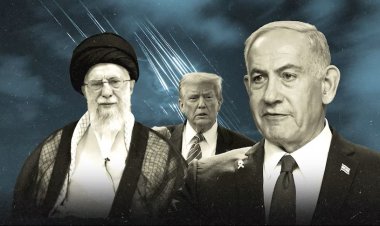
On 27 September 2026, the Usanas Foundation interviewed distinguished expert Mr Victor Vahidi Motti, Executive Director of the World Futures Studies Federation, on “The Iran-US War and Its Implications for West Asia.”
The discussion covered several key issues, including the escalating tensions between Iran and the United States, the strategic importance and potential weaponisation of the Strait of Hormuz, and how the conflict is being viewed within the US. It also examined China’s role in West Asia, domestic Iranian dynamics and Indo-Iranian civilisational connections. Distinguished Expert Victor Vahidi Motti brought a strategic foresight perspective to the discussion, drawing on methods such as game-theoretic modelling to examine how decisions by one actor can shape the responses of others, and the “future wheel” technique to understand the possible wider consequences of major developments. He also brought a civilisational and historical perspective, highlighting Indo-Iranian cultural connections that are often overlooked in conventional international relations analysis.
China’s Role and Strategic Calculus vis-à-vis Iran
Economic Interdependence
Victor Vahidi Motti highlighted the economic importance of China’s relationship with Iran. Trade between Iran and its fifteen maritime and land neighbours is estimated at approximately USD 38 billion, while its trade with China alone is close to USD 41 billion. This makes China Iran’s most significant trading partner despite the geographical distance between the two countries. Motti noted that the scale of this relationship is comparable to the GDP of some smaller US states, highlighting how a partnership that may be of secondary importance to Washington is of considerable significance to Tehran.
He also emphasised that China has consistently opposed unilateral sanctions and military action against Iran and has stayed away from joining Western-led economic blockades. Motti further discussed the role of China's Belt and Road Initiative (BRI) in connecting Iran to wider Chinese trade and transport networks. In particular, overland routes through Central Asia provide Iran with alternative options to maritime routes that could be vulnerable to US naval restrictions. While ports such as Chabahar could remain potential pressure points, China has other routes available to maintain access to the region, including through Central Asia.
Read the detailed report here